Translated with AI




















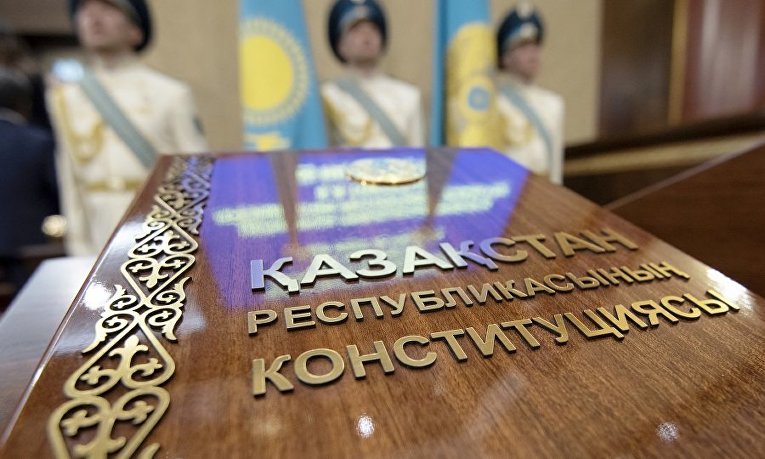
Thus, Kazakhstan's official media have published the final second draft of the new Constitution. If it is approved by the people in the national referendum, the day of the Constitution's adoption will become a national holiday. The Constitution will come into force on July 1, 2026.
Thus, the people of Kazakhstan have been presented with a Fundamental Law of the laws of the steppe civilization, in the spirit of nomadic traditions, which is generally defined, consistent, coherent, and reasoned. I especially note that the Great Yassa of Genghis Khan and the steppe Constitutions of Kasym Khan, Yesim Khan, and Tauke Khan were successfully implemented in the statehood of Kazakhstan long before the formation of the USSR. The Soviet and post-Soviet periods of our people's lives were also protected by the provisions of the Constitutions of 1978 and 1993, as well as the current Constitution of 1995.
My "field" analysis of our society's opinion on the draft of the new Constitution of the country showed that the overwhelming majority of the country's population approved of the political and legal decision of the Head of State, adopted this year at the last Kurultai in Kyzyl-Orda, essentially the Concept on the need to amend and supplement the current Constitution of the country of 1995, as well as what followed: the actual adoption of a new version of this highest legal act of the state.
And, unsurprisingly, the 1995 Constitution fulfilled its historical mission, highlighting the strengths and weaknesses of our statehood. It has periodically been amended and supplemented, justifiably, based on its content and the passage of time. But life moves on, especially now. The future of our country is at stake, and decisive measures must be taken to preserve the legal sovereignty of the state and ensure the future of the nation.
Objectively, the appearance of the draft new Constitution provoked a logical reaction from our society regarding the progressive nature of its norms, many of whose recommendations became the subject of discussion at meetings of the relevant working group, then by members of the Constitutional Commission, formed by decisions of the Head of State, and at various dialogue platforms.
Of course, every position, every opinion of a citizen of the country, always deserves attention. However, against this backdrop, it's difficult to agree with the position of Yevgeny Zhovtis, a well-known human rights activist whose opinions I always respect. Just recently, BBC News published an article about the new version of the draft Constitution of the Republic of Kazakhstan, the conclusions of which, in my opinion, are baseless.
First. Since 2019, the Head of State has consistently and consistently promoted the ideology of a Just State in the lives of society and the state, ultimately embodied in six core, interconnected principles of our country's domestic policy. One of these, in the context of a rapidly changing world order and the new role of middle powers in this process, he quite rightly proclaimed the principle of "Strong President, Influential Parliament, Accountable Government." Accordingly, under this and other interconnected principles of domestic policy, the draft new Constitution incorporates all the classic forms of interaction between the President and the three branches of government, with the aim of preventing abuses by any of them and other legal entities.
Therefore, it is entirely logical that direct appointments of several senior officials of central government bodies and their constitutional compositions are divided between him and the country's Kurultai. In the former case, he works directly with them on a daily basis; in the latter case, the senior staff of these government bodies, appointed by him, including after direct consultations and approval with the Kurultai, are that part of the state mechanism that expresses the interests and oversight functions of the highest representative (legislative) body in the country's system of government.
In the context of the above, the provisions of the Constitution, on the one hand, preserve the institution of “immunity” in the interests of the normal, independent conduct of state activities for a number of senior state officials, but also provide for clear constitutional forms of depriving them of immunity in the field of criminal justice, including their standard establishment in the already existing branches of law of the criminal cycle (Criminal Code, Criminal Procedure Code).
In this regard, E. Zhovtis’s thesis about the “super-presidential” nature of the new model of the political (state) regime, in my opinion, does not have any legal or factual basis.
Second. There's no doubt that Kazakhstan will always remain a full-fledged subject of key international human rights instruments. This is expressed in many forms, and no one has ever questioned it. Yevgeny Zhovtis should clearly understand this.
In this regard, the theme of the special place of international treaties in the system of current legislation of Kazakhstan, respect for the norms and principles of international law, the pursuit of a foreign policy of peace and cooperation with states interested in this, non-interference in their internal affairs, and the peaceful resolution of international disputes is one of the central, stable norms in the system of the draft new Constitution of the Republic of Kazakhstan.
Specifically, first of all, we are talking about international treaty obligations of the Republic of Kazakhstan, that is, those ratified in the established manner and expressing the consent of the Republic of Kazakhstan to be bound by the relevant international treaty on an international level.
It is also important to note that the draft's provisions specifically stipulate that the application of international treaties within the territory of the Republic of Kazakhstan is determined by national laws. This is primarily driven by the need to properly understand and effectively apply international law in national legal practice, not by denying their application within the country.
In this regard, Yevgeny Zhovtis's opinion that the provisions of Article 23 of the draft law contain vague wording that could increase pressure on the media and restrict freedom of speech is inconsistent with international law. I believe we don't have a problem with this in our country; in fact, we're seeing an overabundance of it. This is encouraging.
In this regard, E. Zhovtis does not take into account and bypasses the provisions of paragraph 3 of Article 19 of the ICCPR of 1966, which, I quote verbatim, states: "3. The exercise of the rights provided for in paragraph 2 of this article imposes special duties and responsibilities ( emphasis added ). It may, therefore, be subject to certain restrictions, which, however, must be provided by law (emphasis added) and be necessary : a) for respect of the rights or reputations of others, b) for the protection of national security, public order, or public health or morals."
As a reminder, Article 19(2) of the ICCPR establishes that everyone has the right to freedom of expression; this right includes freedom to seek, receive and impart information and ideas of all kinds, regardless of frontiers, either orally, in writing or in print, in the form of art, or through any other media of his choice.
Third. The emergence of a unicameral legislative body—the Kurultai—in the system of state power is a tribute to the historical traditions of building a system of state power in nomadic civilization and to the norms of Kazakh customary law. All laws should objectively be adopted by a single body of state power, without being re-circulated through the country's legislative body, as is the case and illogically true in modern lawmaking.
The creation of an influential Parliament (Kurultai), without going into detail, was the subject of addresses and other political actions by the Head of State. It was communicated to the public in line with the concept of Kazakhstan as a "Fair" and "Listening State," and was discussed in scientific and practical debates, ultimately finding the necessary grounds for reasonable acceptance and official legalization.
I can state this directly and without citing official sources, as I was one of the initiators of a thorough academic discussion on this issue in 2025 in Astana. Furthermore, I reflected this consistent academic line in my early publications on the legislative activities of society and the state, as well as on improving the norms of the current Constitution and the ideology of Kazakhstan as a state governed by the rule of law.
Fourth. And finally, politics, economics, and law, which have varying degrees of primacy in a given society and state, are the three "eternal" pillars that form the basis for the formation of the "architecture" of any Basic Law of the state. In this regard, issues of economics, the creation of the state budget, and the control and expenditure of its resources are a pressing issue for any legislative body of the state, and Kazakhstan is no exception. That is why the provisions of the draft new Constitution naturally enshrine a system of generally binding rules of conduct for the Kurultai related to the adoption of laws, including economic ones, as well as their unconditional implementation by the country's Government. I will cite only a few of them. For example, the Kurultai has the right to issue laws that regulate the most important social relations, establish fundamental principles and norms concerning: the republican budget, issues of state loans, and the provision of economic and other assistance by the Republic of Kazakhstan. In addition, the Kurultai hears the report of the Chairman of the Supreme Audit Chamber twice a year; Discusses and approves the reports of the Government and the Supreme Audit Chamber on the execution of the republican budget. Failure of the Kurultai to approve the government's report on the execution of the republican budget shall constitute a vote of no confidence by the Kurultai in the government. It has the right, at the initiative of at least one-third of the total number of Kurultai deputies, to hear reports from members of the Government of the Republic of Kazakhstan on their activities. Following the hearing of the report, a majority of at least two-thirds of the total number of Kurultai deputies may decide to appeal to the President of the Republic of Kazakhstan to dismiss a member of the Government from office in the event of their failure to comply with the laws of the Republic of Kazakhstan. In this case, the President of the Republic of Kazakhstan shall dismiss the member of the Government, etc.
Accordingly, the rights of the Kurultai correspond to the rights and obligations of the Government to submit to the Kurultai the republican budget and a report on its implementation, to ensure budget implementation, etc.
Consequently, it is clear how accurately the legal capacity of the Kurultai, as the political and legal expression of an "Influential Parliament" in relation to an "Accountable Government," is represented in the provisions of the draft new Constitution. In this regard, the downgrading and belittling of the Kurultai's role in regulating the state's economic policy, as discussed in Y. Zhovtis's article, is inconsistent with the legal position of the draft new Constitution of the Republic of Kazakhstan. I believe that discussion of the process of adopting the provisions of the new Constitution in international and national sources, regardless of their author, should always be highly motivated, based on a thorough understanding of the actual historical experience of the creation and development of national statehood in the rather challenging conditions of global civilization before and after the collapse of the USSR.
Marat Kogamov Doctor of Law, Professor, Honorary Lawyer of the Republic of Kazakhstan