Translated with AI


































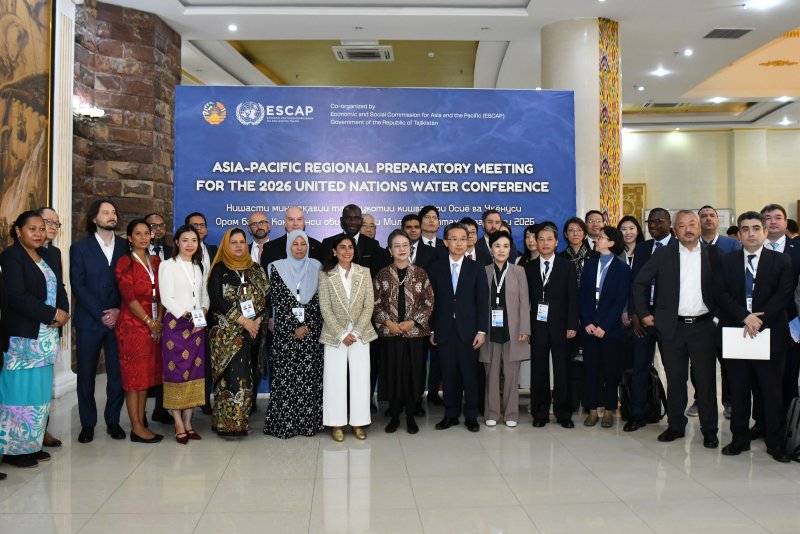
A regional consultation of Asia-Pacific countries on the United Nations Water Conference was held in Dushanbe as part of the Fourth High-Level International Conference on the International Decade for Action, "Water for Sustainable Development, 2018–2028," NIAT Khovar reported.
The consultation was organized by the Government of Tajikistan and the United Nations Economic and Social Commission for Asia and the Pacific (ESCAP).
Over 100 representatives from Asia and the Pacific participated in the event. During the multi-stakeholder dialogue, participants discussed the region's prospects, progress achieved, challenges, and priorities for achieving Sustainable Development Goal 6, which calls for access to clean water and sanitation.
Participants also considered opportunities to accelerate the implementation of SDG 6 through an integrated approach to water and strengthening regional partnerships.
Particular attention was paid to coordinating the positions of regional states and strengthening their contribution to the UN Water Conference, which will be held in December 2026 in the United Arab Emirates.
During the meeting, it was emphasized that countries in Asia and the Pacific face some of the most serious water challenges in the world. At the same time, the region is viewed as an important platform for developing various partnership and cooperation models, and plays a significant role in shaping global action on water.
It is noted that the results of the consultation will contribute to both the Fourth Dushanbe Water Conference and the 2026 UN Water Conference, which will be held in late 2026 in the United Arab Emirates.
The consultation included dialogues on six key areas: water for people, water for prosperity, water for the planet, water for cooperation, water in multilateral processes, and investment in the water sector.
During the discussions, representatives from Asia and the Pacific presented practical proposals for strengthening regional cooperation in water resources, attracting investment for sector development, ensuring access to clean drinking water and sanitation, improving the quality of water supply services, and addressing other pressing water issues.