Translated with AI

































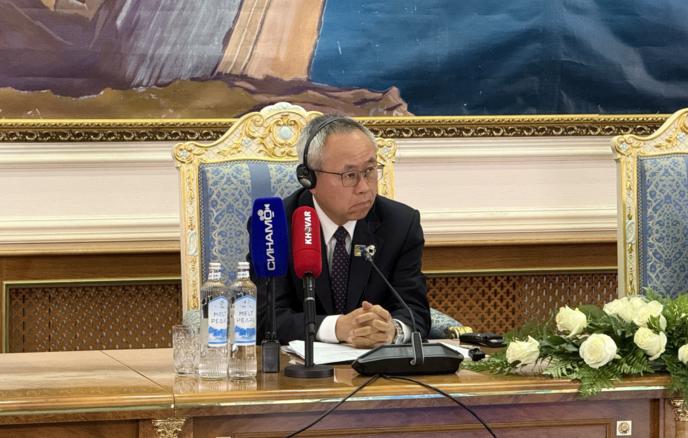
UN Under-Secretary-General for Economic and Social Affairs Li Junhua stated that approximately 2.2 billion people worldwide still lack access to clean drinking water, and 3.5 billion people lack safe sanitation, TASS reports.
He announced this at a press conference in Dushanbe following the Fourth High-Level International Conference dedicated to the International Decade for Action "Water for Sustainable Development, 2018–2028."
According to Li Junhua, efforts to achieve the sixth UN Sustainable Development Goal, related to access to clean water and sanitation, are significantly lagging behind the targets. He emphasized the urgent need to intensify international efforts in this area.
The UN Deputy Secretary-General also noted that there is an annual shortfall of over $130 billion to implement programs to provide clean water and sanitation. He stated that developing countries are particularly in need of additional funding.
The Sustainable Development Goals were adopted in September 2015 at the UN Sustainable Development Summit. The list includes 17 global goals, including ending poverty and hunger and ensuring universal quality education.
In April, Russian Deputy Foreign Minister Alexander Alimov stated that progress toward achieving the Sustainable Development Goals had stalled and regressed in a number of countries. He stated that, according to projections from the Secretariat of the United Nations Economic and Social Commission for Asia and the Pacific, 103 of the 117 measurable SDG targets will not be achieved by the deadline.
Earlier, the UN published a report stating that the world is entering an era of "global water bankruptcy." The document notes that approximately 3 billion people live in regions with unstable or declining water supplies. Furthermore, more than 30% of glaciers have already disappeared.
In November 2025, the World Health Organization reported that lack of adequate access to sanitation, hygiene, and clean water leads to the death of 1.4 million people annually. The WHO called on countries to invest in modern sanitation systems and provide their populations with safe sanitation.