Translated with AI













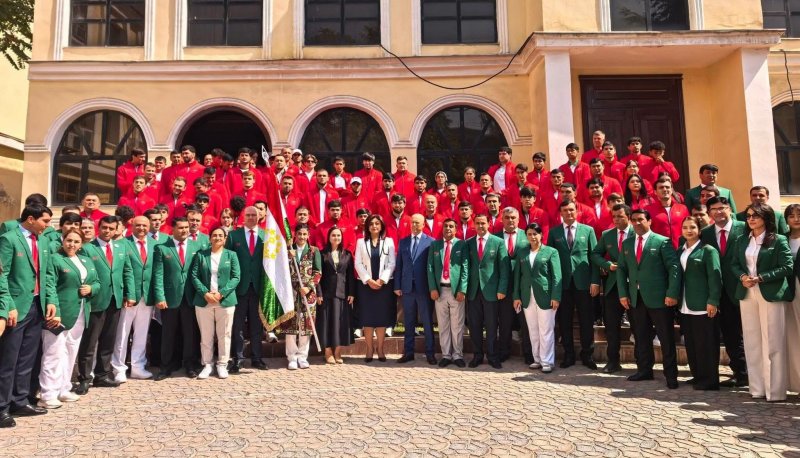










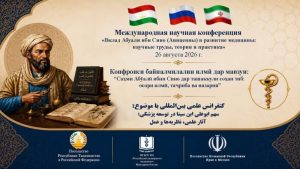
On August 26, an international scientific conference entitled "Abu'ali ibn Sina's Contribution to the Development of Medicine: Scientific Works, Practice, and Theory" was held in Moscow. The event was held at the initiative of the Embassy of the Republic of Tajikistan and the Embassy of the Islamic Republic of Iran in the Russian Federation, in collaboration with the Russian University of Medicine of the Ministry of Health of the Russian Federation, reports NIAT Khovar.
The conference was attended by scientists and researchers, medical specialists, writers, representatives of the diplomatic corps accredited in Russia, members of the Public Council at the Embassy of Tajikistan, as well as Tajik students studying at Russian higher medical educational institutions.
During the event, participants were presented with materials dedicated to the life and work of Abu Ali ibn Sina. Specifically, a documentary film, a house-museum, and his office were shown, as well as medical instruments and supplies used during the great physician's time. Books from his scientific legacy were also on display.
Opening the conference, Ambassador Extraordinary and Plenipotentiary of Tajikistan to Russia Davlatshoh Gulmahmadzoda emphasized the importance of Abu Ali ibn Sina as one of the world's greatest geniuses and an outstanding Tajik-Persian scholar.
According to him, Abu Ali ibn Sina lived in the late 10th – early 11th centuries and made significant contributions to various fields of science, especially to the development of world philosophy and medicine.
The Ambassador noted that after Tajikistan gained independence, the attitude towards this historical heritage took on new meaning thanks to the state and cultural initiatives of the President of the Republic of Tajikistan, Leader of the Nation Emomali Rahmon.
The conference devoted special attention to the establishment of the Abu Ali Ibn Sina International Prize in Medicine. As noted, the President of the Republic of Tajikistan signed the corresponding decree on May 23, 2026.
According to the official commentary on the decision, the prize was established to recognize Abu Ali ibn Sina's contribution to the development of healthcare and medical science on a global scale.
Davlatshoh Gulmahmadzoda emphasized that holding such international forums abroad is important for strengthening national identity, respect for historical and cultural values, and educating the younger generation in the spirit of national pride.
He also noted that the scientific legacy of Abu Ali ibn Sina continues to be a source of knowledge and plays an important role in the development of science and education.
According to the ambassador, today the Tajik State Medical University, a district of Dushanbe, avenues, squares, streets, as well as numerous educational and scientific institutions throughout the country bear the name of Abu Ali ibn Sino.
In his speech, Chargé d'Affaires of the Embassy of the Islamic Republic of Iran to the Russian Federation, Parchizadeh Afshin, called Abu Ali ibn Sina a symbol of civilization that transcends geographical boundaries.
He noted that Abu Ali ibn Sina was born in Bukhara, in the Samanid Empire, and his native language was Farsi-Tajik. The thinker's academic development, his exploration of the Iranian plateau's scholarly heritage, and the creation of his famous works, which in the European tradition are known as Avicenna, were associated with the historical cities of Ray, Isfahan, and Hamadan.
According to Parchizadeh Afshin, for Iran and Tajikistan, Abu Ali ibn Sina is an important part of cultural identity and a source of shared pride for the two peoples, united by a common language and cultural heritage.
The rector of the Russian University of Medicine, Doctor of Medical Sciences, Professor Oleg Olegovich Yanushevich also spoke at the conference.
During the scientific portion of the conference, international scholars and experts presented papers on a variety of topics. Among the speakers were Sakinat Kharkharova-Makkaeva, Associate Professor of the Department of Gerontology and Geriatrics, Faculty of Advanced Studies, Dagestan State Medical University; Talgat Miktiboev, Associate Professor of the Higher School of Law, Faculty of Law, named after M. Speransky, Russian Presidential Academy of National Economy and Public Administration; Dmitry Ermakov, Doctor of Pedagogical Sciences and Professor of the Department of Psychology and Pedagogics, Peoples' Friendship University of Russia named after Patrice Lumumba; Yang Jining, Chairman of the Society of the People's Republic of China in Russia; Durre Shahwar, PhD, Candidate of Medical Sciences, India; and other specialists.
Conference participants noted that one of Abu'ali ibn Sina's greatest achievements was the application of correct methods for conducting chemical reactions and research using various chemical medicines in Transoxiana and Khorasan. In this regard, his approach differed from the methods of alchemists of his time.
During the discussions, Abu Ali ibn Sina was presented as a rationalist philosopher, a skilled physician, a thinker who possessed knowledge in the social and natural sciences of his era, as well as an encyclopedic scholar and universal genius.
It was noted that he introduced numerous innovations into the various fields of science in which he was involved, and for many subsequent centuries determined the directions of their development and improvement.
Conference experts also assessed the establishment of the Abu Ali Ibn Sina International Prize in Medicine, calling it evidence of the Republic of Tajikistan's attention to the spiritual heritage of the past and the shared scientific and cultural heritage of the region's peoples.
Conference participants believe that honoring the world-renowned figure of Abu Ali ibn Sina through an international award will contribute to strengthening scientific dialogue, knowledge exchange, and further bringing peoples closer together.
Medical experts and researchers expressed confidence that the Abu Ali Ibn Sina International Prize could become one of the world's most prestigious scientific awards in medicine and represent Tajikistan as a supporter of science, research, and innovation on the international stage.
A. S. Davlatov, head of the department at the Medical Center of the Russian Presidential Academy of National Economy and Public Administration and author of the scientific book "History of Tajik Medicine. Before Ibn Sina," published in Russian, also gave a presentation on the sidelines of the event.
At the conclusion of the event, scientists and medical researchers from various countries called for the conference to be recognized as an international scientific conference, given its significance.