Translated with AI
































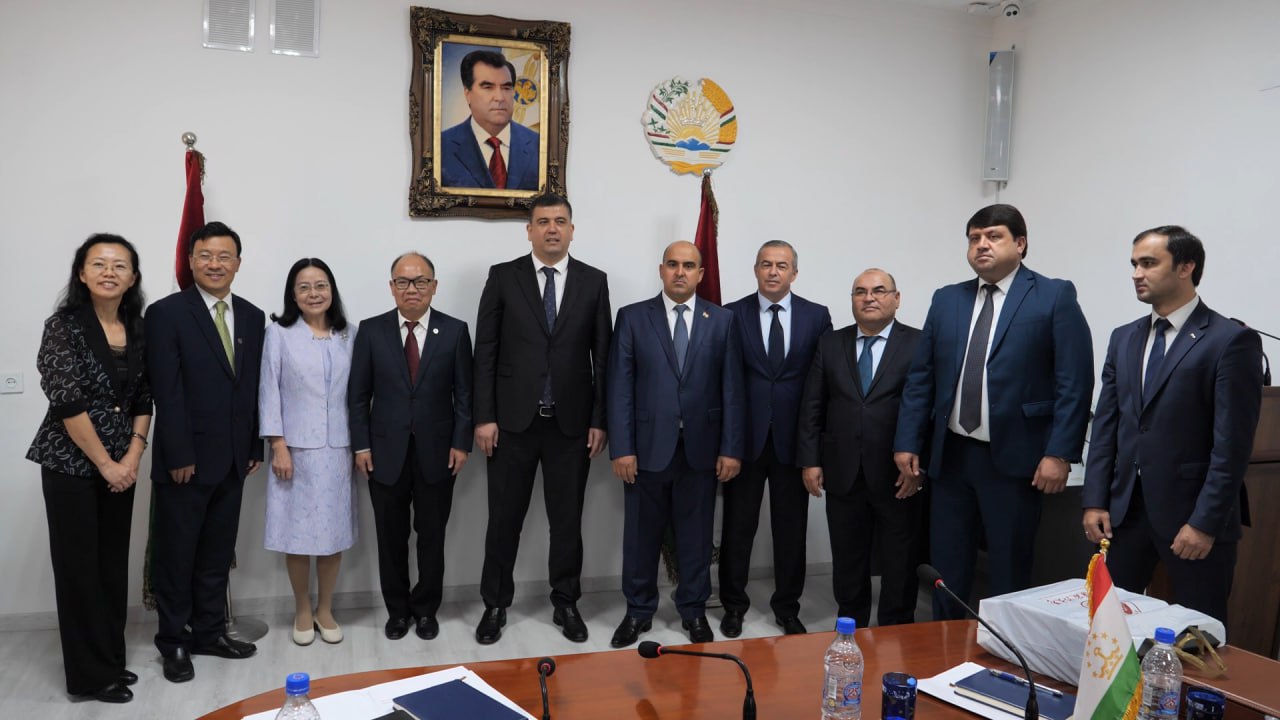
As part of the academic and legal cooperation program, a delegation from the China University of Political Science and Law in Beijing visited the Institute for Advanced Studies of the Ministry of Justice of the Republic of Tajikistan on October 14, Avesta.tj reports.
Deputy Minister of Justice of the Republic of Tajikistan Asadullo Hakimzoda exchanged views with guests on improving legislation, judicial practice, and legal education.
During the meeting, it was emphasized that China's experience in reforming the legal system is of particular interest to Tajik specialists, particularly in terms of modernizing judicial institutions, strengthening the rule of law, and digitalizing public services.
Representatives of the Chinese delegation noted that Tajikistan has also achieved significant success in recent years in strengthening law and order, developing the legislative framework, and increasing legal literacy among the population.
The parties expressed their willingness to develop cooperation in areas such as organizing joint seminars, internships, scientific research, and educational programs.
Following the official part of the event, two lectures were given by Chinese scientists specifically for their Tajik colleagues.
The first lecture, entitled "Experience in Building China's Legal System," was delivered by Professor Yu Zhong. In his address, he provided a detailed account of the development of China's legal system, the role of the Constitution as the primary source of law, the legislative system, and law enforcement mechanisms. The professor focused on the codification of laws, enhancing the efficiency of courts, and streamlining administrative procedures. He noted that one of the key areas of Chinese legal policy is ensuring transparency in government activities and strengthening public oversight.
The second lecture, titled "Achievements and Prospects for Building a Rule of Law in China," was delivered by Professor Yang Weidong. He emphasized that developing a rule of law is a strategic goal for Chinese society and a crucial prerequisite for sustainable socioeconomic progress. In his presentation, the professor discussed the introduction of modern technologies into the justice system, the development of e-courts, and the advanced training of judges and lawyers.
During the lectures and subsequent discussions, Tajik lawyers and professors expressed keen interest in China's experience in legislative and judicial reform. It was noted that this type of knowledge exchange contributes to deeper mutual understanding between countries and opens new opportunities for practical cooperation in the fields of law and governance.
In conclusion, the parties expressed their intention to continue active dialogue and consider signing a Memorandum of Understanding between the Ministry of Justice of the Republic of Tajikistan and the China University of Political Science and Law. This document is intended to serve as the basis for further joint projects, scientific exchanges, and professional training programs.