Translated with AI


































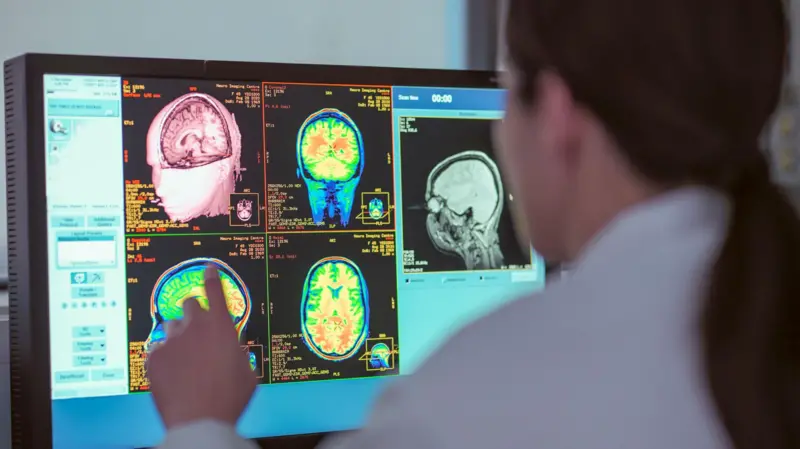
Scientists from the University of Cambridge have found that the human brain goes through several distinct phases throughout life, with key turning points occurring at ages 9, 32, 66, and 83. The study's authors hope that understanding the brain's state at each of these stages will help better understand the causes of mental disorders and dementia, the BBC reports.
Researchers from Cambridge have concluded that the brain remains in a youthful phase until it reaches around 30 years of age – this is the age generally considered to be the peak of the human body’s development.
Scientists believe the results of the new study will help understand why the risks of mental disorders and dementia change at different stages of life.
The brain is constantly changing as we acquire new knowledge and experience, but research shows that it is not one smooth process that occurs from birth to death.
Instead, there are five phases of brain function:
Childhood – from birth to 9 years;
Adolescence – from 9 to 32 years;
Adulthood – from 32 to 66 years;
Premature aging – from 66 to 83 years;
Late aging – from 83 years and onwards.
"The brain rewires itself throughout life. It continually strengthens some connections and weakens others, and it's not a constant, even process—there are fluctuations and phases of brain rewiring," Dr. Alexa Moseley, one of the study's authors, told the BBC.
Some people reach these stages earlier or later, but overall, these were the age thresholds that were most commonly observed in brain scans of study participants.
Five phases of brain function
Childhood. During this first period, the brain rapidly grows in size, but simultaneously "thinning out" the excess number of connections between nerve cells—synapses—that were created early in life.
At this stage, the brain works less efficiently. It acts like a child wandering aimlessly through the park, going wherever it pleases, rather than moving in a straight line from point A to point B.
Adolescence. Everything changes dramatically around age nine, when brain connections begin to rewire themselves for maximum efficiency. "It's a huge shift," says Dr. Moseley, calling this transition from one phase to the next the most significant in a person's life.
It is at this time that the highest risk of mental disorders occurs.
It's no surprise that adolescence begins around the onset of puberty. But current research suggests that it ends much later than previously thought.
It was once thought that adolescence was limited to the teenage years, but neuroscience later showed that it continues into our twenties, and now into our thirties.
This is the only phase when the brain's neural networks become more efficient. According to Moseley, brain function peaks in the first years after age 30, that is, at the very end of the phase that runs from ages 9 to 32. The expert calls the fact that the brain remains in one phase of development for such a long period of time "extremely interesting."
Adulthood. Then comes a period of stability—the longest period in the brain's life, lasting about three decades.
Changes at this time are much slower than the rapid processes of previous years, but it is here that we see how the process of brain development unfolds in reverse.
According to scientists, during this period we reach a kind of “plateau of intelligence and personality.”
Early aging. This stage begins around age 66, but it's not a sudden and abrupt decline in brain efficiency. Rather, it involves changes in the brain's connectivity patterns.
Although the study focused on healthy brains, this is the age at which dementia and high blood pressure, which affect brain health, typically begin to manifest.
Late aging. Then, at age 83, we enter the final stage. There is less data on this age group than on others, as finding enough healthy people to scan has been more difficult. Brain changes at this stage are similar to the symptoms of early aging, but are even more pronounced.
Dr. Moseley was surprised by how closely the age-related transitions coincided with important life stages—such as puberty, health problems later in life, and even major life changes in our 30s, such as having children.
"Cool Research"
The study's findings do not address the performance of men and women separately. However, researchers will be left with questions about gender differences, such as the impact of menopause on the brain.
"Many mental and neurological conditions are linked to the way connections in the brain are wired. Differences in wiring between individuals can actually help predict difficulties with attention, language, memory, and a host of other behaviors," says Duncan Astle, a professor of neuroinformatics at the University of Cambridge.
"This is a really cool study that highlights how much our brains change throughout life," adds Professor Tara Spires-Jones, director of the University of Edinburgh's Centre for Brain Research (she was not one of the study's authors).
Spires-Jones says his findings "align well" with our current understanding of how the brain ages, but notes that it's important to understand that "not everyone goes through the changes at exactly the same age ranges reported in the study."