Translated with AI





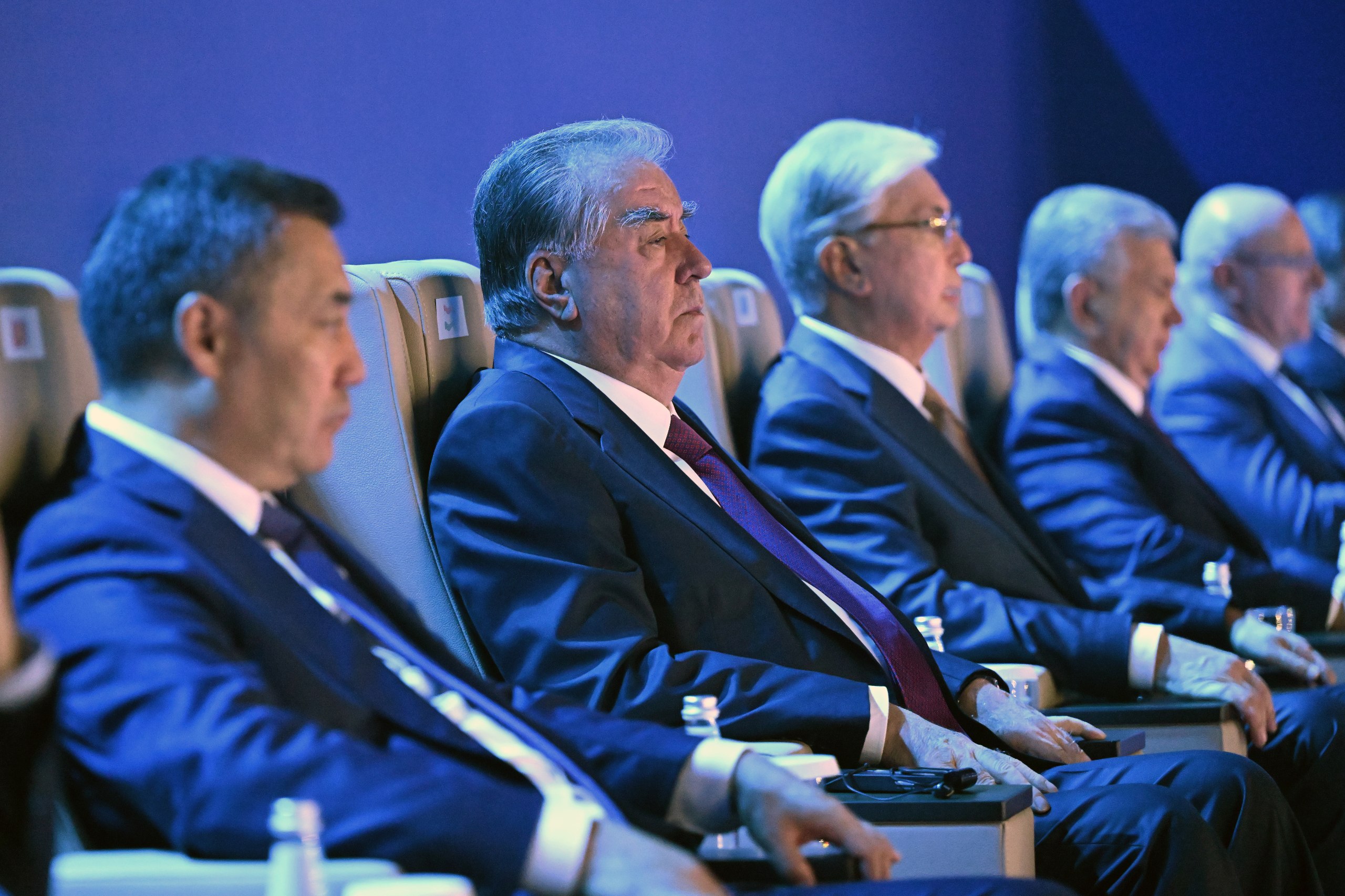



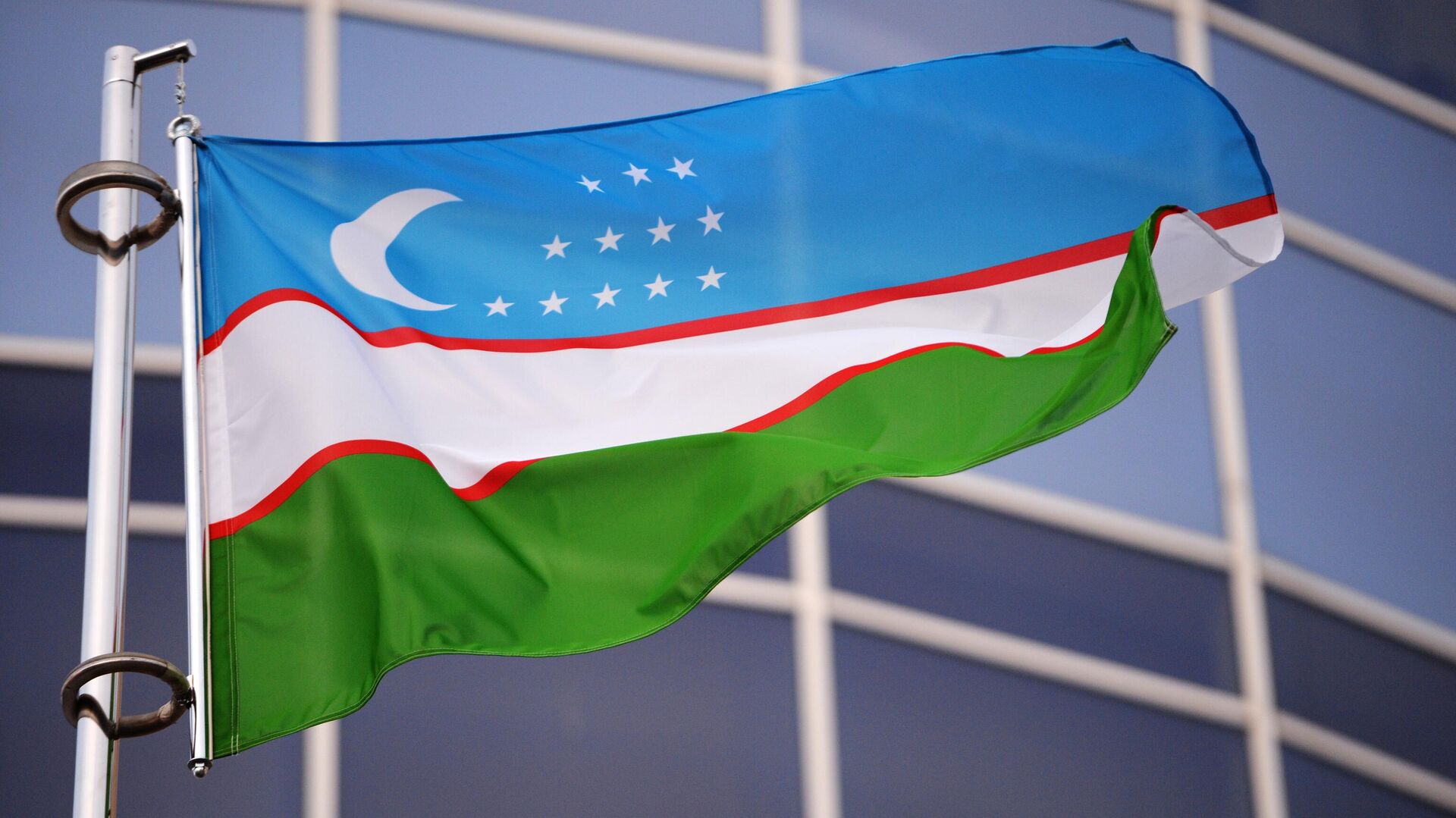
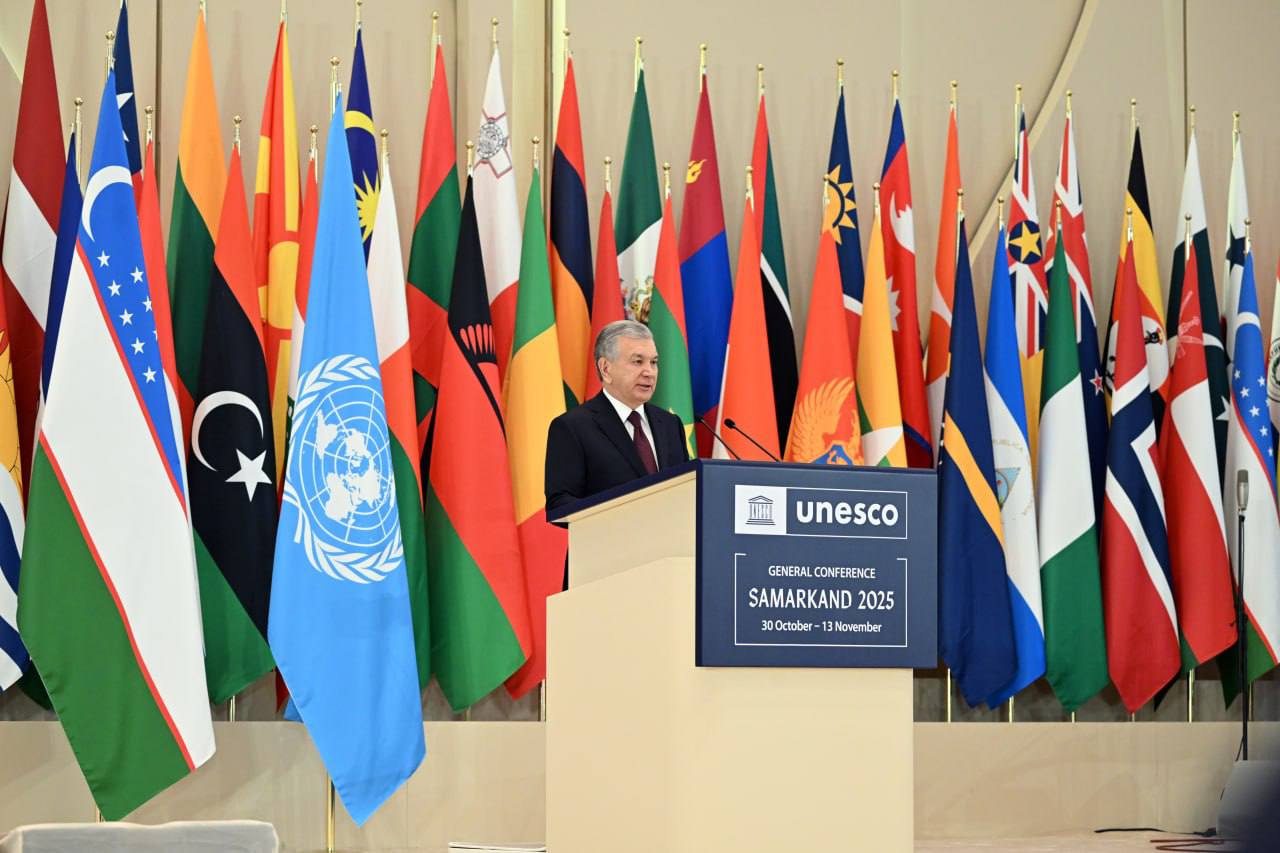
On October 30, 2025, President of Uzbekistan Shavkat Mirziyoyev took part in the opening ceremony of the 43rd session of the General Conference of the United Nations Educational, Scientific and Cultural Organization (UNESCO), held in the city of Samarkand.
According to the press service of the President of the Republic of Uzbekistan, the Uzbek leader warmly welcomed the forum participants to the hospitable Uzbek land – a crossroads of cultures and civilizations. He expressed deep gratitude to Serbian President Aleksandar Vučić, Slovakian President Peter Pellegrini, UNESCO Director-General Audrey Azoulay, heads of government of foreign countries, representatives of international and regional organizations, and all delegations for their participation in the conference.
At the beginning of his speech, the President emphasized that the current session is being held outside UNESCO headquarters in Paris for the first time in the last 40 years.
"We view the holding of such a representative forum in Samarkand as a manifestation of the organization's member states' high level of confidence in the large-scale, accelerated reforms being implemented in New Uzbekistan," the head of state stated.
The Uzbek leader noted that over the course of its 80 years of operation, the organization has become an authoritative global institution, promoting global cooperation in education, science, culture, and information, as well as strengthening trust and solidarity.
In this context, the growing role of UNESCO in preserving the national identity of peoples, their cultural heritage, and strengthening close dialogue between different religions is emphasized.
"It is deeply symbolic that our forum is being held in Samarkand – a city that has gone down in human history as a center of humanistic ideas, invaluable knowledge, and intercivilizational dialogue," the country's leader said.
The head of state recalled Samarkand's great legacy as the cradle of science, literature, and culture. In particular, he mentioned the Mirzo Ulugh Beg Observatory, where the famous star chart was created, which laid the foundation for the discoveries of Copernicus and Kepler. The president urged the guests to soak up the atmosphere of Samarkand—the pearl of the Great Silk Road, a land of peace and friendship among peoples.
It is noted that geopolitical tensions and military conflicts damage unique monuments and cultural heritage, while gaps in access to knowledge and digital technologies exacerbate global inequality.
The head of Uzbekistan emphasized that in such challenging circumstances, strengthening solidarity to achieve UNESCO's core missions is particularly important. Uzbekistan reaffirmed its commitment to the organization's noble goals and its readiness to serve as a bridge between East and West, North and South, offering an open platform for constructive cooperation.
Today, Uzbekistan is implementing a five-year cooperation program with UNESCO until 2027. Within this framework, large-scale events have been held to commemorate the anniversaries of great thinkers and figures—Abu Rayhan Beruni, Akhmad Ferghani, Amir Temur, Ali Kushchi, and Kamoliddin Behzod—as well as commemorate the anniversaries of scientific institutions such as the Khorezm Academy of Mamun, and literary monuments, including the epic poem "Alpomish."
Monuments along the Zarafshan-Karakum Corridor have been added to the World Heritage cities of Khiva, Bukhara, Shakhrisabz, and Samarkand. The natural areas of the Western Tien Shan and Turan Deserts reflect the region's unique biodiversity.
The President recalled that approximately twenty elements of Uzbekistan's intangible heritage have been recognized by UNESCO, including Shashmaqom, Katta Ashula, Lazgi dance, the art of askiya, miniature painting, the Navruz holiday, and the traditions of atlas and adras production. Under the auspices of the organization, festivals of Sharq Taronalari, maqom art, bakhshi, folk crafts, and ethnosports are held.
Particular attention was paid to resolutions put forward at the initiative of Uzbekistan, including the "Khiva Process: Promoting International Cooperation in Central Asia", the "Tashkent Declaration on Early Childhood Care and Education", and the "Tashkent Declaration on Access to Information".
UNESCO partner departments and schools operate throughout the country, and Tashkent and Fergana are included in the Global Network of Learning Cities. Hundreds of cultural heritage sites have also been restored using modern technologies and international standards.
The President announced that additional events will be held as part of the Samarkand Conference: the Bukhara Biennial of Contemporary Art, the opening of the Regional Center for Preschool Education Development in Tashkent, the award ceremony of the UNESCO-Uzbekistan International Prize named after Abu Rayhan Beruni, and a conference on the application of artificial intelligence in museums. Uzbekistan will also join the Global Convention on the Recognition of Qualifications in Higher Education.
Further, Sh.M. Mirziyoyev put forward a number of proposals and initiatives aimed at developing key areas of UNESCO’s activities.
The development of inclusive education and the use of artificial intelligence technologies have been declared an absolute priority. The President proposed creating a UNESCO Platform for the Development of Inclusive Education for Children with Special Needs and holding a World Summit on Professional Education. Uzbekistan is ready to implement a pilot project, "Artificial Intelligence – School," and organize an International Expert Forum on the Ethics of Artificial Intelligence under the auspices of UNESCO.
The Uzbek leader also advocated for the preservation of intangible cultural heritage. Interest was expressed in developing the UNESCO Memory of the World Programme, established to protect and ensure access to unique heritage assets such as oral traditions, manuscripts, archives, valuable historical documents, and cultural information.
An initiative has been put forward to declare November 19 as International Documentary Heritage Day and to establish an International Institute for Digital Heritage within UNESCO.
The head of state proposed holding the International Congress on Crafts and Folk Art in Bukhara in 2027 as part of the UNESCO Creative Cities Network.
To promote gender equality and develop women's leadership skills, the President advocated the creation of a UNESCO Academy for Women's Leadership and the holding of a Global Forum of Women in Education, Culture, and Science in Samarkand, bringing together renowned researchers, artists, educators, and innovators from all continents.
An effective joint fight against the climate crisis is also identified as a pressing issue.
The head of state emphasized the negative impact of climate change on cultural heritage and proposed establishing an international "UNESCO Ecological Capital" initiative and developing a UNESCO Executive Board resolution on preserving cultural heritage in the context of globalization and climate change. Uzbekistan expressed its readiness to host an international symposium on this topic in Khiva.
Other priorities include combating the spread of false information online, protecting public opinion, and combating discrimination. The President proposed holding an International Festival of Children's Cultural Content and developing a UNESCO Comprehensive Strategy for Media Literacy.
The head of state also noted the importance of strengthening interreligious harmony and countering radicalism and Islamophobia, while praising Islamic culture and education throughout the world: "It is important to widely promote such universal ideas as tolerance, mutual understanding, and harmony."
He proposed actively using the potential of unique projects in Uzbekistan – the Center for Islamic Civilization and the Imam Bukhari, Imam Maturudi, Imam Termizi, and Bahauddin Naqshband research centers.
Summing up his speech, the President of Uzbekistan expressed confidence that the forum would be an important step in establishing new areas of cooperation, strengthening mutual trust, global partnership, and promoting sustainable development.
It was noted that the "Samarkand Spirit," based on the eternal traditions and values of UNESCO, will inspire further cooperation for the sake of common progress.
In conclusion, the President of Uzbekistan wished the conference participants successful and fruitful work, emphasizing the symbolism of holding the forum in Samarkand – a city that embodies peace, friendship, and mutual understanding among peoples. This confirms Uzbekistan's high international standing and its contribution to the development of dialogue among civilizations, strengthening mutual understanding, and preserving human cultural heritage.
The opening ceremony concluded with a concert prepared by local and international artists. The best examples of Uzbek classical music and world musical heritage, reimagined in a contemporary way, were performed by a symphony orchestra, a choir, and a national ensemble.