Translated with AI



















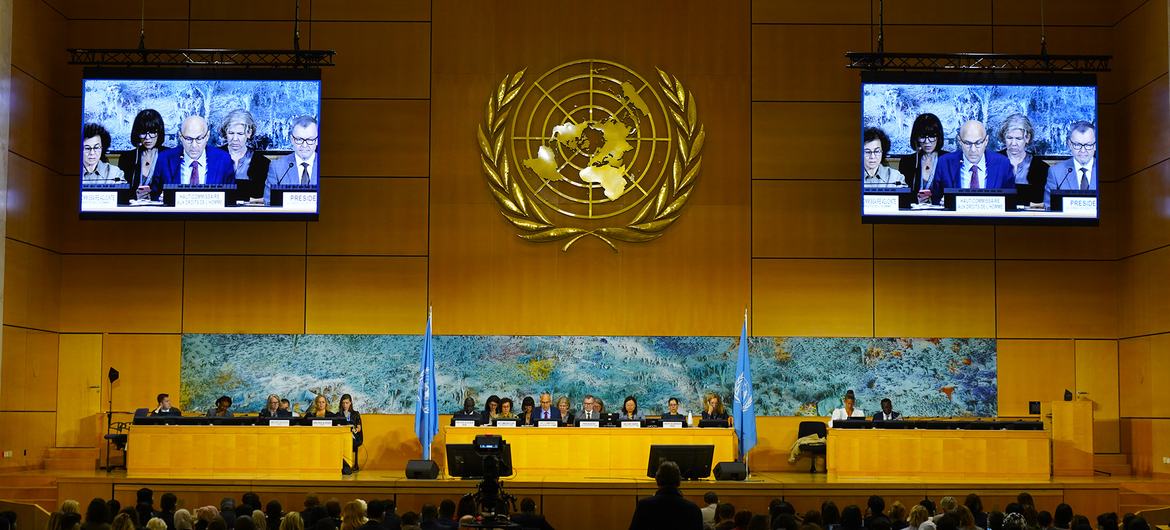
In Geneva, delegates from more than 120 countries celebrated the 20th anniversary of the UN Human Rights Council and reaffirmed their commitment to international law amid growing global instability, wars, and conflicts, according to the Organization's press service.
Speaking at the meeting, UN Secretary-General António Guterres recalled the geopolitical uncertainty surrounding conflicts in Gaza, Myanmar, Ukraine, Sudan, and other regions. He stated that in the current situation, human rights are under threat worldwide.
UN High Commissioner for Human Rights Volker Türk has called for human rights and justice to be placed at the centre of any ceasefire agreement or peace settlement.
UN General Assembly President Annalena Baerbock stated that silence in the face of human rights violations is a choice and has consequences. Systems rarely collapse suddenly, she said, but rather gradually, when those who should protect them choose to do nothing.
Baerbock drew attention to the dire and deteriorating situation of women in Afghanistan, including the latest decree that allows husbands to use violence as long as there are no broken bones or open wounds. She emphasized that silence in the face of grave human rights violations is ineffective.
She also stated the need to recognize the abduction of Ukrainian children as a war crime, calling this the responsibility of every member state of the Human Rights Council.
Speaking about the occupied West Bank and the ongoing expansion of Israeli settlements, António Guterres warned that the two-state solution is being "dismantled." He said the international community cannot allow such a development.
He noted that the world is facing a situation where mass suffering is justified, people are used as bargaining chips, and international law is perceived as an obstacle.
The Secretary-General also warned that technology, including artificial intelligence, is increasingly being used to suppress rights, reinforce inequality and discriminate against marginalized groups.
According to him, human rights are not the privilege of individual regions and cannot be negotiated. States are bound by their obligations under the UN Charter and international law.
Volker Türk emphasized that, in the context of a weakening multilateral system, violations of international law must be clearly and unambiguously assessed, regardless of who is at fault.
He announced the upcoming launch of the Global Alliance for Human Rights, which will unite states, businesses, cities, philanthropists, scientists, artists, youth, and civil society.
"Our future depends on our shared commitment to protecting the rights of every person, always and everywhere," Türk said.