Translated with AI
























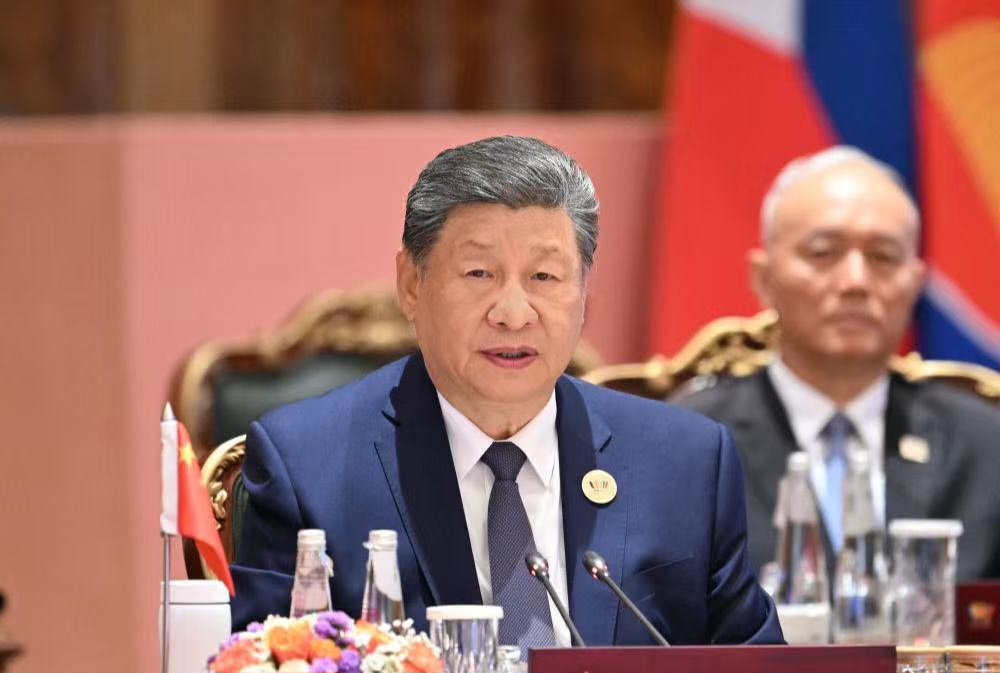








Chinese President Xi Jinping's speech at the online BRICS Leaders' Summit once again underscored China's resolve to lead global governance reform and deepen multilateral cooperation at a time when the world is undergoing profound changes. His ideas resonate with the realities of the evolving international order and strengthen China's position as a stabilizing and leading force in global governance.
Xi Jinping's speech focused on the Global Governance Initiative (GGI), proposed as a roadmap for creating a more equitable, inclusive, and effective international system. It builds on China's concrete actions in recent years in support of multilateralism, particularly through institutions such as the UN and the G20.
In response to the growing fragmentation of global politics, China consistently calls for a stronger role for the UN and the preservation of international law as the foundation of world order. The world is still recovering from the effects of trade wars and geopolitical tensions. In this context, Xi Jinping's call for greater representation and voice for countries of the Global South demonstrates an inclusive governance model in which developing economies are no longer marginalized but actively shape the agenda.
Xi Jinping's commitment to open and inclusive development also carries significant weight in this uncertain environment. While the speech acknowledged the persistence of protectionist tendencies, the primary focus was on defending the multilateral trading system, particularly the WTO, as the foundation of the global economic order.
This position is consistent with China's policy: globalization, while in need of reform, remains an irreversible trend. The Global Development Initiative (GDI) complements this vision by placing progress at the center of the global agenda. For example, China's support for the industrialization of Africa, infrastructure development in Central Asia, and agricultural modernization in Southeast Asia are concrete manifestations of this principle.
The Global Governance Initiative (GGI) is the fourth pillar of the comprehensive conceptual architecture Beijing has been building over the past decade. It logically follows and integrates the Global Development Initiative (GDI), the Global Security Initiative (GSI), and the Global Civilization Initiative (GCI). Understanding this interconnectedness is key to understanding China's worldview.
GDI focuses on the "hardware" of global stability. The initiative aims to accelerate the implementation of the 2030 Agenda for Sustainable Development by addressing poverty, healthcare, and infrastructure shortages.
GSI focuses on "security software." It proposes a path based on dialogue and partnership that opposes confrontation and military alliances and rejects Cold War thinking.
GCI promotes a new "cultural operating system" calling for respect for the diversity of civilizations and the overcoming of ideological prejudices.
Development cannot be sustainable without a secure environment, which cannot be achieved without mutual respect among civilizations. And all of this is impossible without a fair and effective governance system that ensures coordinated action. This quartet of initiatives represents China's comprehensive response to the question of how to build a better world. It is an ambitious attempt to offer a coherent, non-Western model. It would cement China's role not simply as a major economic power, but also as a leading voice in the Global South and a provider of global public goods.
At the core of China's proposals for global governance reform is a universal desire for peace. It is a deeply thoughtful appeal to the international community. It is an argument that to secure the future, it is necessary not only to remember the past but, more importantly, to work together to address the systemic injustices that have often led to conflict. It is a course toward building a world in which wars are eliminated and universal security and prosperity are permanent conditions.
Anna Pan, CGTN, Photo VCG