Translated with AI

































Participants of the Fourth International High-Level Conference on the International Decade for Action, "Water for Sustainable Development, 2018–2028," visited water, energy, and tourism facilities in Tajikistan, including the Rogun and Nurek hydroelectric power stations, the Varzob Gorge, the Hisor Fortress, Safed-Dara, and Dushanbe.
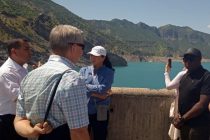
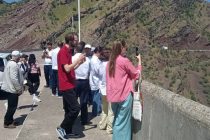
A correspondent from NIAT Khovar took part in a trip with guests to the Nurek Hydroelectric Power Station.
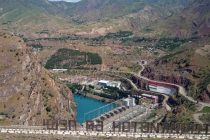
The Nurek Hydroelectric Power Plant is one of the largest energy facilities in Central Asia. The delegation learned about the plant's technical capabilities and its contribution to the country's energy system.
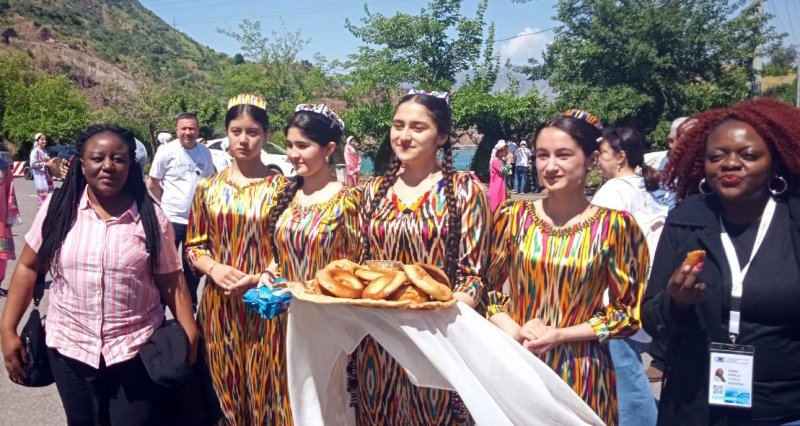
Guests of the international conference were greeted with bread and salt, dancing, and singing, demonstrating traditional Tajik hospitality.
The hydroelectric power plant's management briefed the tour participants on the history of its construction, its strategic importance to the republic's economy, and the equipment modernization being carried out at the plant. The foreign representatives were particularly interested in the scale of the hydraulic structure and the operation of the central turbine hall.
As noted, the first unit of the Nurek hydroelectric power station was commissioned in 1972, and the last unit of the station began operation in December 1979.
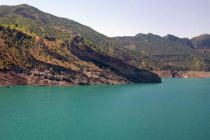
Nurek Hydroelectric Power Plant (HPP) employees informed the guests that the construction of the hydroelectric power plant created the Nurek Reservoir, covering an area of 98 square kilometers and with a capacity of 10.5 billion cubic meters. Of this volume, 4.5 billion cubic meters are used as freshwater reserves.
The reservoir is 70 kilometers long, up to one kilometer wide, and has an average depth of 107 meters. A spillway tunnel is located on the left side, and a drainage tunnel on the right.
Representatives of 50 nations of the world contributed to the construction of the Nurek Hydroelectric Power Station.
"The Nurek hydroelectric power plant, producing environmentally friendly electricity, has created a favorable foundation for the country's industrial development. Major industrial enterprises in Tajikistan—the Tajik Aluminum Smelter and the Yavan Chemical Plant—have been commissioned, and thousands of hectares of arid and fallow land in Yavan and Dangara have been transformed into fertile green spaces," the plant's representatives reported.
During the excursion, participants visited the main production facilities, learned about the power generation process, and learned about the modern technologies being implemented as part of the hydroelectric power plant modernization program.
The guests noted the high level of organization of the work and emphasized the importance of developing green energy in the context of global climate change.
According to representatives of the Nurek Hydroelectric Power Plant, such events contribute to strengthening international cooperation, sharing experiences, and drawing attention to Tajikistan's energy potential.
One of the tour participants, Katuk Oswell, said that the Nurek hydroelectric power station is impressive in its scale, beauty and engineering solutions.
"This place combines the power of modern energy with stunning natural beauty. The Nurek Hydroelectric Power Station can rightfully be considered one of the region's most important tourist attractions," he noted.
The participants also emphasized that visiting such sites allows them to become more familiar with Tajikistan's achievements in water and energy resources and assess the country's potential for ecological and industrial tourism.