Translated with AI














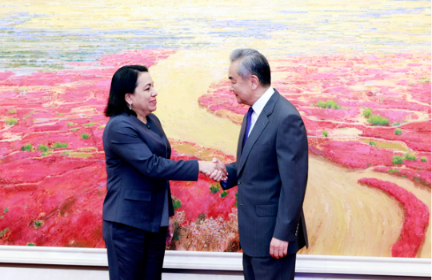





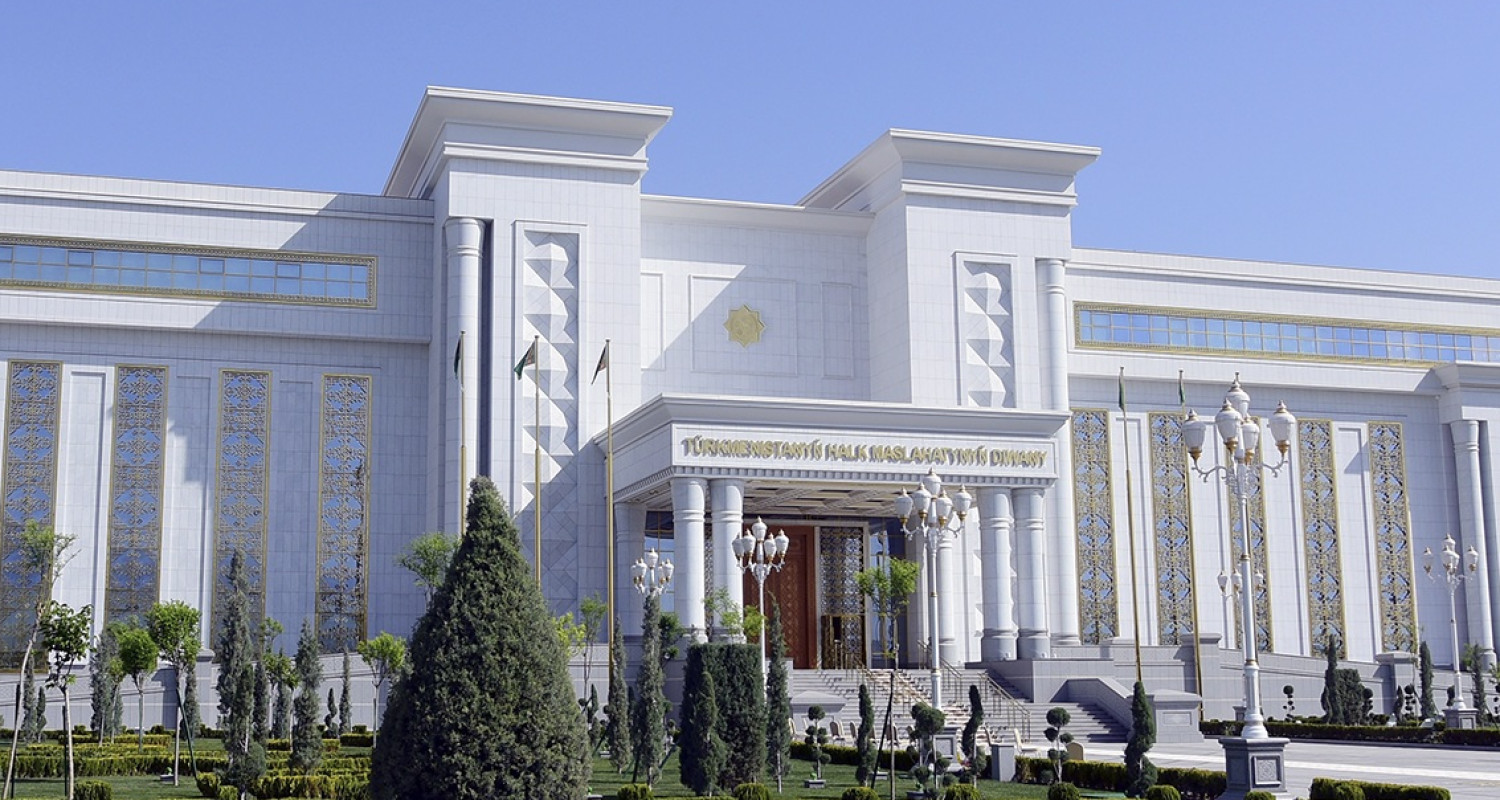
Thanks to a well-considered policy, successfully implemented under the visionary leadership of President Serdar Berdimuhamedov, Turkmenistan's position on the global political and economic stage is steadily strengthening. In this regard, our country's interactions with members of the global community and international organizations are becoming increasingly active.
During his visit to the United States, the National Leader of the Turkmen people, Chairman of the Halk Maslahaty of Turkmenistan Gurbanguly Berdimuhamedov, gave an interview to Rizwan Khan, host of the Al Arabiya TV channel with an audience of millions.
During the conversation, the National Leader of the Turkmen people outlined the main goals of his visit to the United States, described the current state and prospects for the development of bilateral partnership, and also discussed in detail the priority areas of Turkmenistan's domestic and foreign policy.
The interview between the Chairman of the Halk Maslakhaty of Turkmenistan and the host of a popular television channel was clear evidence of the global community's keen interest in Turkmenistan, as well as the significance of our country's initiatives and its steadily growing international standing.
What are the main purposes of your visit to the United States of America?
I am very pleased that our meeting is taking place at the beginning of the holy month of Ramadan. I sincerely hope that your prayers for the well-being of humanity, for peace, and for a peaceful and happy life throughout the world, will be heard and accepted by the Almighty. First of all, I would like to thank our American partners for the excellent organization of this visit, its rich program, and the hospitality they have shown.
I would like to highlight the growing momentum of the traditionally friendly and constructive cooperation between Turkmenistan and the United States of America, based on mutual benefit. Bilateral relations encompass virtually all key areas, including politics, economics, culture, education, science, and sports. We attach great importance to exchanging views on the prospects for our cooperation and further strengthening our joint efforts.
We clearly see the real opportunities that are now opening up and remain committed to constructive dialogue across all areas. This approach is driven by a mutual understanding of the priorities of the Turkmen-American partnership.
We highly value the current level and state of bilateral political cooperation. The United States was among the first to recognize our country's independence and establish diplomatic relations. The United States, as always, respects and positively views Turkmenistan's permanent neutrality.
The United States is an important trade and economic partner for Turkmenistan: a solid track record has been established in this area, concrete results have been achieved, cooperation is expanding, and mutual trade turnover is rapidly increasing.
Overall, we view the current visit to the United States of America as a serious impetus to the consistent development of multifaceted cooperation with a long-term focus.
We know that your country is rich in natural resources, including energy. What is Turkmenistan's strategy in this area?
You're absolutely right. Turkmenistan is a country with truly colossal hydrocarbon reserves. Moreover, in terms of proven and confirmed natural gas reserves, we rank fourth in the world.
Deeply aware of the significance of this situation in today's geo-economic conditions, Turkmenistan is building its energy strategy, including in the international market, on a very responsible and thoughtful basis.
The primary goal here is to ensure reasonable diversification of energy flows, their balanced combination, and the security and reliability of supplies. At the political and international legal levels, we are building energy cooperation based on the requirements of contemporary global development and mutual benefit. In this regard, Turkmenistan initiated a broad multilateral dialogue on energy security within the United Nations and has sponsored a number of successive General Assembly resolutions. The first such resolution was approved in 2008, and since then, the issue of energy security has acquired a qualitatively new character, based on the interests of energy producing countries, transit countries, and consumers.
In the political sphere, we are translating issues of diversifying energy flows and ensuring their security into practical terms. Naturally, this work is carried out taking into account geoeconomic realities and development trends.
For example, at one time, the bulk of our natural gas exports was oriented toward Russia, where up to 40 billion cubic meters of gas were supplied annually. Currently, China is our main consumer, with supply volumes remaining at roughly the same level. Furthermore, by pursuing a policy of diversification, our country has the opportunity to supply gas within the region through a swap arrangement—to Iran and Azerbaijan, as well as to Kazakhstan, Uzbekistan, and other interested countries.
Our country is currently implementing one of the largest international projects: the Turkmenistan–Afghanistan–Pakistan–India (TAPI) gas pipeline. Construction of the first phase of TAPI, known as "Arkadagyň ak ýoly," continues in Afghanistan. This project, which enjoys international support, including from the United States, has enormous potential for meeting the growing energy needs of South Asian countries and offers promising access to developing markets in the Asia-Pacific region and the Middle East. TAPI is also of paramount importance for political stability and economic prosperity, and offers investment appeal.
I would like to especially emphasize that the TAPI project is open to all interested companies. We hope that our American partners will also appreciate the prospects of participating in it.
What is the future of the Trans-Caspian Gas Pipeline?
We view this project as one of the most important areas for diversifying energy flows and ensuring energy security on the continent. Turkmenistan is approaching it seriously, attentively, and constructively. At the same time, international legal issues must be resolved, particularly the delimitation of the Caspian Seabed. A Turkmen-Azerbaijani working group was recently established to address this issue. We hope its work will yield significant practical results.
You touched on the topic of trade and economic cooperation between Turkmenistan and the United States. What is the current state of affairs in this area?
― Cooperation with the United States of America is developing consistently and is built on a mutually beneficial and equal basis.
Over the years, hundreds of economic projects have been implemented or are in the implementation phase in Turkmenistan with the participation of American companies, the total value of which approaches 45 billion US dollars.
Major American companies have long been successfully operating in the Turkmen market, spanning key sectors such as fuel and energy, transportation, electric power, software, agriculture, food processing, and other industries. We welcome and highly value this cooperation and will continue to encourage and support it. Among these companies, I would highlight John Deere, General Electric, Case, Boeing, Coca-Cola, Sikorsky, and Caterpillar. This list is far from exhaustive.
I would like to especially note the important role of the Turkmen-American Business Council, established in 2008 on our initiative.
Over the years, this format of interaction has evolved into a significant and effective tool for bilateral partnership. It is invaluable for building, expanding, and strengthening contacts between the business communities of the two countries and jointly exploring promising areas of cooperation. Today, the Business Council is an effective platform, paving the way for the implementation of major projects in various segments of our country's economy. The Business Council has earned respect among business circles, and its opinions and recommendations are sought by government agencies in both Turkmenistan and the United States.
At the same time, it's clear that mutual potential can be exploited much more broadly. This primarily concerns the diversification of Turkmenistan's economy, the widespread introduction of high-tech manufacturing, and the implementation of large-scale national and international infrastructure projects.
We see tremendous potential in attracting American investment and technology to develop innovative and knowledge-intensive industries in Turkmenistan. We also note significant potential in areas such as electric power, computer and logistics services, education, and professional development.
What other areas of Turkmen-American cooperation do you consider promising?
― Culture, science, education, sports – in general, all social and public spheres in which there is already rich and useful experience of interaction.
Projects implemented through U.S. State Department programs play a key role here. One example is the Ambassador's Fund for Cultural Preservation (AFCP), which has been active in Turkmenistan since 2001. To date, the Fund has supported 30 projects in our country.
There's a huge interest in English in Turkmenistan—it's now taught in all public schools across the country. Four higher education institutions offer instruction entirely in English.
In the recently built new "smart" city of Arkadag, a specialized English-language school is planned, where instruction will be based on modern educational methods and standards. It is also important to note that the educational process will be focused on providing students with the opportunity to continue their education at prestigious US universities, such as Harvard, MIT, and Columbia University. This truly opens up broad horizons for the ongoing activities of the educational and scientific communities of Turkmenistan and the US.
Speaking of culture, it's worth noting the established cooperation with the Metropolitan Museum of Art in New York. I believe it's essential to expand such collaboration. Turkmenistan is a country with an ancient and extremely rich history and culture.
We, in turn, have shown a great interest in American cinema, literature, and music. In recent years, we have implemented various educational programs, organized visits by professors, lectures, and master classes, and facilitated archaeological expeditions to our country for excavations. The US State Department organizes concerts by American music and dance groups, and organizes summer and winter screenings of American films, which have now become a tradition. We are ready to continue and expand this cooperation, as well as to present Turkmenistan's culture in the United States on a larger scale.
Turkmenistan is located in a strategically important region. How does this influence your country and its foreign policy and economic priorities?
We are fully aware of our country's geopolitical and geoeconomic position. It allows us to serve as a bridge connecting Europe and Asia, and, through the Caspian Sea, to access the Black and Mediterranean Seas, and the Middle East.
It is this strategic position that determines Turkmenistan's most balanced and considered approach to international cooperation and, in general, our foreign policy concept, the foundation of which is permanent neutrality.
Based on the norms of neutrality, we work to ensure peace and conduct preventive activities in the region, advancing an agenda of peace and trust in the international arena. At Turkmenistan's initiative, the United Nations declared 2025 the International Year of Peace and Trust, marking a significant milestone in global politics. Last year, the main high-level event was a major international forum in Ashgabat, attended by representatives of 66 states, 30 international organizations, and 16 presidents and heads of government. Turkmenistan utilizes its geostrategic position and neutral status exclusively for constructive and constructive purposes, namely, maintaining stability, preventing conflicts, stimulating economic and trade relations, and ensuring the successful integration of the Central Asian and Caspian regions into global economic and political processes.
What results do you expect from the meetings here in Florida?
We intend to use our presence here to establish direct contacts between the state of Florida and Turkmenistan, as well as to pool strengths and opportunities that can be leveraged for mutual benefit. This includes reaching specific agreements in the areas of business cooperation, investment, and trade.
We also want to study the state of Florida's experience in building sports facilities and organizing sports activities in general. This applies specifically to golf. In 2017, Turkmenistan opened its first golf club, covering over 70 hectares including its courses.