Translated with AI














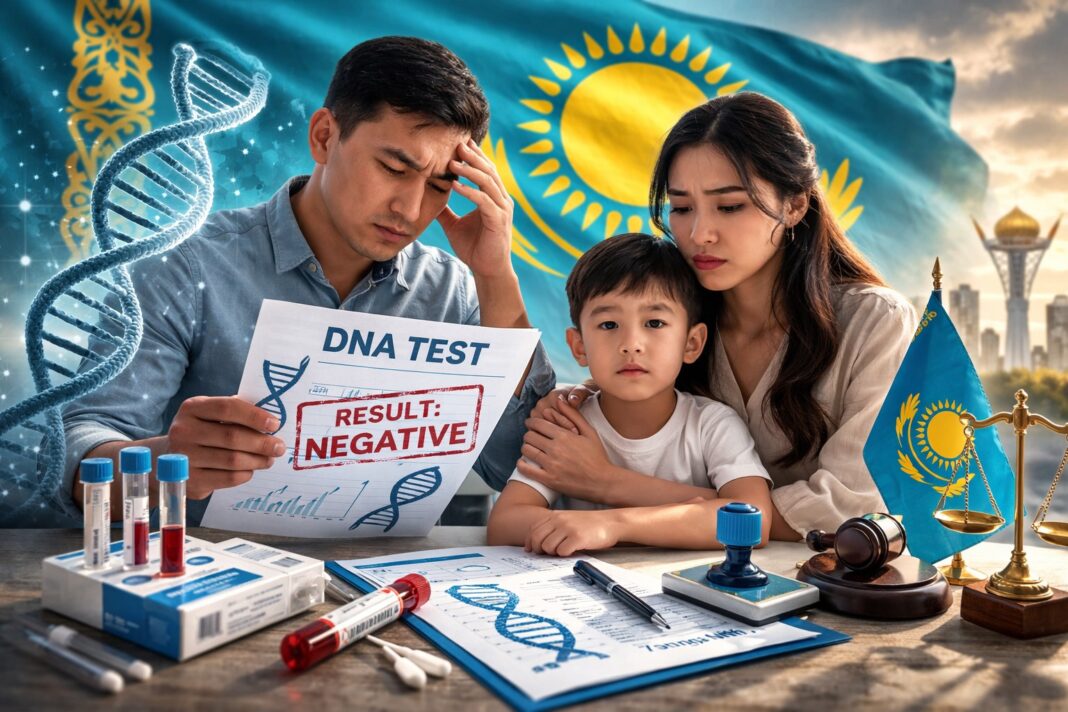
In Kazakhstan, a publication claiming that approximately 30 percent of men undergoing DNA testing discover they are not biologically related to children they believed to be theirs has sparked widespread public outcry. According to the data, three out of ten men who take the test discover they are raising a child fathered by another man. The information was disseminated on inbusiness.kz and sparked a heated public debate.
One of the central issues was the legal one. The discussion focused on what legal mechanisms are available for men who are officially registered as the fathers of a child and who, years later, discover they are not biologically related. Lawyer Saiken Aisin provided clarification on this matter.
According to him, the basic norms are enshrined in the family legislation of the Republic of Kazakhstan. Specifically, in accordance with Article 51 of the Marriage and Family Code, a record of parents in the civil registry can only be challenged in court. The court does not make decisions based on private DNA tests. A state genetic test is mandatory, and only based on its official conclusion can the court rule on changing the paternity record. The corresponding court order is then sent to the civil registry office for amendment.
The right to initiate the process belongs to the man who doubts the relationship, the child's mother, persons actually fulfilling parental responsibilities, the child himself upon reaching adulthood, as well as legal guardians or trustees.
A separate restriction applies to cases where the man initially knew of the lack of biological relationship. In such a situation, the court will dismiss the claim. A similar dismissal is possible if the child was born using assisted reproductive technologies.
The issue of alimony is receiving particular attention in the public debate. According to the lawyer, once a court decision enters into legal force, the obligation to pay future alimony ceases. However, amounts paid prior to the decision are non-refundable. According to Article 172 of the Family Code of Kazakhstan, alimony cannot be reclaimed, except in cases stipulated by the Civil Procedure Code, or if the payment agreement is invalidated due to fraud, threats, or violence.
As the expert notes, this rule is due to the fact that the funds paid had already been used for the child's maintenance, and their return would be contrary to the principles of protecting the interests of minors.
The lawyer also pointed out that, theoretically, the man could file a claim for compensation for moral damages, citing emotional suffering and damage to his reputation. However, judicial practice in such cases remains complex and ambiguous.
Social media users are actively discussing the situation, raising questions about the legal balance and the possible classification of such actions as fraud. The discussion is accompanied by statements calling for further analysis of current legislation and mechanisms for protecting the rights of all parties.