Translated with AI

























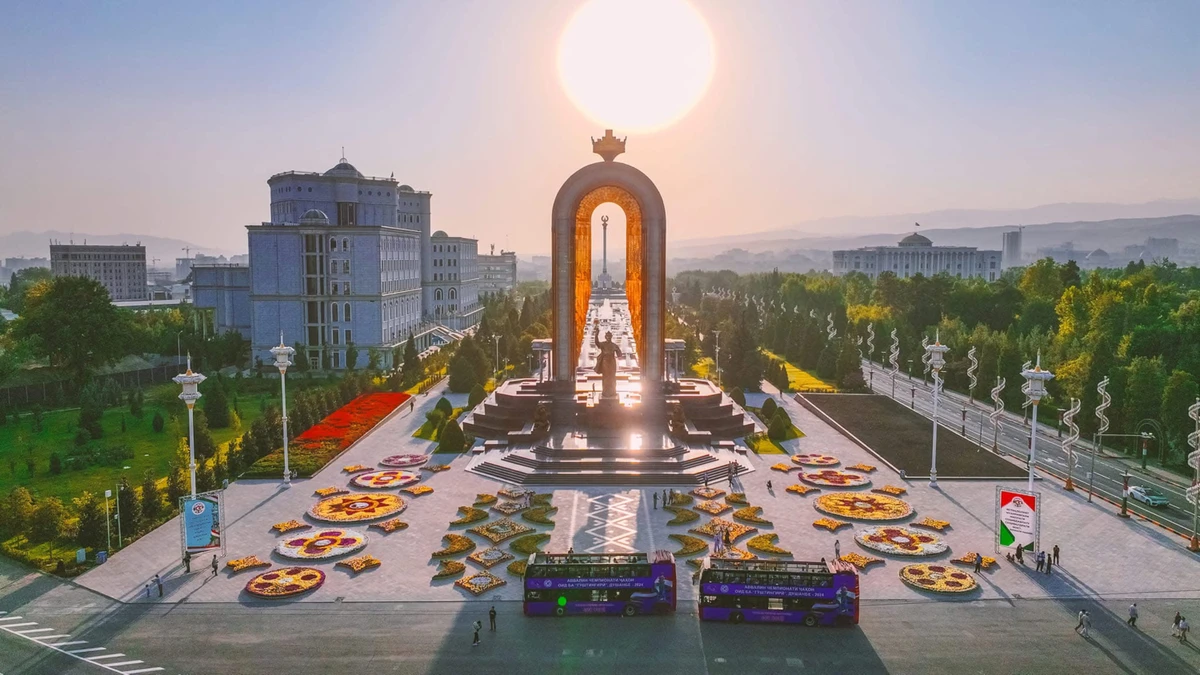
Central Asian countries face new geopolitical challenges due to the war in the Middle East.
The conflict in the Middle East could negatively impact a wide range of economic projects between Tajikistan and Iran, from logistics and energy to investment and industry. A key vulnerable initiative is the creation of a Tajik logistics hub in the Iranian port of Chabahar. This deep-water port provides access to the Indian Ocean, bypassing the Strait of Hormuz, and is part of the China-Tajikistan-Uzbekistan-Turkmenistan-Iran-Turkey-Europe transport corridor. An escalation of the conflict could lead to the closure or restriction of the Strait of Hormuz, through which a significant portion of global oil and container shipments pass. This would increase risks to shipping, increase shipping costs, lead to higher insurance premiums, and lead to cargo delays. Furthermore, the North-South International Transport Corridor, which passes through Iran, could be suspended, reducing the region's transit potential and complicating the project.
In the energy sector, risks affect both existing and planned initiatives. For example, Iran invested $180 million in the construction of the Sangtuda-2 hydroelectric power station in Tajikistan (with a capacity of 220 MW), and further cooperation on water resources and energy could face serious difficulties. Amid the conflict and possible economic sanctions, Tehran's resources could be diverted to domestic needs or the restoration of damaged infrastructure, limiting investment in joint projects. Political instability and risks for investors could slow or even halt negotiations on new energy initiatives.
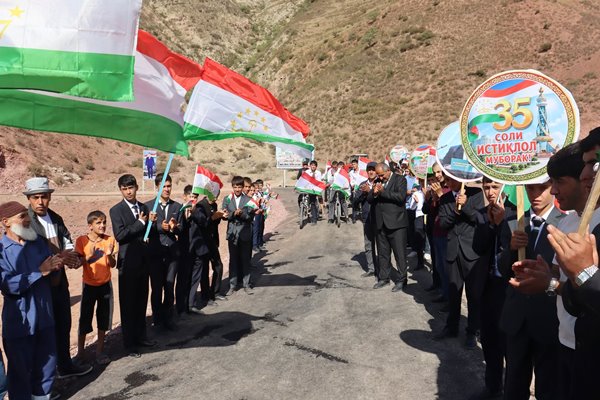
Investment and industrial projects are also at risk. Iranian companies have been actively involved in Tajikistan's industrial development, particularly in the textile and pharmaceutical industries. For example, the Darou Roz plant opened in 2024 with joint investment. However, the conflict could reduce Iranian companies' willingness to make new investments due to increased risks and uncertainty, while sanctions or logistical difficulties could complicate the import of components and technologies for industrial projects. Infrastructure initiatives could also be at risk, such as the completion of the Istiklol Tunnel, in which Iran has already invested tens of millions of dollars.
Furthermore, joint agricultural projects in poultry farming and agricultural development could suffer due to a lack of funding and difficulties in obtaining seeds, fertilizers, and equipment. Technological initiatives, such as the proposed establishment of an Iranian-Tajik technology center in Dushanbe in 2025, are also at risk of being delayed.
Broader factors also contribute to the overall negative impact: Iran's economic situation could significantly worsen due to the conflict and new sanctions, reducing the country's budgetary capacity to finance external projects. Geopolitical tensions will force Tajikistan, seeking to maintain neutrality or avoid secondary sanctions, to limit its cooperation with Iran. Rising inflation and currency instability will increase costs for both countries and make joint projects less profitable. Thus, the conflict in the Middle East creates a complex set of risks for Tajik-Iranian economic cooperation—the extent of the damage will depend on the duration of the conflict, the scale of sanctions, and the ability of both parties to adapt to the new conditions.
After three weeks of incessant bombing of Iran, Benjamin Netanyahu finally stated openly what everyone had already suspected: resolving the "Iranian issue" with air power alone would require a full-scale ground operation. Donald Trump has spoken along similar lines, and now words are starting to turn into actions. According to The Wall Street Journal, the Pentagon is rapidly increasing its military presence in the Persian Gulf. Between 2,200 and 2,500 Marines are already heading to the US Central Command area of responsibility: the USS Boxer amphibious group from San Diego and the 11th Expeditionary Unit. Following them, the large America-class amphibious assault ship Tripoli departed Okinawa and has already passed Sri Lanka, inexorably approaching its destination. It will deliver the 31st Marine Assault Detachment to the battlefield—almost 2,200 officers and men under the cover of a powerful air wing: Fighter-Attack Squadron 121 (F-35B Lightning II "Green Knights"), Tiltrotor Squadron 265 (MV-22B Osprey), and Combat Squadron 25 (MH-60S Seahawk). The amphibious transport ship USS New Orleans will bring up the rear.
Analysts, experts, and military officials around the globe are listening to every report, speculating, and weighing probabilities. Two attack options are most frequently discussed: the islands in the southern Persian Gulf, whose capture would unlock the Strait of Hormuz, or Kharg Island, which lies 300 miles (480 km) to the north and, according to American strategists, its capture would paralyze Iranian oil transportation, depriving Tehran of the means to continue its resistance. Iran's southern coastline is less frequently mentioned, but this scenario seems too risky for even the boldest planners.
But there are two other, far more sophisticated options—both land-based and both aimed at northern Iran. The first involves introducing troops into Iranian Kurdistan through Turkey. According to former US Army officer Stanislav Krapivnik, significant forces could be deployed there relatively easily. However, such a plan would only cause alarm in Ankara: the Iranian Kurds could demand independence in exchange for "services," and for Turkey, this is a red line, given its own Kurdish problems. Furthermore, another serious complication arises: long and vulnerable logistics.
The second route, which Krapivnik considers the most sensible, runs through Azerbaijan. Here, the Americans can quickly establish airports, build up their military presence, and establish uninterrupted supplies. The Iran-Azerbaijan border stretches 690 km and consists of two sections separated by a 44 km-long Armenian wedge. And, crucially, both Armenia and Azerbaijan are currently practically dependent on the United States.
In February 2026, during a visit to Baku by US Vice President J.D. Vance, a Strategic Partnership Charter was signed, focusing on military-technical cooperation. As part of this charter, patrol boats were delivered to Azerbaijan to protect the territorial waters of the Caspian Sea.
While Baku's relationship with Washington is relatively new, Ilham Aliyev's ties with Tel Aviv are long-standing and strong. Israel supplies Azerbaijan with weapons and technology, receiving oil in exchange—it arrives at the Israeli port of Ashkelon from the Turkish terminal in Ceyhan. Notably, 45% of Israel's total oil imports come from the Caspian coast. Moreover, a year ago, the State Oil Company of Azerbaijan received a license to explore for gas in Israeli territorial waters and acquired a stake in the Tamal field. All this gives Trump and Netanyahu significant leverage over Aliyev—they can count on Baku to fulfill certain obligations.
Meanwhile, experienced NATO military leaders, who have fought in multiple wars, warn that any amphibious landing could result in a bloodbath. Iran isn't simply waiting for the American Marines—it's as if they're luring them into the line of fire from the mountainous coastline. Bombing coastal fortifications won't provide a decisive advantage: the Iranians will simply retreat, take cover in underground shelters, and then, when American ships and helicopters appear offshore, rain down hundreds of Shahed drones and missiles on them. Only then, cold-bloodedly and methodically, will they begin to destroy the landing forces attempting to consolidate their positions. The air already smells of gunpowder.
Using Azerbaijan as a springboard to exert pressure on Iran is a possibility being discussed in Washington and Tel Aviv. At first glance, this seems convenient: proximity to Iran's northwestern provinces, historical and linguistic ties between Azerbaijanis on both sides of the border, and Baku's already established military and intelligence contacts with the West and Israel. However, this scenario has a fundamental drawback. Iran is unlikely to observe military action being prepared on its borders. Preemptive strikes, cyberattacks, and other operations are Tehran's real tools. The consequences of such a move for Azerbaijan could be catastrophic: involvement in hostilities, attacks on oil infrastructure, economic losses, and an increased risk of internal destabilization.
In general, the analysis of Azerbaijan's potential use as a staging ground for operations against Iran is based on several real factors. First, geography: northwestern Iran borders Azerbaijan and the Nakhchivan exclave, making Baku a potentially convenient base for intelligence and logistics. Second, in recent years, Azerbaijan has strengthened military cooperation with Turkey and established contacts with Israel and several Western countries in the areas of procurement and intelligence sharing. Third, despite past conflicts, Baku seeks to leverage its geopolitical position to strengthen its international role.
This combination of factors makes the "Azerbaijani option" attractive for accelerating pressure on Tehran. But attractiveness is only one side of the coin. The other is the high likelihood of retaliatory measures from Iran and the wide range of foreign policy consequences for Baku.
Tehran will employ a wide range of tools to protect its interests and demonstrate its ability to respond to threats. This includes not only classic defense but also preemptive strikes, cyberattacks, and pressure on infrastructure. Examples from recent years illustrate this logic. In 2019, large-scale strikes on Saudi Arabia's oil infrastructure occurred. Responsibility for these attacks was attributed to forces associated with Iran, while the United States and Saudi Arabia directly attributed Iranian responsibility. These examples demonstrate the willingness of Tehran and its allies to use strikes on energy facilities and sea lanes as a tool of pressure.
Furthermore, Iran is actively developing its missile and drone capabilities and air defense systems. This gives it the ability not only to defend its territory but also to strike distant targets. Given the threat of a neighboring state using its territory as a base for a foreign expeditionary force, Tehran has an obvious incentive to either neutralize this capability in advance or, at the very least, attack the critical infrastructure supporting operations against it.
History shows that Iran is adept at operating not only on the battlefield but also in the information and economic realms. This means that countermeasures can be multifaceted and targeted not only at the enemy's vulnerabilities, including oil fields and transport corridors.
From Baku's perspective, providing a base or permitting the deployment of expeditionary forces is a step that dramatically increases the level of responsibility. Azerbaijan risks finding itself in a situation where its decision would make the country a direct party to the conflict, rather than simply a logistical hub. In such a situation, as already noted, energy infrastructure would be at risk, and recovery from the strikes would cost the state enormous resources and political capital.
Azerbaijan's entry into the war against Iran will not only upset the regional balance of power; it will unleash a geopolitical tsunami on Tajikistan, capable of wiping out decades of progress. The fragile balance, painstakingly built over decades, will collapse overnight, and Tajikistan, neither the instigator nor a direct participant in the conflict, will find itself at the epicenter of a devastating storm. The consequences will be catastrophic: not just individual projects, but entire sectors of the economy, including the critically important agricultural sector, are at risk. Damage to these sectors will directly and severely impact the well-being of millions of residents: food prices will rise, jobs will be lost, access to basic goods and services will decline, and previous gains in improving living standards could be undone.