Translated with AI


























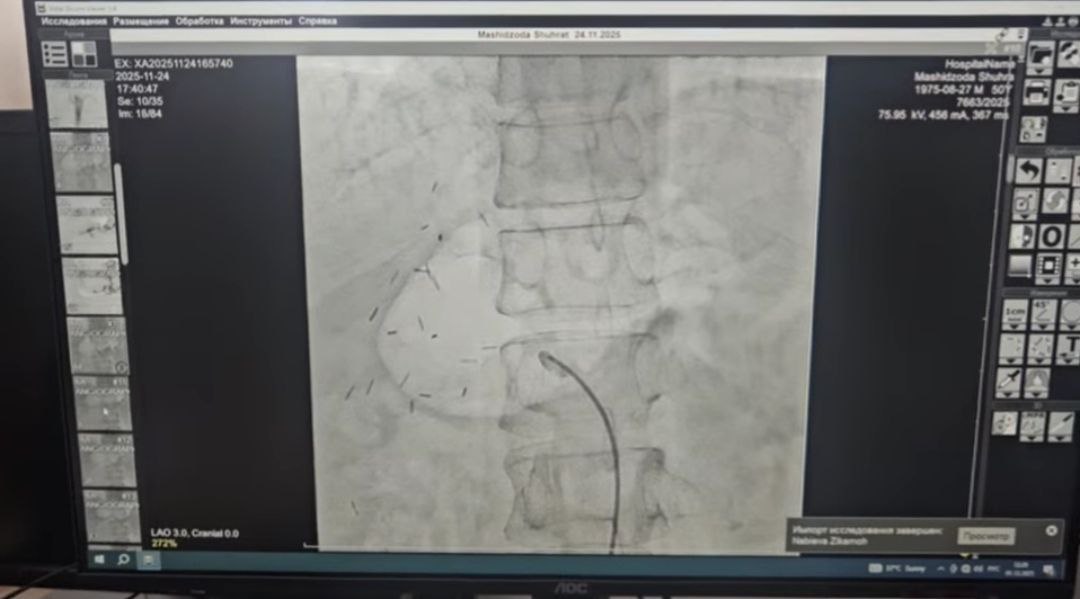
At the State Institution "Republican Scientific Center for Cardiovascular Surgery" of the Ministry of Health and Social Protection of the Republic of Tajikistan, for the first time in the country, a patient undergoing liver transplantation underwent successful splenial artery embolization. This was reported by the press service of the Ministry of Health of Tajikistan.
According to the center's endovascular surgeon, Jamshed Rakhmonov, who performed the operation together with his colleagues, blood circulation in the patient's hepatic artery significantly improved after the procedure.
A 50-year-old resident of Dushanbe, who was diagnosed with decreased blood flow in the hepatic artery during a follow-up examination 20 days after a liver transplant, was referred to the center for further evaluation. According to the specialist, this is the first such complication in a liver transplant patient in the country, and there is no previous experience treating such cases.
The center notes that, thanks to the conditions created, the availability of modern equipment, and the accumulated experience of Russian doctors gained in various countries around the world, the complication was promptly eliminated and the patient's condition stabilized.
A modern angiographic study revealed splenic artery steal syndrome: a dilated splenic artery was taking away a significant volume of blood flow, disrupting the normal blood supply to the liver.
Following a discussion at a specialist council, a decision was made to perform splenial artery embolization. The distal portion of the dilated vessel was successfully occluded using spherical emboli measuring 900–1200 µm. Repeat angiography fully confirmed the restoration of blood flow in the hepatic artery, demonstrating the effectiveness of the intervention. The surgery was performed without an incision.
The patient was discharged home a day after the procedure, his condition is assessed as good.
According to Jamshed Rakhmonov, this operation was the first successful treatment of this complication in Tajikistan and opens up new possibilities in the treatment of complex vascular disorders after liver transplantation.