Translated with AI























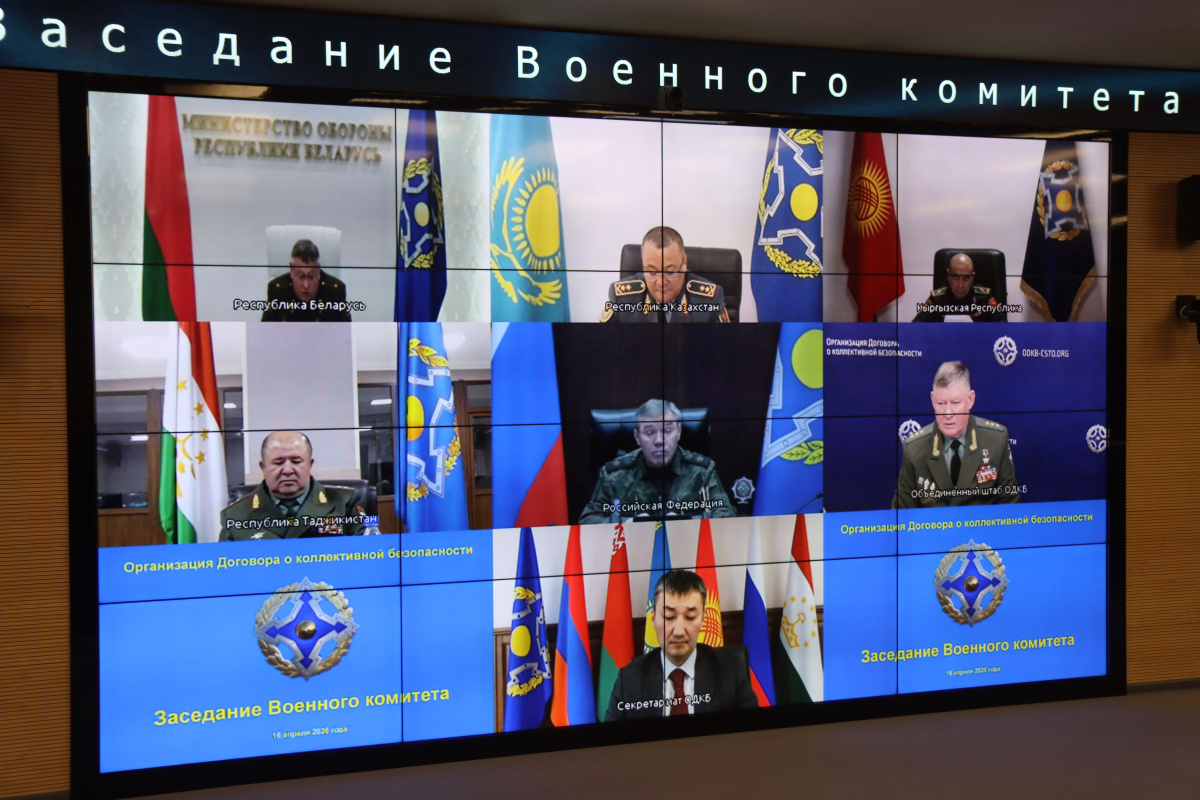
The 24th meeting of the CSTO Military Committee, chaired by Chief of the General Staff of the Russian Armed Forces and First Deputy Minister of Defense of the Russian Federation, General of the Army Valery Gerasimov, was held via videoconference. The meeting focused on developing military cooperation among the organization's member states, the organization's press service reported.
The meeting was attended by senior military leaders from the member countries. Among them were Major General Pavel Muraveyko, Chief of the General Staff of the Armed Forces of the Republic of Belarus and First Deputy Minister of Defense; Lieutenant General Kanysh Abubakirov, First Deputy Minister of Defense and Chief of the General Staff of the Armed Forces of the Republic of Kazakhstan; Major General Tariel Otonbaev, Chief of the General Staff of the Armed Forces and First Deputy Minister of Defense of the Kyrgyz Republic; and Lieutenant General Bobojon Saidzoda, Chief of the General Staff of the Armed Forces and First Deputy Minister of Defense of the Republic of Tajikistan.
In addition, the Chief of the CSTO Joint Staff, Colonel General Andrei Serdyukov, and the organization's Deputy Secretary General, Mirlan Turgunbekov, also took part.
Participants discussed the organization's priority areas of activity in the military sphere, proposed by the Russian Federation for its chairmanship in 2026, as well as measures for their implementation.
Particular attention was paid to the analysis of challenges and threats to military security in the collective security regions. Lieutenant General Khasan Kaloyev, First Deputy Chief of the Joint Staff and Chief of the Center for Planning the Use and Training of Troops (Collective Forces) of the CSTO, presented the relevant information.
The meeting also included a presentation on the results of joint training of command and control bodies and formations of forces and assets of the collective security system for 2025 and the objectives for 2026. This presentation was delivered by Colonel General Andrei Serdyukov, Chief of the CSTO Joint Staff.
Participants discussed issues related to improving the command and control system for the components of the collective forces. Lieutenant General Anatoly Yakovlev, Head of the CSTO Troop Employment Planning Directorate and Deputy Head of the Joint Staff Troop Employment and Training Planning Center, presented the relevant information.
In addition, a report was heard from Lieutenant Colonel Temirlan Musapirov, Head of the Peacekeeping Department of the International Cooperation Department of the Ministry of Defense of the Republic of Kazakhstan, dedicated to the experience of the participation of the Kazakh armed forces in the United Nations peacekeeping mission.
Following the discussions, the Military Committee recommended that the general staffs of the participating countries, in conjunction with the Joint Staff, continue to work on increasing their combat potential. Specifically, this includes incorporating unmanned aerial systems, electronic warfare, and air defense units into their national contingents.
It was also recommended to incorporate the experience of using troops in modern armed conflicts into the joint training system and to continue the practice of demonstrating the capabilities of modern and advanced weapons, military and special equipment with the involvement of defense industry enterprises of the CSTO countries.
Summing up the meeting, Valery Gerasimov stated that the participants had thoroughly examined the implementation of the organization's priority areas of activity, proposed by Russia as part of its chairmanship this year.
He emphasized that special attention was paid to organizing joint operational and combat training, taking into account the specifics of modern armed conflicts. The main training activities in 2026 will be joint exercises to be held in Russia, Belarus, and Kazakhstan.
In conclusion, it was noted that the meeting was held in a constructive manner, with an emphasis on the practical component, and its results were aimed at strengthening the military security of the organization's member states.