Translated with AI
























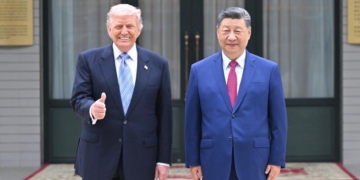








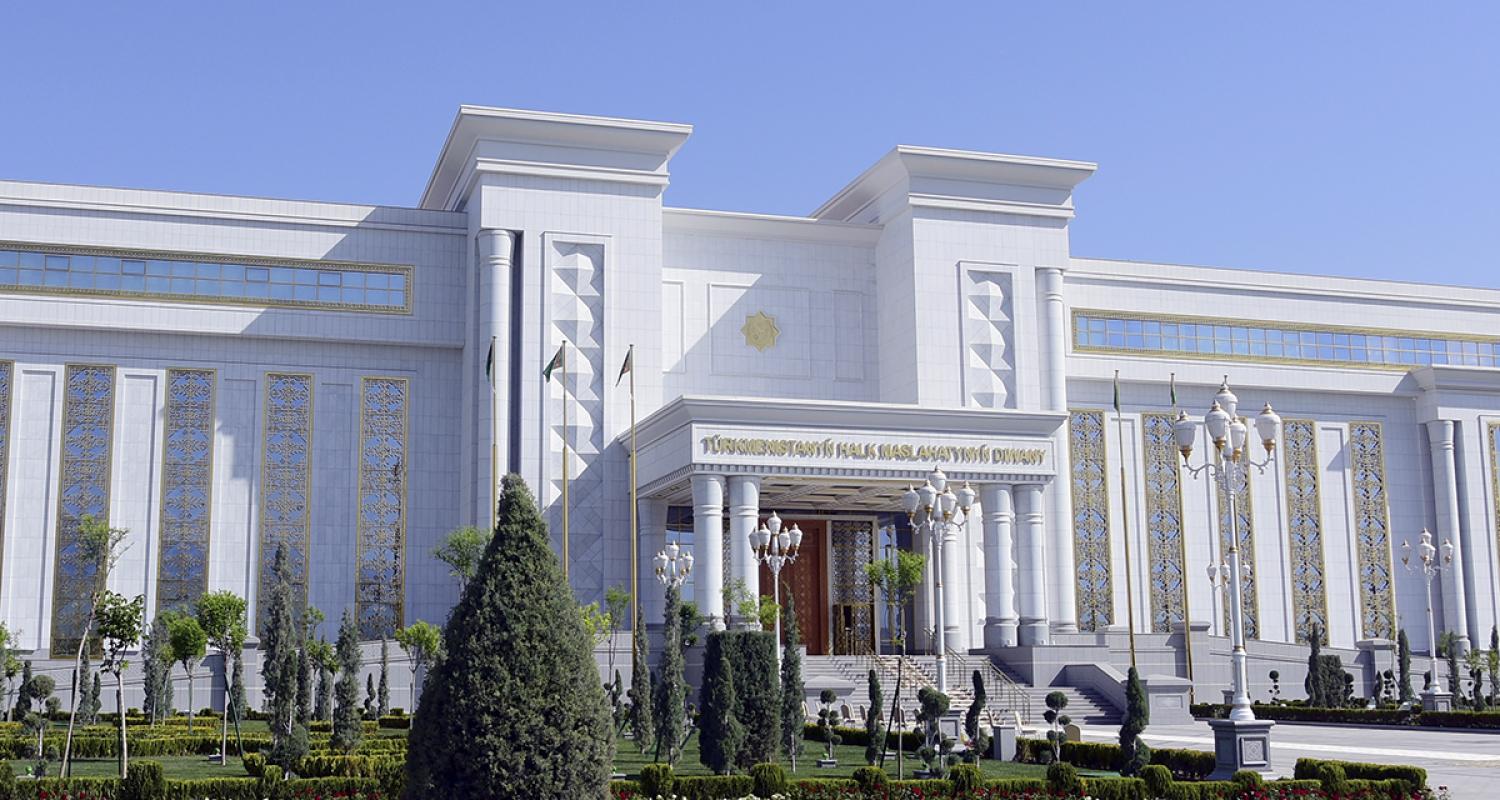
During his visit to the Republic of Austria, National Leader of the Turkmen People and Chairman of the Halk Maslahaty of Turkmenistan Gurbanguly Berdimuhamedov met with the Agency's Director General, Rafael Grossi, at the headquarters of the International Atomic Energy Agency (IAEA) to discuss the peaceful uses of nuclear energy. Following the meeting, representatives of our country's media addressed a number of questions to Hero Arkadag.
Hero Arkadag, answering journalists' questions, outlined his thoughts and views on the recent situation in the territories adjacent to our region.
As is well known, the situation in the Middle East, a neighboring region for Turkmenistan, remains extremely difficult. Furthermore, the possibility of escalating tensions, including the use of weapons of mass destruction, cannot be ruled out. What could be the consequences of such a situation?
The current developments are causing serious concern for Turkmenistan. Our concerns are well-founded, as the vast Middle East region borders Turkmenistan. Therefore, events there could have a negative impact on neighboring countries and the entire region.
Turkmenistan is a neutral state. Our position is based on resolving conflicts and disputes through peaceful, political, and diplomatic means. This is a fundamental point of view that has never changed and will not change.
At the same time, over the past three decades, Turkmenistan has been actively participating in multilateral efforts aimed at reducing military activity and eliminating the use of force as an instrument of foreign policy.
This primarily concerns weapons of mass destruction. I want to openly state that Turkmenistan categorically supports the ban on weapons of mass destruction.
Our country is a party to most of the major international legal instruments on arms control, including the Treaty on the Non-Proliferation of Nuclear Weapons and the Comprehensive Nuclear-Test-Ban Treaty.
Moreover, Turkmenistan is an active participant in the Central Asian Nuclear-Weapon-Free Zone Treaty. For us, this legal status is not simply a political or military-technical matter, but, first and foremost, a matter of morality, humanism, and an awareness of our responsibility to the present and future generations.
As a physician who has dedicated decades of public service to protecting the health and lives of current and future generations, I want to emphasize that weapons of mass destruction will lead to irreparable negative consequences. I know that if used, they will have a profound impact on the population, the environment, and all aspects of the socioeconomic development of large regions. This is an issue that requires a profound and utmost responsibility. Underestimating this, treating it superficially and thoughtlessly, is an extremely dangerous situation that must not be allowed to happen.
It has become known that during the current Middle East conflict, military strikes were also carried out on territories in the Caspian region. What is your position, and Turkmenistan's position, on this situation?
"It's important to understand that for over thirty years, Turkmenistan, together with the Caspian littoral states of Azerbaijan, Kazakhstan, Iran, and Russia, has consistently and sincerely built Caspian cooperation. Over these years, we have coordinated our actions and jointly achieved success in various areas of partnership."
As a result, in 2018, all littoral countries signed the fundamental document – the Convention on the Legal Status of the Caspian Sea. The Convention clearly states that the Caspian Sea is a zone of peace, harmony, and good-neighborliness, and that the deployment of armed forces or any military activity by non-littoral states is prohibited there. This definition is a fundamental factor in regional security.
Therefore, it is only natural that Turkmenistan is concerned about military strikes on the territory of a neighboring Caspian state. Our country completely rejects such actions. Military action in the Caspian region is absolutely unacceptable.
In this regard, Turkmenistan, after carefully reviewing the recently proposed draft Joint Statement of the Caspian states, will decide to support it.
This project notes that the spread of armed conflict in the Middle East to the Caspian region will mean increased escalation and pose a threat to regional security.
This document expresses our fundamental views, as well as our opinion on the unacceptability of expanding the scale of the conflict.