Translated with AI

























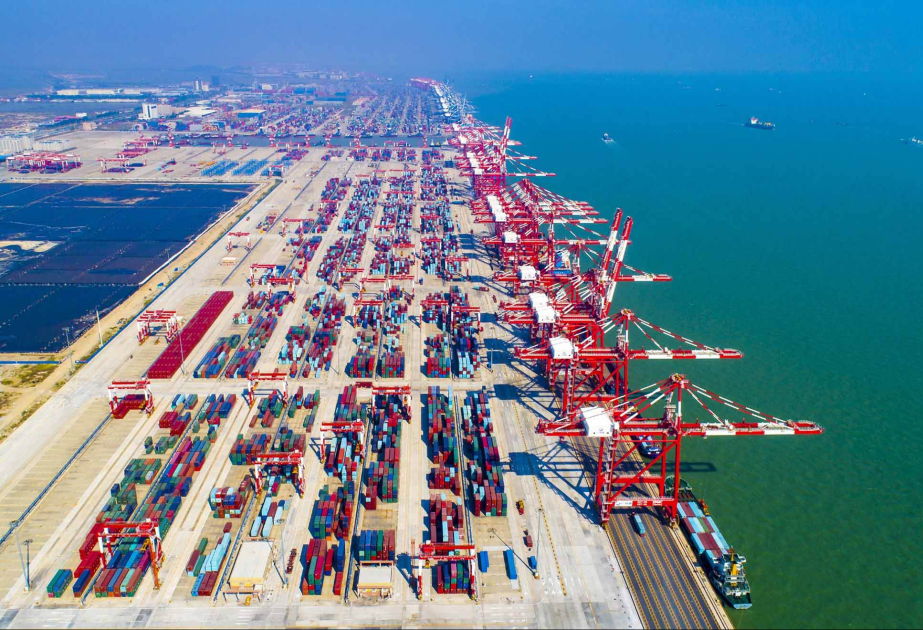
Recently, the General Administration of Customs of China released data showing that China's trade surplus reached $1.08 trillion for the first 11 months of 2025, exceeding the $1 trillion mark for the first time. This is clear evidence of the high resilience of China's foreign trade. However, some forces have seized on this opportunity to promote the so-called "second wave of China shock," baselessly accusing China of "pursuing a strategy of impoverishing neighboring countries." Upon closer examination, it's easy to see that various versions of the "China shock theory" appear periodically, with only the rhetoric changing, while at their core lies the well-worn narrative of the "China threat."
"Dumping Excess Capacity" or Mutually Beneficial Trade?
From an economic theory perspective, so-called "excess capacity" is a misconception. In the context of economic globalization, various countries, relying on their comparative advantages, engage in international trade, ensuring the optimal distribution of global resources, which represents an important stage in the development of human economic cooperation. Production in any country is oriented toward both domestic and foreign demand, and China's exports are a natural manifestation of trade based on comparative advantage.
In international practice, dumping is defined as the export of goods at a price below their normal value that causes or threatens to cause significant harm to the relevant industries of the importing country, provided there is a causal relationship. The competitiveness of Chinese goods is based on the world's most comprehensive industrial system, efficient logistics, a large pool of highly qualified personnel, and continuous investment in research and development. This competitiveness is shaped by economies of scale, the integrity of production chains, and technological progress. When there is demand and a reasonable price-quality ratio, all parties benefit.
"Crowding out space for development" or collaboration and empowerment?
When looking at the structure of Chinese exports, intermediate and capital goods are the main drivers of growth. At the same time, Chinese companies are actively promoting the localization of supply chains. Leading Chinese automakers such as Great Wall and SAIC are consistently opening factories in Thailand and Indonesia, and the localization rate at BYD's plant in Thailand has already reached 54 percent. The "technological spillover effect" from China is significantly improving the quality of local industry. For example, Midea Corporation built Southeast Asia's first fully 5G-connected air conditioner factory in Thailand, where 5G and AI technologies for quality control have significantly increased production efficiency.
China actively promotes high-level opening-up to the outside world, annually hosting trade fairs such as the China International Import Expo and the China International Fair for Trade in Services, which benefit many neighboring countries. In the first 10 months of 2025, agricultural and food trade between China and ASEAN countries amounted to USD 51.3 billion, an increase of 8.9% year-on-year. China's imports of fresh and dried fruits from ASEAN countries exceeded USD 10 billion, accounting for more than two-thirds of global imports. China is the world's second-largest importer of services, and demand for tourism services is particularly high: the country has long been a key source of tourists for Thailand, Malaysia, Vietnam, and other neighboring countries.
Chinese trade and investment projects offer local youth more diverse and promising employment opportunities. China adheres to the concept of "education follows production, with schools and enterprises going hand in hand," which contributes to the development of the workforce in host countries. For example, Lu Ban Workshop in Thailand uses the "academic education plus vocational training" model: all six open specializations have been certified by the Vocational Education Commission of Thailand, are integrated into the national education system, and graduates receive diplomas officially recognized by education authorities.
Clearly, China's cooperation with its neighbors is complementary and mutually beneficial. A one-sided interpretation of trade surpluses, the deliberate confusion of comparative advantage and unfair competition, and the denigration of normal trade relations and cooperation in production and supply chains constitute a denial of the global market and the laws of the market economy. This is an attempt to artificially disrupt global value chains and hinder the industrial development of countries in the Global South, driven by the logic of "prioritizing self-interest."
The international community generally views China's development prospects positively. The International Monetary Fund, Standard Chartered Bank, and other institutions have raised their economic growth forecasts for China through 2026. Proposals for China's 15th Five-Year Plan paint a positive picture of joint development and a shared future for all countries. China will continue to promote high-quality joint construction of the Belt and Road Initiative, build a more efficient regional connectivity network, reduce logistics and trade costs, and help neighboring countries with favorable geographic locations fully realize their role as regional hubs.
China, which consistently adheres to the policy of opening up, focuses on innovation and strives for high-quality development, is the most powerful engine of Asia's common prosperity.
(The author is an observer on international affairs)