Translated with AI
































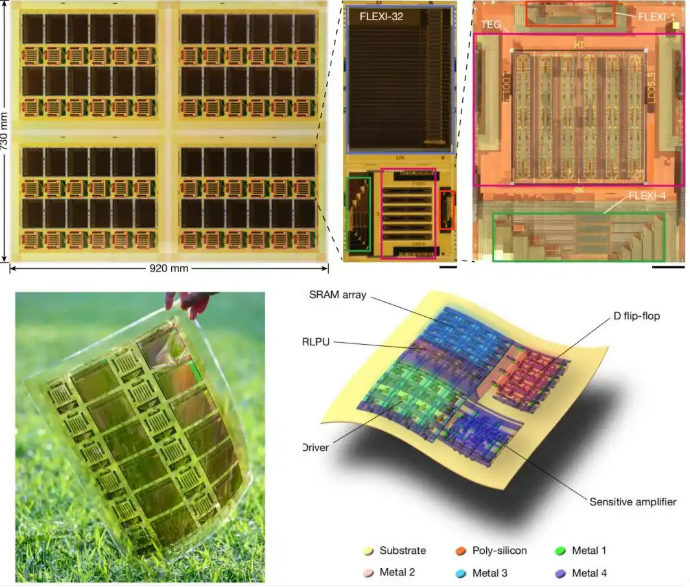
On January 28, Chinese scientists published a paper in the British journal Nature, claiming to have successfully developed a fully flexible artificial intelligence (AI) chip that provides key hardware support for intelligent applications related to wearable health monitoring devices and flexible robots.
With the deep integration of AI and the Internet of Things, as well as embodied AI, the need for lightweight, efficient, and flexible intelligent computing hardware is becoming increasingly urgent. Traditional rigid silicon chips cannot meet the demands of devices that adapt to the shape of the human body or complex curved surfaces, while existing flexible processors are generally unsuitable for data-intensive tasks, such as neural network inference.
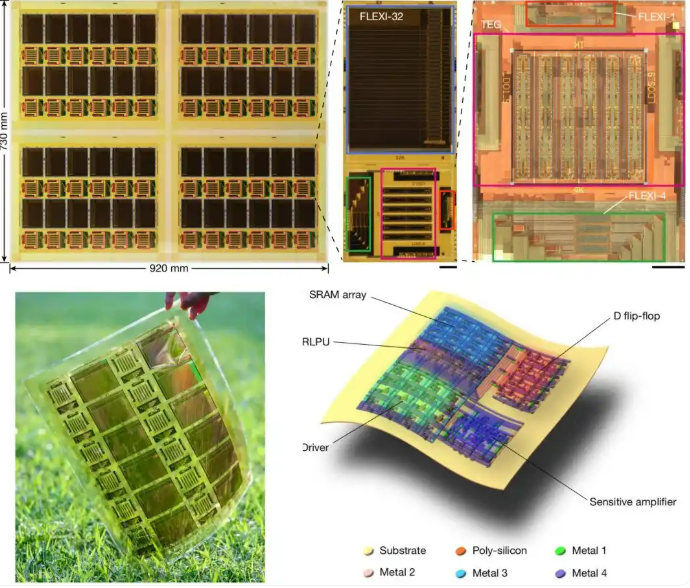
Researchers from Tsinghua University and Peking University have successfully developed a series of fully flexible digital computing chips, FLEXI, based on Chinese technology, breaking the natural barrier in applying flexible electronics to high-performance computing in the field of artificial intelligence at the edge.
The new chip is based on low-temperature polycrystalline silicon thin-film transistors, which are as thin as cicada wings, can be arbitrarily bent, and have the advantages of ultra-low power consumption, high energy efficiency, high stability, and low cost.