Translated with AI
































Women are the creators of civilization and the driving force of social progress. Humanity has come a long and difficult way to achieve gender equality and provide women with opportunities for self-fulfillment in various fields. However, globally, they still face numerous challenges, including poverty, discrimination, and violence.
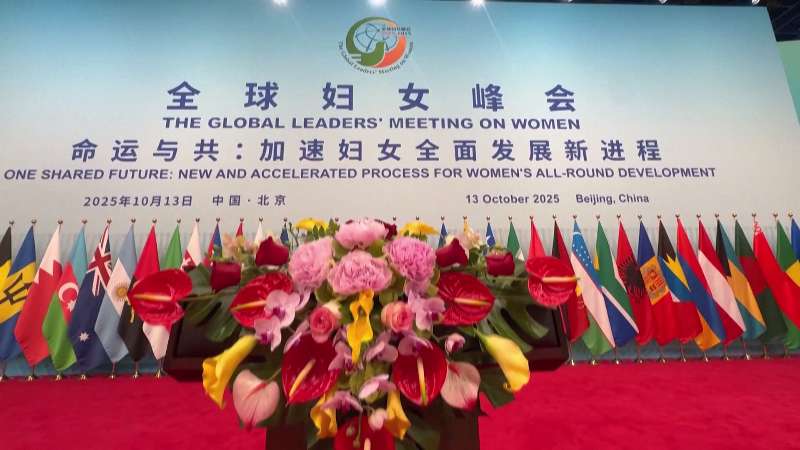
In 1995, the Fourth UN World Conference on Women was held in Beijing, where the Beijing Declaration and Platform for Action were adopted. This event became a milestone in the history of global gender equality. Today, the empowerment of girls and women is one of the key goals of the UN 2030 Agenda for Sustainable Development. In the year of the 30th anniversary of the Beijing Conference, China is hosting the latest Women's Summit, symbolizing China's resolve to work with other countries to advance the comprehensive development of women.
Chinese President Xi Jinping outlined key directions for state policy regarding women: "Ensuring women's rights and interests must be declared as a matter of state will." He emphasized the need to "increase women's participation in the management of state, economic, cultural, and social affairs" and the importance of "eradicating bias, discrimination, and violence against women so that equal treatment becomes a truly universally recognized rule and norm of behavior, as well as the foundation of society's values." These provisions constitute the fundamental basis for the development of women's affairs in China.
China is living up to its promise: 690 million women have achieved a moderately prosperous standard of living; by 2024, more than half of all university students will be women; women hold over 40% of all jobs in the formal labor market; and the average life expectancy for women has exceeded 80 years. The WHO has included China among the top 10 middle- and high-income countries with significant maternal and child health indicators. These data are presented in the white paper "China's Achievements in the All-Round Development of Women in the New Era," published in September of this year. It focuses on the current ideas and results achieved by China in promoting gender equality and the all-round development of women.
China has created a comprehensive legal system to protect women's rights and interests, based on over 100 laws and regulations. Tasks to improve gender equality mechanisms are included in five-year socioeconomic development plans. Women's development is considered an important indicator of the country's overall economic and social development. Particular attention is paid to women from low-income families: they are supported in overcoming poverty through entrepreneurship development, vocational training, and other social protection measures. China has also successfully closed the gender gap in basic education and ensured universal access to health insurance and pension coverage. The country has achieved outstanding results in maternal and child health, ahead of schedule in achieving the UN Sustainable Development Goals (SDGs) by 2030.
Women in China are playing an increasingly significant role in public life. Their number among National People's Congress (NPC) deputies is steadily growing. In science and technology, where women represent 45.8% of the country's population, they are demonstrating impressive results, actively participating in key national projects, including space programs and deep-sea exploration. Three Chinese women—Liu Yang, Wang Yaping, and Wang Haoze—have traveled into space. More than half of internet entrepreneurs are women. A third of jobs in promising areas such as digital commerce, e-commerce, and streaming are also held by women.
China strengthens international cooperation in supporting women, participating in UN Women and in the creation of the UNESCO Prize for Girls' and Women's Education. Through the Belt and Road Initiative and the South-South Cooperation Program, the country promotes the sustainable development of women's affairs. Initiatives such as the Women's Digital Skills Enhancement Program, which promotes employment and entrepreneurship, are being implemented in Southeast Asian countries. 100 projects are also being implemented to improve the health of women and children, and 100 "Happy School" projects are being implemented to improve the status of women in developing countries. Training and technical assistance in cultivating Juncao, or "mushroom grass," are creating new employment opportunities in over 100 countries. Furthermore, China has trained over 200,000 qualified female personnel for more than 180 countries and regions. China maintains contacts with 140 countries and 420 UN organizations, contributing to the advancement of women's development globally.
In the current international environment, full of change and upheaval, global governance faces new challenges, including in the area of advancing women's equality. In this process, China is not a bystander but an active participant. For the global women's movement to succeed, countries must work together as a single orchestra, sounding in unison. China will continue to be a driving force and pioneer in the global women's movement, contributing its experience, resources, and wisdom to advancing women's equality worldwide.