Translated with AI
































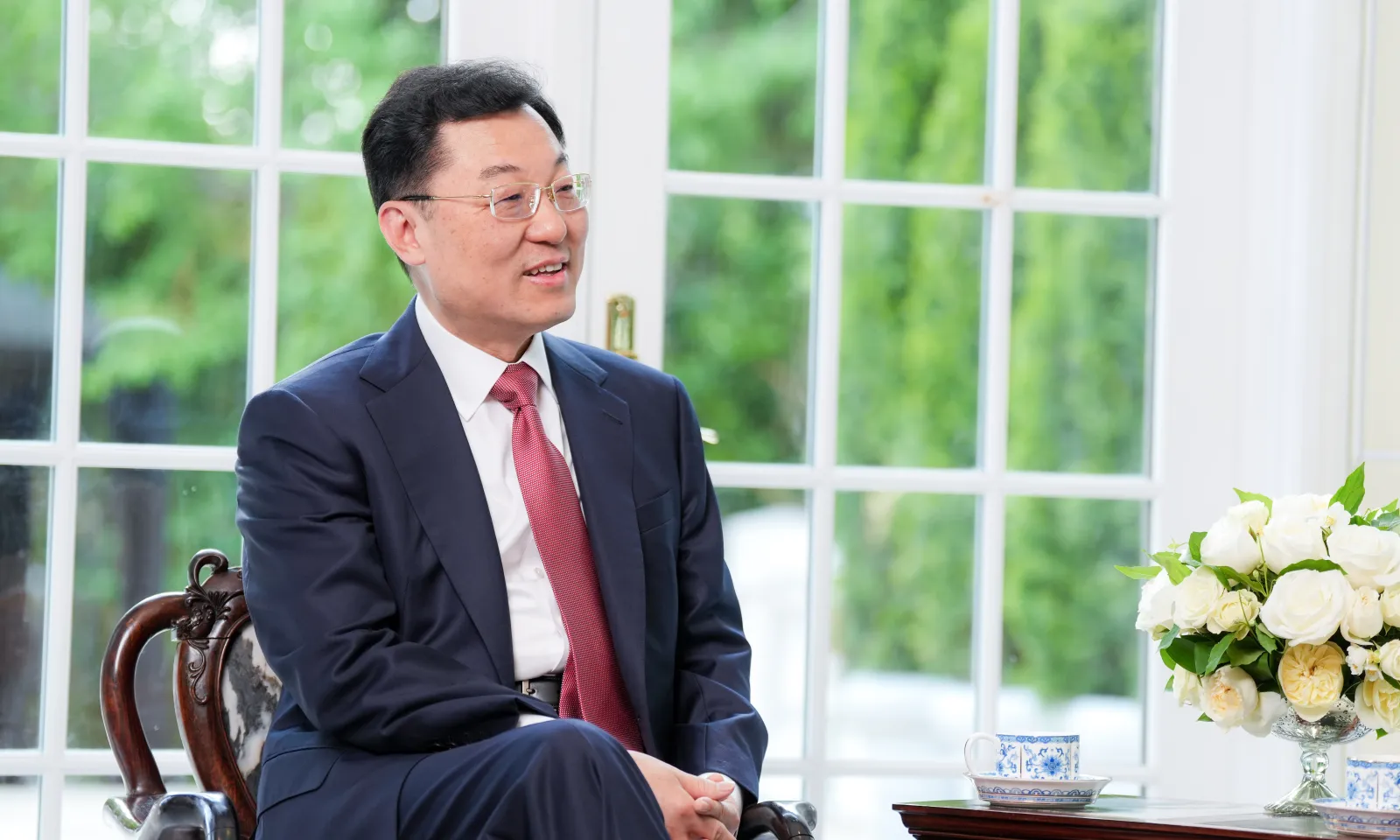
In an exclusive interview with Newsweek, China's Ambassador to the United States Xie Feng spoke about hopes for improved relations between the two countries and the need to address sources of bilateral tension as US President Donald Trump prepares to visit Beijing later this week amid Washington's ongoing war with Iran.
This is one of several key issues likely to be discussed during Trump's meeting with Chinese President Xi Jinping. The visit will be the American leader's first to China since Trump's last visit in 2017.
Xie Feng said the meeting would be an important opportunity for Trump and Xi to build on previous positive contacts and promote "stable and constructive China-US relations" in what the ambassador described as an "increasingly turbulent world."
Amid the massive conflict in the Middle East, whose repercussions are being felt around the world, Xie renewed his call for peace and discussed the consequences of war for China and the international community, categorically rejecting what he called "fake news" about Beijing's alleged military support for Tehran.
Xie also touched on other key topics in one of his longest and most insightful interviews to date, including trade relations between Beijing and Washington, the geopolitically sensitive issue of Taiwan, and viral social media trends promoting China and Chinese traditions in the West.
Below is a transcript of the conversation, adapted and condensed for clarity.
Newsweek: How is the relationship between the two leaders, given that President Trump frequently speaks positively of President Xi? What are China's expectations for the upcoming summit in Beijing during Trump's visit from May 13 to 15?
Xie Feng: Heads of state contacts provide indispensable strategic guidance for China-US relations. President Xi Jinping and President Donald Trump respect each other and maintain close ties. Since last year, the leaders have spoken five times by phone, exchanged several letters, and held a successful summit in Busan, South Korea, redirecting China-US relations toward overall stability.
President Trump has repeatedly expressed his desire to visit China again. President Xi welcomed this and invited him to visit again. Both sides are actively preparing for the visit.
In an increasingly unstable world, the strategic importance of China-US relations is becoming even more evident. Stable and constructive relations between China and the US not only serve the fundamental interests of the peoples of both countries but also meet the expectations of the international community.
We hope that, through our joint efforts, the upcoming Beijing summit will be a success, charting the right course for the future development of China-US relations and expanding dialogue and cooperation, advancing a positive agenda while narrowing the list of challenges and appropriately managing differences. This will help not only ensure the sustainable, healthy, and long-term development of bilateral relations this year, but also find the right path for China and the US to coexist in the new era based on mutual respect, peaceful coexistence, and win-win cooperation.
Has China, as some claim, benefited from the war in Iran or is it providing military support to Iran? What role did China play in the conflict?
For people of all countries, peace is the highest value, human life is the most precious, and stability is the most essential condition. China consistently adheres to an independent, peaceful foreign policy and opposes the arbitrary use of force in international relations.
Since the first day of hostilities, China has firmly supported peace and consistently promoted negotiations and a ceasefire. President Xi Jinping put forward four proposals, calling on all parties to adhere to the principles of peaceful coexistence, national sovereignty, and international law, as well as a balanced approach to development and security. This is China's approach to resolving the Middle East crisis.
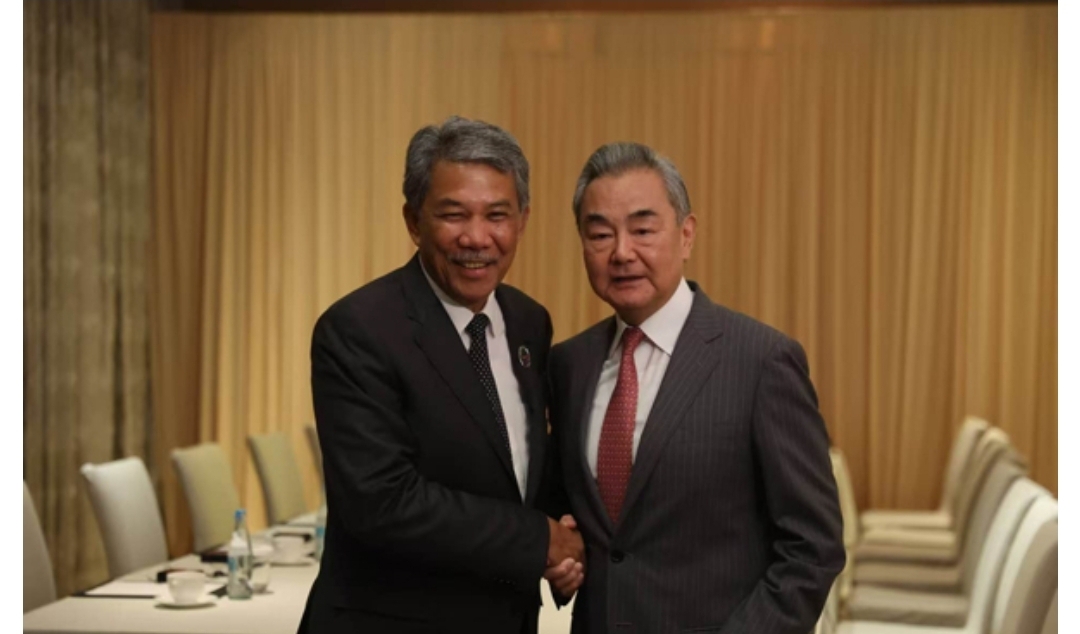
Foreign Minister Wang Yi, together with the Pakistani Foreign Minister, proposed a five-point initiative to facilitate negotiations between the US and Iran. China's fair, responsible, and constructive role has been widely recognized by the international community.
Unfortunately, some people seem to think the world doesn't have enough chaos, spreading rumors that "China has profited from the conflict" and "is militarily supporting Iran." Their goal is to smear China, provoke a confrontation between China and the US, and disrupt high-level bilateral contacts. All of this is fake news, spread with ulterior motives. We hope that people around the world will recognize these lies and will not be misled, much less spread them.
For China and the world, the blockade of the Strait of Hormuz, the disruption of the international energy market, and the upheaval of global production and supply chains are a disaster. This is a war that should never have happened, and it must end immediately. China hopes that the US and Iran will maintain the momentum of negotiations and supports all efforts to end the fighting and restore peace and stability as soon as possible. We will continue our tireless efforts for peace.
Leaders of many countries, including Western ones, are visiting China. Could China take advantage of the potential decline in US soft power in the world?
As the Chinese proverb goes, "Peaches and plums don't speak, but the path beneath them appears by itself." China's domestic and foreign policies are consistent, and we always do the right thing.
Domestically, we strive for comprehensive Chinese modernization, focusing on effective governance and self-improvement to ensure a better life for our people. Internationally, we are committed to building a community with a shared future for humanity and are ready to join all countries in pursuing the path of peaceful development, implementing the four global initiatives in development, security, civilization, and governance, and promoting the progress of human society.
As a result, more and more countries view China as a pillar of stability, a haven of reliability, and a worthy friend. This is why China's circle of friends continues to expand.
In March, China's annual "two sessions" adopted the 15th Five-Year Plan, which not only set out a roadmap for advancing China's modernization over the next five years but also created significant opportunities for the world.
For many years, China has accounted for over 30 percent of global economic growth annually. Over the next five years, the country's continued commitment to high-quality development and openness will provide a sustainable source of impetus for the global economy and significant development opportunities for all countries.
The plan also opens up vast opportunities for mutually beneficial cooperation between China and the United States. China boasts a growing market, a developed innovation ecosystem, and a favorable business environment. Over the next five years, China will continue to expand market opening experiments in high-value-added telecommunications services, biotechnology, wholly foreign-owned hospitals, and other areas, further unlocking the potential of this trillion-yuan market.
As one of the main platforms for the new scientific, technological and industrial revolution, China will become a testing ground for new ideas and a source of value growth.
China will also continue to foster a world-class business environment focused on markets, the rule of law, and international standards, so that foreign companies feel confident doing business in China. We welcome American businesses and invite them to seize these historic opportunities to jointly create a brighter future of mutual benefit.
Last year, China and the US clashed over tariffs. Tensions have eased, but some believe the trade imbalance remains unresolved, and China's industrial overproduction continues to grow. What's your response?
History has repeatedly proven that tariff and trade wars are unwinnable, damaging the interests of both sides, and harming the entire world. Under the leadership of the two presidents, China and the United States have reached a number of agreements during six rounds of trade and economic consultations and stabilized bilateral economic relations. This was not easy and should be commended. But it is still not enough. We hope that the American side will go further and completely eliminate unilateral tariffs and other restrictive measures.
The problem of imbalances is extremely complex and must be considered holistically. There are imbalances in both goods and services trade; in both the current account and capital flows; and differences in the stages of development of countries and regions. Therefore, focusing solely on goods trade is misleading. For example, in services trade, the United States enjoys a surplus with most global economies.
In advanced technology sectors, according to capital market valuation trends, the artificial intelligence industry alone could generate over $1 trillion in services trade surplus for the United States annually over the next decade. Regarding capital flows, the United States also enjoys a huge annual surplus as one of the world's leading centers of investment. At recent G20 meetings, some participants have already warned that the problem of financial imbalances cannot be ignored.
Accusations of so-called "China overcapacity" are also unfounded. Internationally accepted criteria for determining overcapacity include capacity utilization, inventory levels, and profit levels. In the first quarter of this year, capacity utilization at Chinese industrial enterprises was 73.6 percent, inventories remained stable, and industrial profits increased by 15.5 percent year-on-year. All indicators were within reasonable limits.
Despite tariff pressure, China's foreign trade grew last year, with total goods imports and exports reaching record levels, reflecting strong global demand for Chinese manufacturing capacity.
For countries in the Global South, high-quality industrial capacity is not a surplus, but a pressing need. The more of it, the better.
Against the backdrop of the global green transition, key Chinese products such as electric vehicles, lithium-ion batteries, and photovoltaic products are highly sought-after high-quality industrial goods. They not only meet China's domestic demand but also help narrow the global gap between renewable energy supply and demand, making a significant contribution to energy conservation, emissions reduction, and decarbonization. Such industrial products are in the interests of all countries and should be welcomed, not questioned or suppressed.
Are there concerns about the US's continued political and military support for Taiwan? How are global tensions affecting the situation around Taiwan?
There is only one China in the world, Taiwan is an inalienable part of the territory of China, and the Government of the People's Republic of China is the sole legitimate government representing all of China.
The "one China" principle is an integral part of the post-war international order, a fundamental norm of international relations, and a broad international consensus, affirmed by UN General Assembly Resolution 2758 and other international documents. This principle also serves as the political basis for the establishment and development of diplomatic relations between all countries, including the United States, and China.
Adherence to the 1992 consensus on the "one China" principle and opposition to "Taiwan independence" are the foundation of cross-Strait dialogue and the guarantee of peace and stability in the region.
In the joint communiqué establishing diplomatic relations between China and the United States, the American side recognized the government of the People's Republic of China as the sole legitimate government of China. In this context, the United States will maintain only cultural, commercial, and other informal relations with the people of Taiwan. Therefore, it is only natural that China opposes any official contacts or military interactions between the United States and Taiwan.
Imagine: if a foreign country sold weapons to an American state seeking "independence" and even sent its leader there, ignoring the protests of the US federal government, would Americans be able to accept it? President Abraham Lincoln said, "A house divided against itself cannot stand," and he resolved to fight to preserve the unity of the country. I believe the American people, having lived through the threat of division and civil war, can understand China's determination to defend national unity.
Last month, General Secretary Xi Jinping met with Kuomintang Party Chair Cheng Li-wen and made important statements calling for strengthening mutual understanding, safeguarding the common motherland through peaceful development, improving people's wellbeing through exchanges, and jointly striving for the great rejuvenation of the Chinese nation.
Following the meeting, mainland China announced ten measures to expand exchanges and cooperation across the Taiwan Strait. This once again demonstrates that the Chinese people on both sides of the Strait possess sufficient wisdom and the ability to resolve their own issues independently.