Translated with AI































Why Solovyov and Dugin's statements have caused alarm in the region
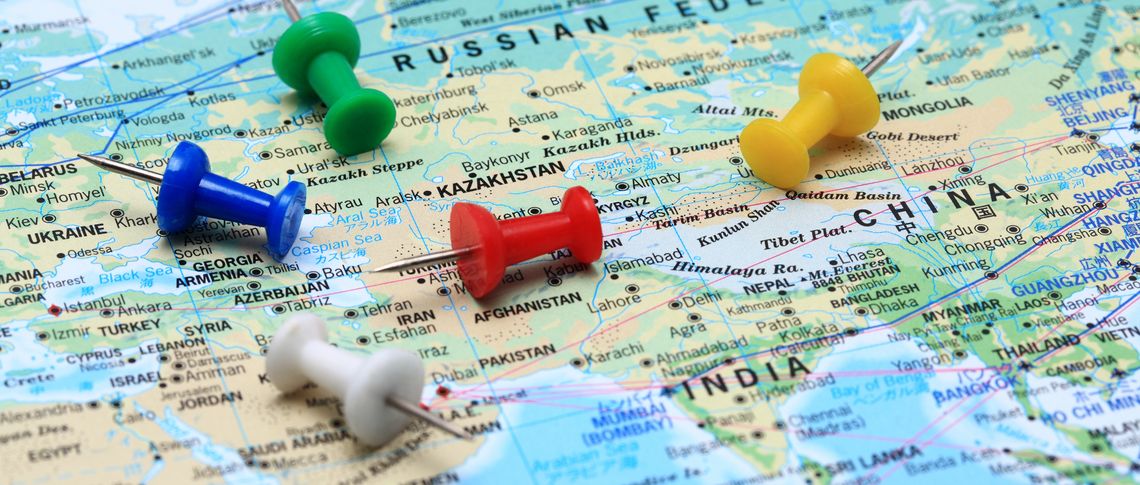
In January 2026, Russian state propagandists spoke so openly for the first time about the possibility of using force against the countries of Central Asia and the Caucasus, effectively calling into question their sovereignty.
At issue are statements by television host Vladimir Solovyov, a key figure on Russian state television and one of the Kremlin's main mouthpieces, as well as by "Russian World" ideologist Alexander Dugin, whose views, according to experts, have influenced Russia's foreign policy in recent years.
The historical roots are explored in detail by Ukrainian author Kuzari in his book "A Vanished Civilization – An Unnoticed Catastrophe ." In it, the author notes that, as early as the 14th century, Moscow's expansion into the Caucasus and Central Asia was justified by a religious and civilizational mission, and disregard for the sovereignty of neighboring peoples became a structural part of the state ideology.
So, what exactly are propagandists Solovyov and Dugin broadcasting? On January 11, Russian TV presenter Vladimir Solovyov—one of the Kremlin's chief propagandists and the host of a political talk show on the state-run Rossiya-1 television channel—publicly admitted the possibility of expanding the so-called "special military operation" beyond Ukraine. Citing the US actions in Venezuela as an example, Solovyov declared, "International law be damned. If we needed to launch a special military operation in Ukraine for our national security, why can't we launch a special military operation in other parts of our zone of influence? The loss of Armenia is a gigantic problem. The problem in our Central Asia is a gigantic problem. We must clearly articulate our goals and objectives. We must explain—the games are over."
Solovyov is more than just a journalist or media commentator. He regularly participates in Kremlin events, consistently conveys the official line of the Russian government, and in January 2025, Vladimir Putin personally awarded him the title of Honored Journalist of the Russian Federation. Given the strict control over state television, such statements cannot be dismissed as random or private rhetoric.
The very next day, Alexander Dugin —the ideologist of the "Russian World" concept, a philosopher, and political theorist, often referred to by Western media as "Putin's brain"—made an even more radical statement. Dugin declared: "We cannot accept the existence of sovereign Armenia, Georgia, Kazakhstan, or Uzbekistan. They will either be in our camp or become a foothold for the West or China."
He also added that in the current reality, in his opinion, “there is no way out at all except to declare Russia an empire and discard international law.”
Dugin is considered a more complex and influential figure than might initially appear. His ideas, according to several researchers, influenced the Kremlin's foreign policy decisions, including the annexation of Crimea in 2014 and the outbreak of a full-scale war against Ukraine in 2022. In this context, the denial of the sovereignty of Central Asian and Caucasian countries appears not as abstract philosophy, but as an ideological justification for potential pressure and interference.
Propagandists publicly abandoned international law and questioned the right of post-Soviet countries to independently choose their foreign policy course.
Given Solovyov and Dugin's obvious affiliation with official Moscow, their statements are difficult to interpret as personal opinions. On the contrary, they appear to be a public articulation of attitudes long present in Russian political thinking.
The imperial logic, formed back in the 14th century, remains the structural foundation of the Russian Federation's foreign policy. Within this framework, the CIS countries continue to be viewed as part of its own sphere of influence, and their sovereignty as a secondary factor.
In the aforementioned, recently published book, “A Vanished Civilization: An Unnoticed Catastrophe,” the author consistently shows how, as early as the 14th century, Moscow’s authorities shaped an imperialist model of governance in which the religious legitimization of Moscow’s supremacy sacralized its power and served as a justification for territorial expansion.
The chapter "The Formation of a Russian Ideology of Anti-Turkic Expansion" emphasizes that the juxtaposition of "faithful Christians" led by Moscow and the "filthy infidels" of the "Tatar land" ultimately provided ideological legitimacy for the seizure of traditionally Turkic-Muslim territories. Since the time of Genghis Khan, all Turkic peoples (except the Ottomans) had been referred to as "Tatars" in Moscow's discourse, the scope of potential expansion "for the Orthodox faith" was extremely broad—including the Volga region, Siberia, Central Asia, and the Caucasus.
In its geopolitical dimension, Kuzari offers a new perspective on a number of historical events and processes that have shaped the modern ethnic and political map not only of the South Caucasus but also of Eastern Europe and Central Asia. Drawing on thousands of sources, like a multitude of puzzle pieces, it constructs a comprehensive panorama of the cause-and-effect relationships that have shaped the current balance of power in the South Caucasus. Particular attention is paid to the root causes and subtle catalysts of the Armenian-Turkic confrontation, with a focus on its manifestations within the borders of modern Armenia. The resulting picture differs markedly from the official interpretations of history prevalent in both the countries of the region and Russia.
The book's main uniqueness, however, lies precisely in its local dimension. It is an attempt to reconstruct the holistic history of the final stages of the existence of one of the Caucasian Turkic subethnic groups without resorting to Azerbaijani or Turkish sources. The past of the Turkic civilization of the Erivan region and Zangezur is reconstructed primarily based on Armenian, French, and Russian materials, as well as through the "living voices" of the Erivan and Zangezur Turks themselves.
The comprehensive historical perspective offered in the book is particularly relevant today, given the war in Ukraine, the weakening of international law, and the escalating confrontation between Russia and the West. The Kremlin's propagandist rhetoric regarding Central Asia only confirms that imperial thinking in Russian politics is not a relic of the past, but remains a viable and dangerous element of foreign policy practice.