Translated with AI
































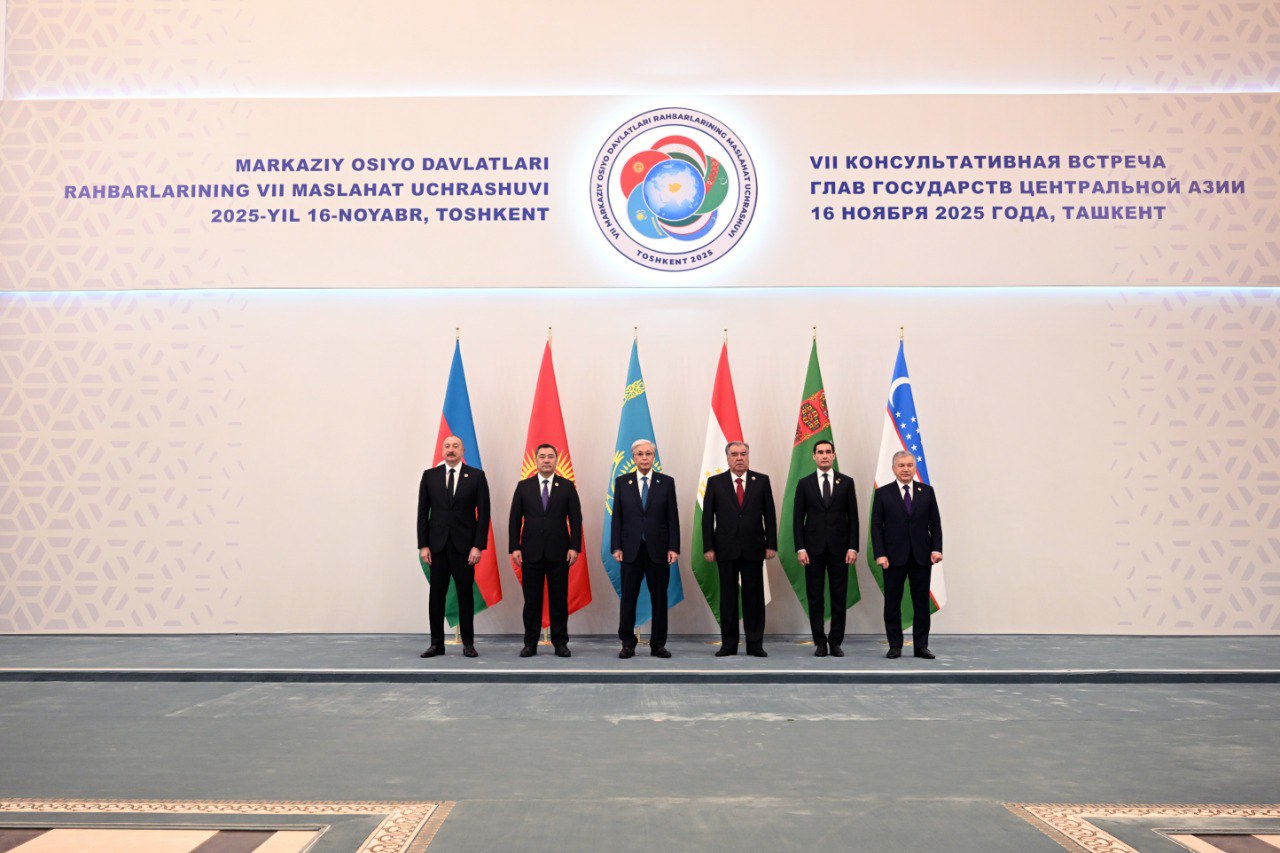
The Seventh Consultative Meeting of the Heads of State of Central Asia was held in Tashkent (Republic of Uzbekistan), in which the President of the Republic of Tajikistan Emomali Rahmon participated and delivered a speech.
The meeting discussed a wide range of current issues concerning relations between countries in the region, prospects for expanding cooperation to ensure sustainable economic development, strengthen friendly and good-neighborly relations, and develop cultural and humanitarian spaces.
At the beginning of his speech, President of the Republic of Tajikistan Emomali Rahmon thanked the head of the host country for the traditional hospitality and high level of organization of the meeting.
The head of state also congratulated President of the Republic of Azerbaijan Ilham Aliyev on Azerbaijan's accession to the Consultative Meeting of the Heads of State of Central Asia.
Emomali Rahmon noted the role and significance of the consultative meeting, emphasizing that it is confidently cementing its importance as a key participant in international and regional processes. "Interstate ties are strengthening, and we actively maintain contacts with external partners," the Head of State stated.
The President of Tajikistan praised the results achieved and emphasized that they create a favorable foundation for expanding comprehensive, mutually beneficial cooperation. He reaffirmed Tajikistan's commitment to developing constructive political dialogue and regional integration.
Particular attention was paid to the previously signed Treaty of Friendship, Good-Neighborliness, and Cooperation for the Development of Central Asia, which, according to the esteemed Emomali Rahmon, confirmed a shared commitment to the principles of equal partnership, mutual respect, and trust.
The head of state noted that Central Asia today is a space for intensive diplomatic dialogue, creative initiatives, and the formation of new cooperative ties. He believed the region possesses significant potential and serves as a hub for the development of trade, transit, energy, science, and tourism. The agreements reached, reflected in the "Central Asia 2040" Regional Cooperation Development Concept, provide a solid foundation for this.
Particular attention was paid to the Concept for Ensuring Regional Security, Stability, and Sustainable Development in Central Asia, which opens up broad opportunities for strengthening security, expanding economic cooperation, and implementing joint initiatives.
Emomali Rahmon called economic development a sustainable foundation for the future and emphasized the need to expand the regional economy through cooperation and innovation. He noted the importance of joint efforts to develop production integration, industrial cooperation, energy collaboration, the reconstruction of railway corridors, and the expansion of transport routes. In this regard, he proposed the creation of a unified transport and logistics space for Central Asia.
The need to effectively use the opportunities of the region’s free economic zones was emphasized.
Given the importance of the digital economy, Emomali Rahmon proposed establishing a Regional Artificial Intelligence Center in Dushanbe, which would conduct research programs on the application of AI technologies in key areas of cooperation. He also expressed appreciation for Tajikistan's support for the UN General Assembly resolution "The Role of Artificial Intelligence in Creating New Opportunities for Sustainable Development in Central Asia."
In addition, the President proposed creating a unified digital platform for the development of e-commerce, which would strengthen economic integration and increase business activity in the region.
Speaking about security, Emomali Rahmon noted the ongoing threat of terrorism, extremism, radicalism, cybercrime, and drug trafficking. He proposed strengthening the capacity of relevant agencies and departments, as well as developing cooperation in training security personnel. Given the growing cyberthreats, he called for strengthening joint measures to ensure cybersecurity.
In the areas of science, education, and culture, President Rahmon proposed establishing an international innovation and education center in Central Asia. He emphasized the importance of strengthening cooperation in tourism and sports, as well as the need to make extensive use of the region's rich cultural and historical heritage.
The environmental agenda was also addressed. The President noted that climate change, melting glaciers, and dust storms have a direct impact on food security in the region.
In conclusion, Emomali Rahmon emphasized that Central Asia's prosperity depends on close cooperation aimed at improving the quality of life of its citizens.
Following the summit, the heads of state signed a Joint Statement and a number of other important documents. At the conclusion of the meeting, President of the Republic of Uzbekistan Shavkat Mirziyoyev, on behalf of all the leaders of Central Asia and Azerbaijan, congratulated Emomali Rahmon on President's Day of the Republic of Tajikistan.