Translated with AI





























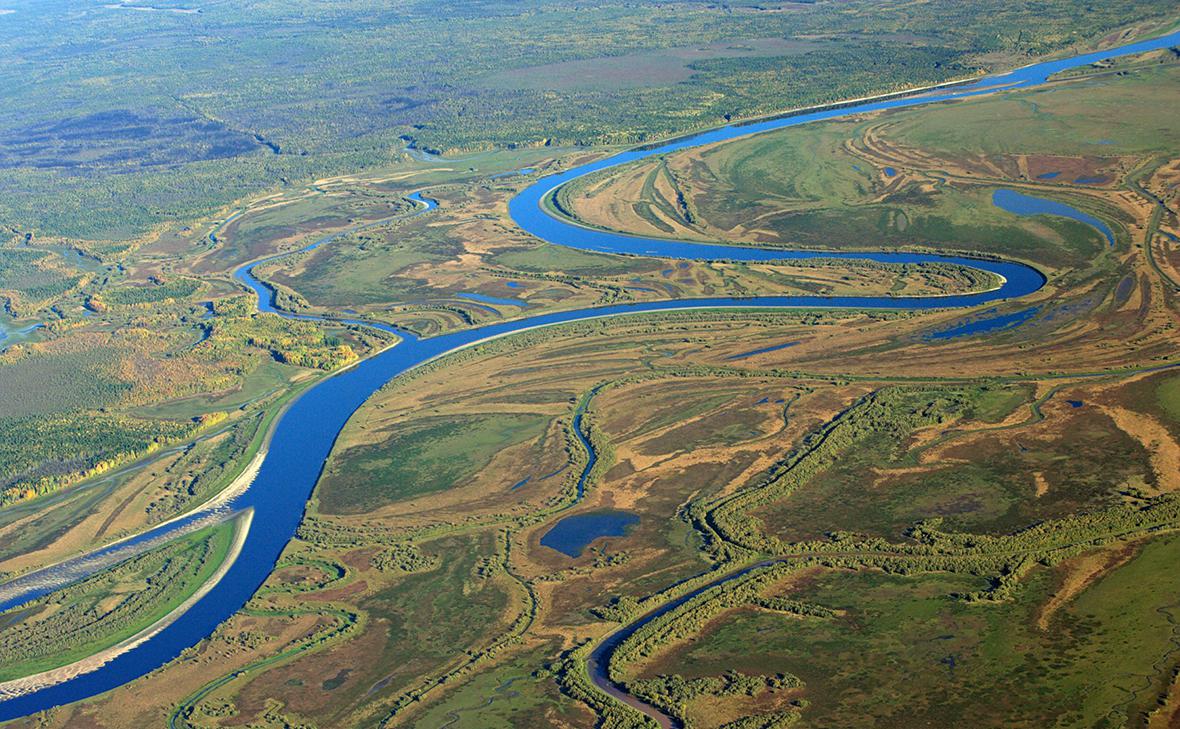
The Russian Academy of Sciences (RAS) will study the feasibility of a project to divert some of the water from the Siberian Ob River to Central Asia, specifically Uzbekistan, Forbes reports, citing RBC.
This is a modern-day equivalent of the Soviet-era Siberian River Diversion Project, which in the 1970s envisioned the construction of open canals to deliver water to the arid regions of Central Asia. The new version envisions the creation of a closed water supply system, which, according to scientists, will minimize water loss and reduce environmental impacts.
The decision to develop the project was made at a meeting of the Scientific Council of the Russian Academy of Sciences' Earth Sciences Division entitled "Terrestrial Water Resources," held in October. The meeting addressed strategic planning issues in Russia's water sector, including "the potential and consequences of large-scale interbasin and transboundary river flow transfers, including climate effects and the impact on the socioeconomic development of participating countries."
According to Viktor Danilov-Danilyan, Scientific Director of the Institute of Water Problems of the Russian Academy of Sciences, scientists intend to propose to the Ministry of Science and Higher Education that funding for research in this area be included in the state plan.
Two priority ideas were discussed at the meeting: redistributing some of the Ob River's waters to the Aral Sea region on the border of Uzbekistan and Kazakhstan, and diverting the flow of the Pechora and Northern Dvina rivers to the Volga basin, ending in the Azov region. This approach, according to the researchers, will optimize the water balance not only within Russia but also in Central Asia.
Lev Gorilovsky, Chairman of the Board of Directors of the Polyplastic Group, proposed constructing a closed pressure pipeline consisting of seven lines approximately 2,100 kilometers long. He estimates that the system will be able to supply 5.5 billion cubic meters of water per year in the first phase, and three to four times more if necessary. The company's press service stated that Polyplastic is not a participant in or initiator of any projects related to the transfer of water from Siberian rivers, and the materials provided are for scientific and expert purposes only.
Speaking at the meeting, Academician Robert Nigmatulin drew attention to the growing water and electricity shortages in Central Asia. He noted that water shortages are already leading to desertification, declining crop yields, and socioeconomic risks. He argued that using only a portion of the Ob River's flow—20 to 70 cubic kilometers per year out of a total volume of 3,000 cubic kilometers—could partially solve the region's problem and simultaneously "reduce the heat load on the Arctic."
Dmitry Sozonov, project manager at the consulting firm IES Engineering and Consulting, estimated the investment in the water supply system's implementation at at least $100 billion, and the construction of the main facilities would take at least ten years. He cited the Great Man-Made River in Libya and the California Aqueduct as examples of similar large-scale infrastructure systems.
In the 1970s and 1980s, the USSR Ministry of Water Resources considered the possibility of diverting the waters of the West Siberian rivers—the Ob, Irtysh, Tobol, and Ishim—to the Aral Sea. The project was in development for about twenty years, but in 1986, the Politburo of the CPSU Central Committee decided to halt the work.