Translated with AI




























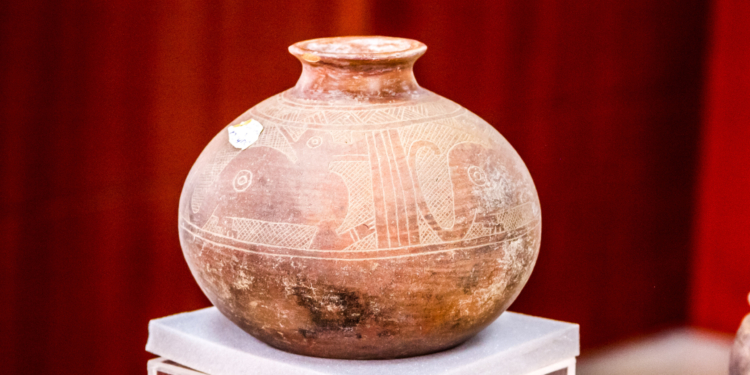
In 2024, more than 37,000 items of cultural value, including archaeological artifacts, works of art, coins, and musical instruments, were seized during the international operation "Pandora IX." The operation involved Europol, Interpol, the World Customs Organization, and law enforcement and customs agencies from 23 countries, including Ukraine, Poland, Romania, Moldova, Serbia, Bulgaria, the Czech Republic, the United States, and other countries, according to the UN press service.
According to official Interpol data, Ukrainian customs seized 87 items of historical value, including icons of St. Seraphim of Sarov and ancient coins, which were being smuggled out of the country to Poland, Moldova, and Romania. In Spain, a group looting archaeological sites in the province of Cáceres was uncovered: the criminals obtained thousands of Roman coins using metal detectors and sold them on social media. In Greece, three individuals were arrested for attempting to sell five Byzantine icons for 70,000 euros.
According to the United Nations Office on Drugs and Crime (UNODC), smuggling cultural property is one of the oldest forms of criminal activity and ranks among the most profitable forms of illicit trafficking, alongside weapons and drugs. Moreover, the trade in cultural property itself is not prohibited, making it an extremely profitable and low-risk sector for criminal networks, especially during crises.
November 14 marks the International Day against Illicit Trafficking in Cultural Property. This date was established by UNESCO to commemorate the adoption in 1970 of the Convention on the Means of Prohibiting and Preventing the Illicit Import, Export and Transfer of Cultural Property. The day aims to highlight that cultural heritage is not a commodity, but a part of human history that must be protected.
Krista Pikkat, Director of the Division of Culture in Emergencies at UNESCO's Culture Sector, noted that the illicit trafficking, theft, and illegal transfer of cultural property affect the cultural rights, identity, and history of communities. Historical sites in areas of armed conflict and political instability are particularly vulnerable. Smugglers are increasingly using online platforms and auctions to sell illegally obtained items, including objects from underwater archaeological excavations.
In October 2025, eight priceless objects were stolen from the Louvre. UNESCO stated that such crimes threaten the preservation, study, and transmission of historical artifacts to future generations, and fuel the international trade in stolen property linked to money laundering and terrorist financing.
International coordination, including UNESCO's collaboration with INTERPOL, the World Customs Organization, UNODC, and the International Council of Museums, strengthens legal mechanisms, trains specialists in the identification of stolen objects, and raises public awareness. Since 2023, more than 1,200 specialists from 80 countries have received relevant training.
UNESCO also launched the world's first Virtual Museum of Stolen Cultural Property, using 3D modeling and virtual reality technologies. The platform allows users worldwide to view digital copies of stolen artifacts, explore educational materials, and explore successful examples of cultural property recovery.
The repatriation of objects is yielding tangible results: in May 2025, Egypt received back 25 archaeological objects, including a mummy portrait from the Fayum and a gold coin from the time of Ptolemy I, discovered in New York. In February, dozens of ancient objects worth over €2 million were returned from New York to Greece and Italy.
UNESCO supports countries in identifying and returning stolen property, including objects lost during colonial times and artifacts from conflict zones. The organization uses digital solutions, electronic registries, databases, and blockchain technology to trace the origins of objects.
Citizens are advised to request official documentation of origin when purchasing antiques and works of art, avoid transactions with unknown sellers online, and report suspicious items to law enforcement or Interpol.
International Day on November 14 reminds us that every returned artifact is a restored link between the past and the present, and that the preservation of cultural heritage is the shared responsibility of all humanity.