Translated with AI




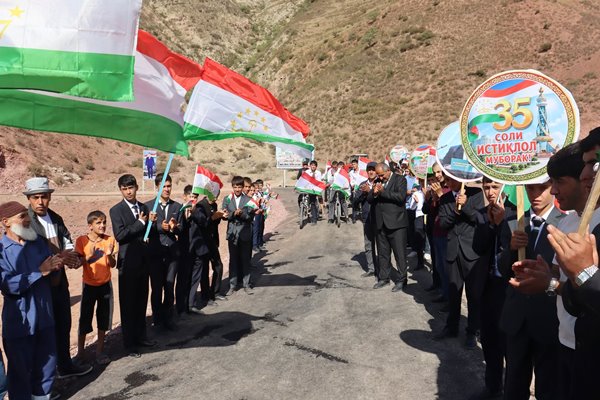



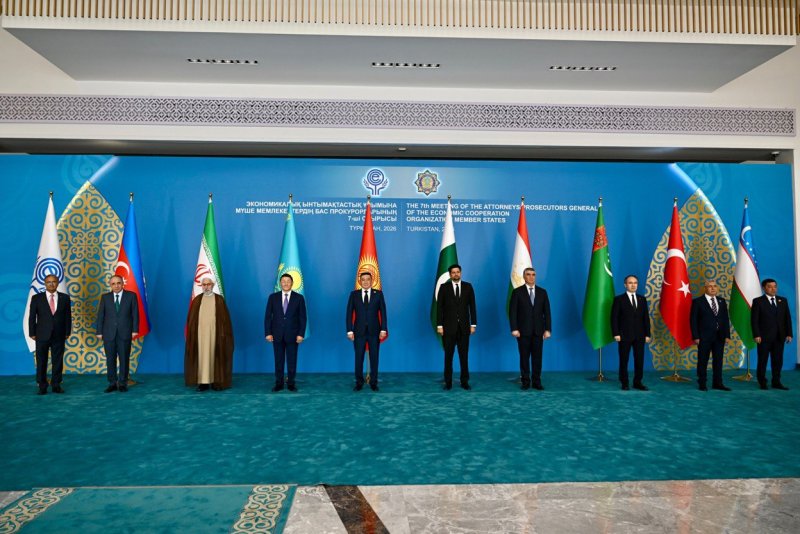



















For thirty years, the Commonwealth of Independent States has remained a key platform for developing mutually beneficial economic ties between post-Soviet countries. Despite external challenges and diverging national priorities, the potential for cooperation between CIS countries continues to grow, taking on new forms – from large-scale investment programs and industrial cooperation to deeper integration in transport, energy, and the digital economy.
The dynamics of interaction are most clearly demonstrated by the example of the Republic of Uzbekistan, which is actively developing trade and economic relations with all Commonwealth countries.
Russia and Uzbekistan: The CIS's Locomotive
Uzbek-Russian cooperation today underpins all economic interactions within the CIS. Russia is Uzbekistan's largest trading partner: trade turnover in 2024 reached $11.6 billion, and in the first eight months of 2025, $8.3 billion, an increase of 6.5%.
The partnership is based on free trade, industrial cooperation, and large-scale investment programs. The joint portfolio includes projects in the energy, mechanical engineering, chemical, and food industries. More than 3,000 enterprises with Russian capital operate in Uzbekistan, and the annual INNOPROM. Central Asia exhibitions have become a symbol of industrial integration between the two countries.
Transport corridors, logistics, education, and digital technologies are developing. Thus, Russia and Uzbekistan are laying the foundation for a new model of economic cooperation in the CIS, where industrial cooperation and innovation become the basis for sustainable growth.
Kazakhstan: a strategic partner and neighbor
Relations between Uzbekistan and Kazakhstan are an example of how geographic proximity can be transformed into an economic advantage. An intergovernmental commission between the two countries has been in operation since 1997, and today trade turnover exceeds $7 billion, with steady growth in exports.
1,157 enterprises with Kazakh capital have been established in Uzbekistan, and over 5,400 Uzbek companies have been established in Kazakhstan. Cooperation is actively developing in trade, construction, IT services, and logistics. Interregional forums are particularly important, the most recent of which, held in Samarkand, culminated in the signing of a roadmap and a significant package of contracts.
Uzbekistan and Kazakhstan are forming a single economic space for Central Asia, strengthening the region's role as a bridge between Europe and Asia.
Belarus: Industrial Cooperation and Technological Exchange
Belarus is one of Uzbekistan's most important industrial partners. Trade turnover from January to August 2025 amounted to $599.7 million (+34.3%), with joint ventures actively developing in pharmaceuticals, mechanical engineering, construction materials, and textiles.
Regional forums, meetings of agricultural working groups, and business forums with the participation of women's entrepreneurship organizations demonstrate a high level of trust and institutional coordination. Belarusian investment in Uzbekistan is growing annually, with a projected total of $107 million in 2025.
Azerbaijan: Alliance and Joint Projects
Relations with Azerbaijan have acquired an allied character: an Agreement on Allied Relations was signed in 2024. The countries are actively developing joint projects in mechanical engineering, energy, metallurgy, and logistics.
In 2024, trade turnover amounted to $253.5 million, and by August 2025, it reached $177,700 (an increase of 18.2%). There are 280 enterprises with Azerbaijani capital operating in Uzbekistan.
Particular attention is being paid to transport corridors through the Caspian Sea and the port of Alat, where the transit of Uzbek goods increased by 26% in 2024, strengthening Azerbaijan's strategic role as a logistics hub in the region.
Tajikistan and Kyrgyzstan: Good Neighborliness and Regional Integration
Uzbekistan is developing a strategy of "good-neighborliness economy" with Tajikistan and Kyrgyzstan.
Trade turnover with Tajikistan in 2024 amounted to $702.7 million, and the Uzbek-Tajik Investment Company, with an authorized capital of $100 million, is operating. Projects in industry, transport, and construction are being implemented.
Mutual trade with Kyrgyzstan reaches $846 million, and 309 joint ventures operate in Uzbekistan. Strategic partnership programs through 2030 are actively underway, new logistics routes are being developed, and border industrial zones are being established.
Armenia and Georgia: New Directions for Business Dialogue
Uzbekistan's relations with Armenia and Georgia are reaching a new level.
Trade turnover with Armenia has quadrupled over the past five years, and projects are being implemented in the pharmaceutical, food, and textile industries.
Trade turnover with Georgia has reached $182.5 million, with exports growing and transport logistics developing through Black Sea ports. An Intergovernmental Commission is in place, and cooperation is expanding in energy and tourism.
Results and Prospects
Uzbekistan's experience shows that cooperation within the CIS remains a crucial factor in the region's sustainable development and economic stability.
A common legal framework, free trade, intergovernmental commissions, regional forums and joint investment funds create a solid foundation for deepening integration.
Strengthening economic ties between Commonwealth countries is not just a matter of statistics and contracts, but also an indicator of trust, political will, and a desire for a common future.
The CIS is becoming not just a legacy of the post-Soviet space, but a modern platform for the formation of a new economic order—one based on equality, partnership, and mutual benefit.