Translated with AI

































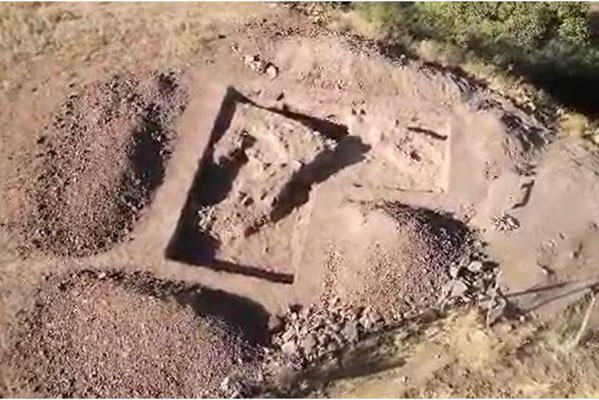
During a historical and cultural heritage inventory, employees of the Agency for the Protection of Historical and Cultural Heritage under the Government of the Republic of Tajikistan discovered the medieval city of Khutali—the ancient city of Andicharog—in the Langardor Jamoat of the Shamsiddin Shokhin district. The Agency reported this discovery.
The central area of the settlement covers approximately 14 hectares. During excavations, archaeologists uncovered over 100 artifacts, including numismatic finds, pottery, carpentry, and blacksmithing. Numerous tools were also discovered in this area, including hand- and water-powered millstones, meticulously crafted by artisans. Coins have been recovered from this region and are currently undergoing expert analysis.
Agency Director Sherali Khodjazoda noted that, according to historical sources, the city was located on the right bank of the Panj River, at the foot of Mount Varvalak, or ancient Varvali, in the territory of the modern-day Mu'minobod and Shamsiddin Shokhin districts. An educational center or madrassa was also discovered in this area. Among the discovered artifacts are decorative elements, including wood carvings. The discovered columns indicate that ancient Tajik artisans devoted particular attention to folk crafts, particularly wood carving.
According to preliminary estimates, one of the columns found in the Sarykal area is at least six meters tall. The column is distinguished by its majesty and artistic expressiveness, demonstrating the high skill of Khutali's architects and carvers. The column bears inscriptions that are currently being studied by historians.
The archaeological discovery coincided with the recent inscription of the Khutali cultural heritage sites on the UNESCO World Heritage List.
"Thanks to Tajikistan's state independence and the wise policies of President Emomali Rahmon, the country's historical monuments are now being revived after millennia. Numerous plans and programs are being developed to honor the history, culture, and ancient urban development of our ancestors, as well as to strengthen national identity and patriotism," emphasized Sherali Khojazoda.
He also noted that Khutali's artistic traditions are an integral part of Tajik culture. The findings confirm that wood carving and other crafts have been developed in this region since ancient times, and that the Tajik people have always possessed a rich history, culture, and diverse handicraft traditions.
Of particular importance is the revival of national traditions and the preservation of historical and cultural heritage, which contributes to the formation of patriotism, self-awareness and national identity of citizens, especially among adolescents and young people.