Translated with AI






















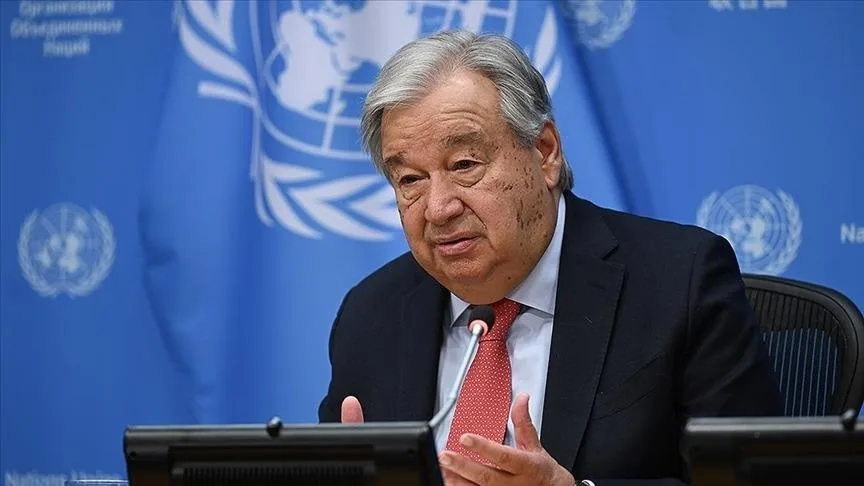
UN Secretary-General António Guterres called on civil society representatives to continue fighting for the rights of women and girls, warning of a growing wave of resistance to gender equality in many countries around the world, the UN press service reported.
He spoke at a meeting with women's rights activists at UN headquarters in New York on the sidelines of the 70th session of the Commission on the Status of Women and thanked them for their work at the forefront of the global movement.
Guterres said activists are defending the rights of women and girls every day, opening up new opportunities and building coalitions at a time when societies are divided.
The Secretary-General noted that this activity is often accompanied by threats, intimidation, and harassment. He asserted that when activists advocate for change, they challenge patriarchy.
"When you advocate for change, you challenge the patriarchy. And the patriarchy fights back," he said.
Guterres emphasized that the world remains a "man's world with a male culture," and that gender equality is largely linked to power—in politics, economics, and the technologies that shape the future, including artificial intelligence. He noted that the concentration of power in the tech sector reflects a profound gender imbalance.
The UN chief noted that over the past decade, the organization has made significant progress in achieving gender balance. For the first time in the history of the UN, parity has been achieved among senior management—both at headquarters and among heads of missions worldwide.
While ten years ago, women accounted for approximately 30 percent of the approximately 160 senior UN officials, today complete gender balance has been achieved. The Secretary-General emphasized that this did not require any changes to the selection rules.
"Achieving gender parity doesn't require changing the rules. We just need to ensure women have the same opportunities as men," he said.
According to Guterres, achieving gender balance has strengthened the organization's work, increased its credibility and improved its performance.
At the same time, the Secretary-General warned of a disturbing trend—a growing global backlash against women's rights. He said this wave is fueled by disinformation, fears, and so-called "culture wars."
Despite this, he noted, women continue to play a key role in the fight for human rights – from health and climate to peacebuilding and the protection of labor rights.
Guterres called on the activists to continue their work and reminded them that the progress achieved remains fragile.
"Rights can be lost much faster than they were won," he warned.
At the end of the meeting, the Secretary-General assured the participants of his support.
"We will say it loud and clear: no backsliding, no abandoning what has been achieved. We will never give up," he declared.
Representatives from various organizations and countries spoke during the meeting. Several participants expressed reservations about the proposed merger of UN Women, which promotes gender equality, and the United Nations Population Fund, which works on sexual and reproductive health.
Maria Leon Gonzalez of the Young Feminist Caucus, which represents hundreds of civil society groups, questioned the reasons for the possible merger of these two key structures and called for a careful study of the implications of such a move.
In response, the Secretary-General stated that the merger was intended to create a more powerful structure. Both mandates would be retained and implemented using shared resources.
Nigerian law professor Joy Ngozi Ezeilo also expressed concern about shrinking public space, a lack of funding, and increasing pressure on activists from governments.
She stressed that states need to acknowledge existing problems and more actively support the promotion of women's rights.
"It is time to reaffirm that women's rights are human rights," Ezeilo said, recalling the slogan voiced at the Fourth World Conference on Women in Beijing in 1995.
Asked what legacy he would like to leave after completing his ten-year term as Secretary-General, António Guterres stressed the importance of changing the existing distribution of power to advance gender equality.
He said he had paid particular attention to this issue throughout his ten years in office. Guterres also noted the important role of civil society organizations and announced that the UN would hold a meeting with them in July to consider proposals for reform of the organization's system as part of the UN80 initiative.
In conclusion, he called on the participants to act decisively and remove barriers to equality.