Translated with AI































Nepalese authorities have cancelled a program designed to encourage climbers to take their trash with them instead of leaving it on Everest. Officials acknowledged the program had failed, the BBC reports.
Climbers were required to pay a $4,000 deposit, which would only be returned if they brought back at least 8 kg of waste.
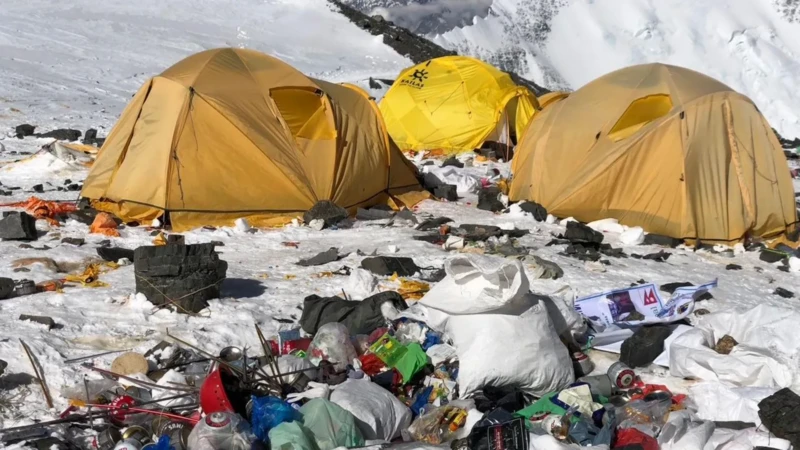
It was hoped this would at least come close to solving the trash problem on the world's highest peak. By conservative estimates, Everest is covered in approximately 50 tons of waste.
But after 11 years, the program was suspended because it "didn't produce tangible results." Meanwhile, the trash continues to accumulate.
Himal Gautam, director of Nepal's tourism department, told the BBC that not only had the waste problem not gone away, but the security deposit system itself had "become an administrative burden."
Tourism Ministry officials told the BBC that over the years, most of the deposits have been returned to tourists – meaning most climbers have returned their trash.
However, officials say the scheme failed because the trash the climbers brought in usually came from the lower camps, not the upper ones, where the trash problem is most acute.
"People from high-altitude camps generally only bring oxygen cylinders with them," said Tshering Sherpa, head of the Sagarmatha National Park Pollution Control Committee, which is responsible for managing the Everest checkpoint.
"A lot of things – tents, cans and boxes of packaged food and drinks – are mostly left there, so we're seeing more and more trash piling up there."
On average, a climber leaves behind 12 kg of waste during the six-week acclimatization period required for an ascent.
The main problem, besides the dysfunctional waste collection program, is the lack of oversight, regional authorities say.
"Apart from the checkpoint above the Khumbu Icefall, there are no checks on climbers' activities," Mr. Sherpa said.
Nepalese authorities hope the new scheme will be more effective.
Under the new rules, the non-refundable waste collection fee collected from climbers will be used to establish a checkpoint at Camp 2. This money will also support mountain rangers who will regularly ascend to higher areas of the mountain to ensure climbers bring their trash down.
Tourism Ministry officials said the fee would likely be $4,000 per climber – the same amount as the deposit – and would come into effect after parliamentary approval.
The local Sherpa community has been pushing for these changes for many years.
"We have always doubted the effectiveness of the garbage deposit system because we are not aware of any case where anyone has been fined for not going down to the garbage bin," said Mingma Sherpa, head of the Pasang Lamu municipality.
He hopes that the new rules on non-refundable fees will allow the creation of a fund to clean up the mountain.
There are no precise quantitative studies estimating the volume of waste on Everest, but it is assumed that there are tons of it, including human excrement, which does not decompose at the top of the mountain due to low temperatures.
Every year, the number of climbers wanting to conquer Everest grows, and so does the number of support personnel. All of this is causing increasing concern.