Translated with AI























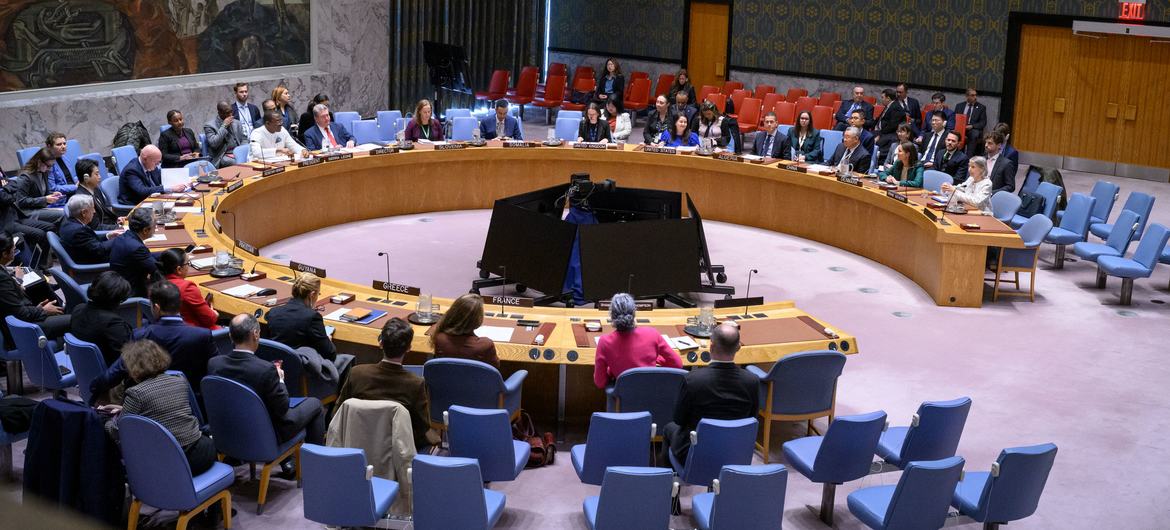
The UN Security Council held its annual debate on Friday on its working methods, including the process for selecting the next Secretary-General in 2026, the Organization's press service reported.
Governments will soon begin submitting nominations for the leadership of the 80-year-old organization, whose top position traditionally rotates among geographic regions. However, the UN's highest office has so far been held exclusively by men.
The Secretary-General is appointed by the General Assembly, the most representative body of the UN, on the recommendation of the 15 members of the Security Council.
"Significant" responsibility
“As the year draws to a close, the Security Council approaches one of its most significant responsibilities – the process of selecting the next Secretary-General,” said Danish Ambassador Christina Marcus Lassen, co-chair of the Informal Working Group on Documentation and Other Procedural Questions.
In the coming months, the Security Council, she said, will discuss how voting and interaction with candidates will proceed and how other UN member states will be informed about this work and its results.
A woman as General Secretary?
The next UN Secretary-General will take office in January 2027 and will be elected for a five-year term.
Since the post had never been held by a woman, the representative of Chile advocated for an "open, inclusive, and gender-inclusive process." "After 80 years, the time has come for a woman to lead this organization—a woman who, through her leadership and vision, can infuse the multilateral system with the credibility it needs to respond to the challenges of our time," he said, recalling that "it is now the turn of the Latin American and Caribbean region to assume this position."
Procedure for holding meetings
More than 40 countries took part in the debate, which discussed the updated consolidated guidelines on the Security Council's working methods, known as Note 507, adopted last December.
How exactly Council meetings are conducted has become especially important over the past year, given the scale of the crises, noted Lorraine Sievers, co-author of the book "UN Security Council Procedure."
"Of course, the primary focus is on the statements made here and the votes on draft resolutions," she said. "But even when Council members and non-Council members demonstrate sharply divergent positions, the Security Council and the UN itself can build or lose credibility depending on how organized and professionally the Council's meetings are conducted."