Translated with AI


























Tajikistan is taking active steps to preserve and revive the ancient art of pottery, whose traditions date back more than five thousand years, the country's National Museum reported.
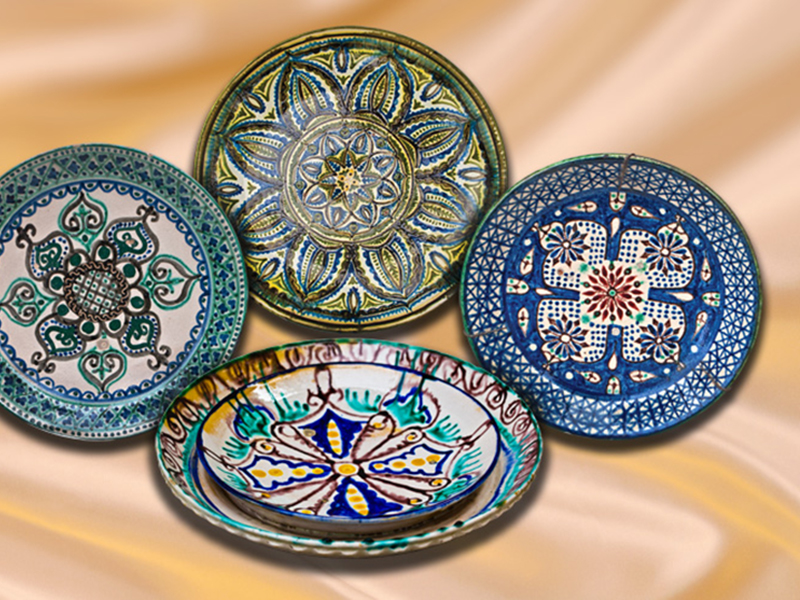
The museum's exhibition features vessels created by artisans of ancient times. Their smooth surfaces are decorated with engobes and patterns, which, according to the museum's senior researcher, Farid Rakhimov, can be considered "an echo of distant eras." Straight lines symbolize rain, while circular ones symbolize flowing water. "This is the language in which potters communicated with the world," he noted.
Archaeological research in Sarazm, one of the oldest settlements in Tajikistan, indicates that a sophisticated pottery industry existed there as early as the late Neolithic and Bronze Ages. Scientists have discovered six kilns of various types, including a unique two-chamber kiln built over five thousand years ago. The complex system of heat-conducting channels and chimneys in these kilns allowed artisans to create ceramics of remarkable strength and elegance.
As a museum employee explained, clay has always been the most accessible and inexpensive raw material, so pottery became a ancestral craft for many Tajik families. During the Samanid dynasty, it truly flourished, and the works of Tajik artisans were prized throughout Central Asia.
"Sarazm ceramics enjoyed particular prestige, and its quality spurred the development of pottery in Samarkand, Bukhara, Khujand, and Khulbuk. Today, the descendants of ancient masters continue this tradition. In small workshops on the outskirts of Dushanbe, pottery wheels spin, and young artisans learn from their elders how to create forms that preserve the spirit of the Tajik people's ancestors," he noted.
Modern scholars emphasize that each new discovery in Sarazm not only adds to museum collections, but also helps restore the people's cultural memory.
In modern workshops on the outskirts of Dushanbe, young artisans master pottery under the guidance of experienced mentors, creating pieces that preserve the spirit and traditions of the Tajik people. Each new archaeological artifact helps restore the country's cultural memory.
"When you hold a shard of a five-thousand-year-old vessel in your hands, you feel a sense of living history. It's a reminder of the deep roots of our culture," Rakhimov admitted.
The National Museum of Tajikistan displays works by modern masters alongside ancient artifacts, symbolizing the continuity of a pottery tradition that has spanned millennia.