Translated with AI














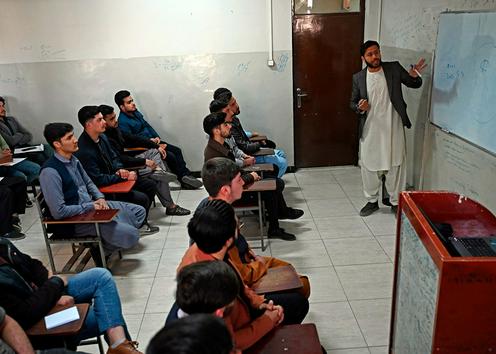
The Taliban-controlled Ministry of Higher Education has banned 679 textbooks from use in public and private universities across Afghanistan. The decision was made after a committee including mullahs, ministry officials, and Islamic legal scholars reviewed the textbooks, reports The Independent.
The textbooks were analyzed based on their ideological, cultural, religious, and scientific content. As a result, some of the textbooks were deemed to be contrary to Sharia law. The banned books include works by Western and Muslim authors, including "Globalization: A Critical Introduction" by Jan Arth Skulte, "Comparative Studies in Human Rights" by Abdul Rahman Saleem, "Introduction to Sociology" by Bruce J. Cohen, and "A History of Western Philosophy" by Abdul Rahman Alam.
According to the ministry, the ban affected all areas of higher education, including theology and medicine. The majority of the banned textbooks are devoted to women's rights, Western history, philosophy, modern democracies, and US history. The list of 679 textbooks is not final; the review of the teaching materials is ongoing.
In addition to the book ban, the ministry canceled 18 courses deemed incompatible with Sharia law. Another 201 courses are under review. The banned courses include courses on Afghan constitutional law, Islamic political movements, human rights, democracy, gender issues, philosophy, the history of religions, and the role of women in the public sphere.
Education experts in Afghanistan note that a widespread ban on textbooks could lead to a shortage of educational materials and negatively impact the country's higher education system.
The Taliban previously confiscated hundreds of books from libraries and bookstores in Kabul and Herat, banning the publication and distribution of literature on women's rights, democracy, philosophy, and art. Dozens of teachers were fired for not adhering to the movement's ideology.
The Ministry for the Promotion of Virtue and the Prevention of Vice has mandated that teachers take two-hour weekly classes on Sharia. Universities are now covered by mandatory religious instruction, and dozens of mullahs have been deployed to teach Sharia principles to staff and students.
Since coming to power in August 2021, the Taliban have imposed numerous restrictions, primarily targeting women's rights, including bans on secondary and higher education, sports, employment in healthcare facilities, and public speaking. These measures have drawn criticism from the international community and organizations, including the UN.