Translated with AI











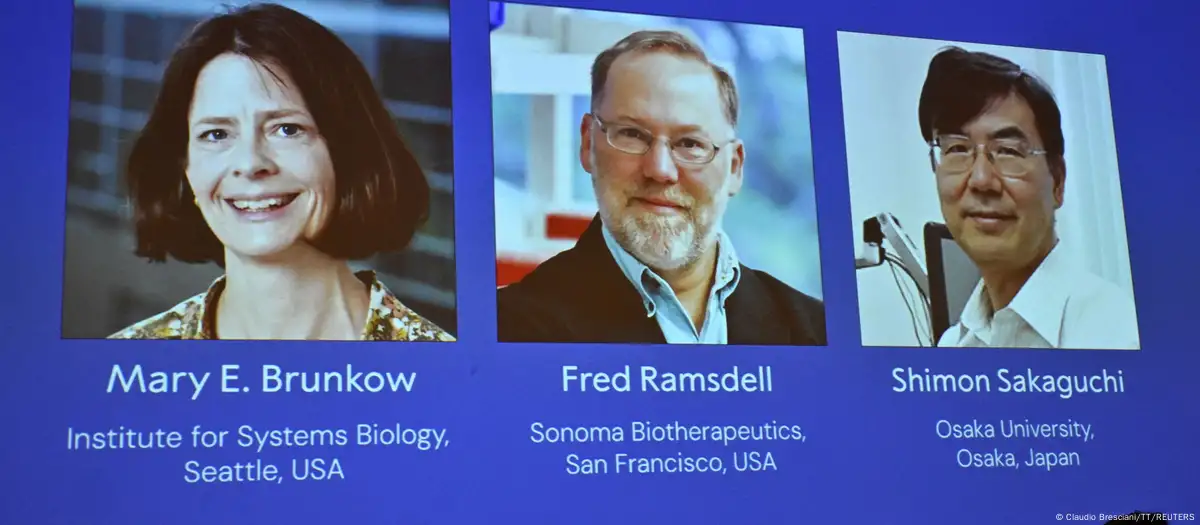
The Nobel Prize in Physiology or Medicine for 2025 has been awarded to Mary E. Brunkow, Frederick Ramsdell, and Shimon Sakaguchi for their discoveries concerning peripheral immune tolerance. The Nobel Committee announced this in Stockholm.
According to Nobel Committee Chairman Olle Kempe, the scientists' discoveries have played a decisive role in understanding how the human immune system works and why not everyone develops serious autoimmune diseases.
Peripheral immune tolerance is the immune system's ability to suppress the activity of autoreactive cells that mistakenly attack healthy tissues, as well as to ignore harmless antigens and allergens. The discoveries of Brunkow, Ramsdell, and Sakaguchi launched a whole new field of research, spurred the development of treatments for cancer and autoimmune diseases, and may lead to more successful organ transplants.
Mary E. Brunkow is with the Institute for Systems Biology in Seattle, Washington. Frederick Ramsdell is director of research at the Parker Institute for Cancer Immunotherapy in San Francisco, California, and is affiliated with Sonoma Biotherapeutics. Shimon Sakaguchi is a professor at Osaka University, Japan.
The 2025 prize will be worth 11 million Swedish kronor (approximately one million euros). The Nobel Prize in Medicine has been awarded 116 times, and 229 people have been awarded the prize by 2024.
Previous winners of the award included American scientists Victor Ambros and Gary Ravkan (2024) for the discovery of microRNA, Drew Weissman and Katalin Karikó (2023) for their work that formed the basis of mRNA vaccines against COVID-19, and in 2022, Swedish biologist Svante Pääbo received the award for his research on the genome of extinct hominids and human evolution.
The announcement of the names of the Nobel Prize laureates in Medicine opened Nobel Week. In the following days, the laureates will be announced in Physics (October 7), Chemistry (October 8), Literature (October 9), Peace (October 10, Oslo), and Economics in Memory of Alfred Nobel (October 13).