Translated with AI


































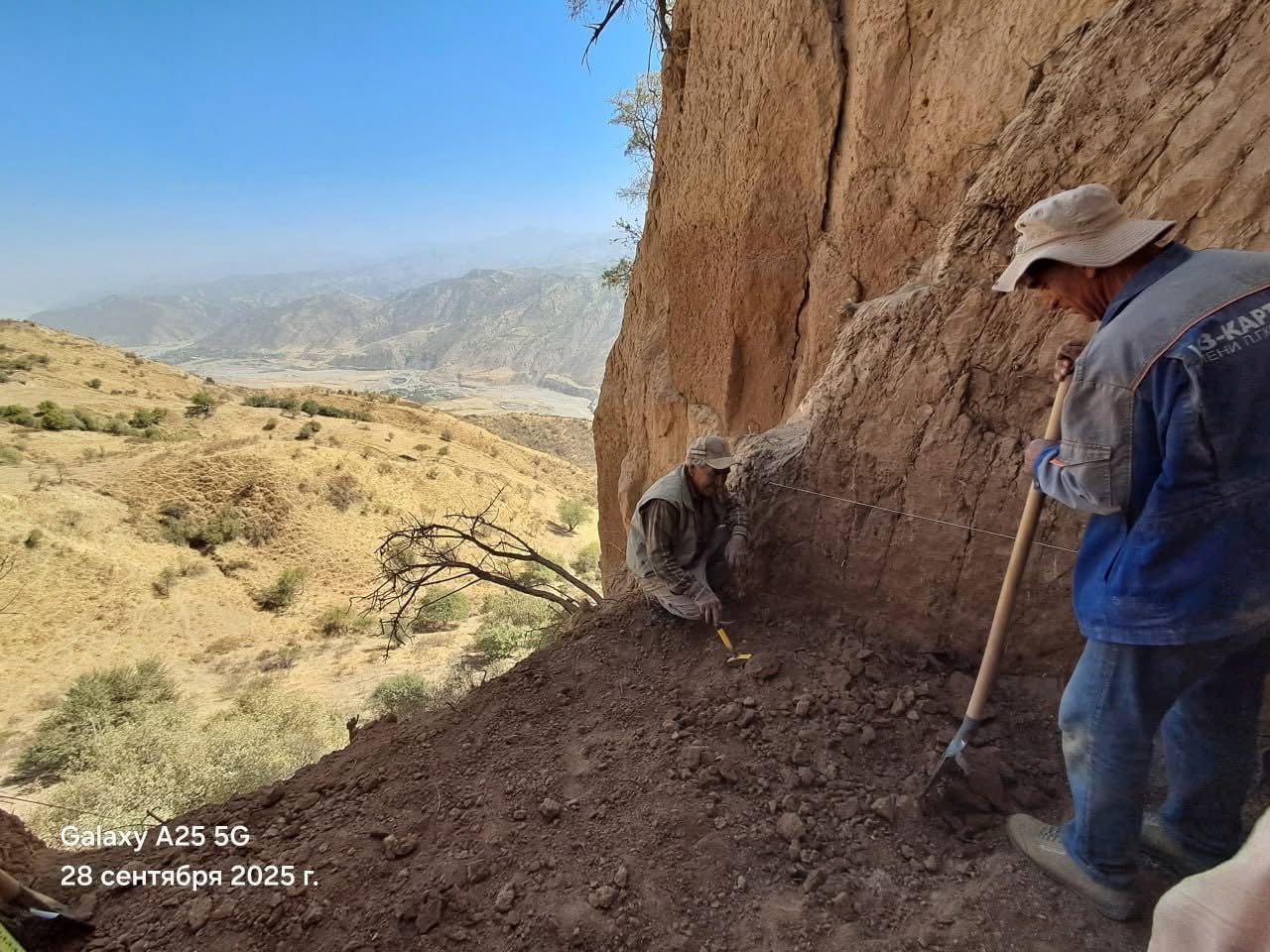
A new Paleolithic site dating back approximately 0.5 million years has been discovered in the Khovaling district of Tajikistan. This was reported by participants of an international expedition conducted from September 20 to October 2, 2025, in the Yokhsu River Valley, according to the regional administration's press service.
The expedition was attended by staff from the Department of Archaeology of the A. Donish Institute of History, Archaeology and Ethnography of the National Academy of Sciences of Tajikistan (T.U. Khujageldiev, A.F. Sharipov), the Institute of Geography of the Russian Academy of Sciences (R.N. Kurbonov), and the Faculty of Geography and Oceanology of Nanjing University (Professor H. Wang, Associate Professor N. Nemier, students Ya. Chen and Sh. Yang).
According to researchers, geoarchaeological research in Tajikistan is a key task for studying the early stages of human settlement in Central Asia and investigating the evolution of natural conditions during the Pleistocene period.
The discovery of the new camp was made possible by many days of painstaking work by archaeologists to clear the surface of the ancient red layers, during which two stone artifacts were discovered, which served as the basis for the beginning of excavations.
Excavations covered an area of approximately 10 square meters. Thirty-one stone tools were found in a 2.5-meter-thick cultural layer. The artifacts include radial cores, flakes, elongated flakes, pointed and fragmented pieces. The tools include two shovel-like scrapers with signs of secondary processing, a hand axe with a long, sharp edge, and a knife made from a flake. River stones (zarogan) were used for crushing the stone.
The lithic industry of this new camp is characteristic of the Karatokh archaeological culture of the Early Paleolithic in southern Tajikistan. This culture is characterized by the use of simple stone crushing techniques and a weak manifestation of the more advanced Levallois technique (Ranov, 2001).
Such Homo erectus habitats were not considered permanent settlements, but rather temporary encampments for small groups of hunter-gatherers, and are therefore called "ephemeral." The main settlements were likely located in valleys and on riverbanks, but they have now almost completely disappeared.
The materials obtained during the 2025 expedition will significantly expand our understanding of the stone industry approximately 0.5 million years ago and deepen our knowledge of natural conditions and the impact of climate change on human settlement processes in the upper reaches of the Yohsu River between 0.1 and 0.8 million years ago.