Translated with AI


































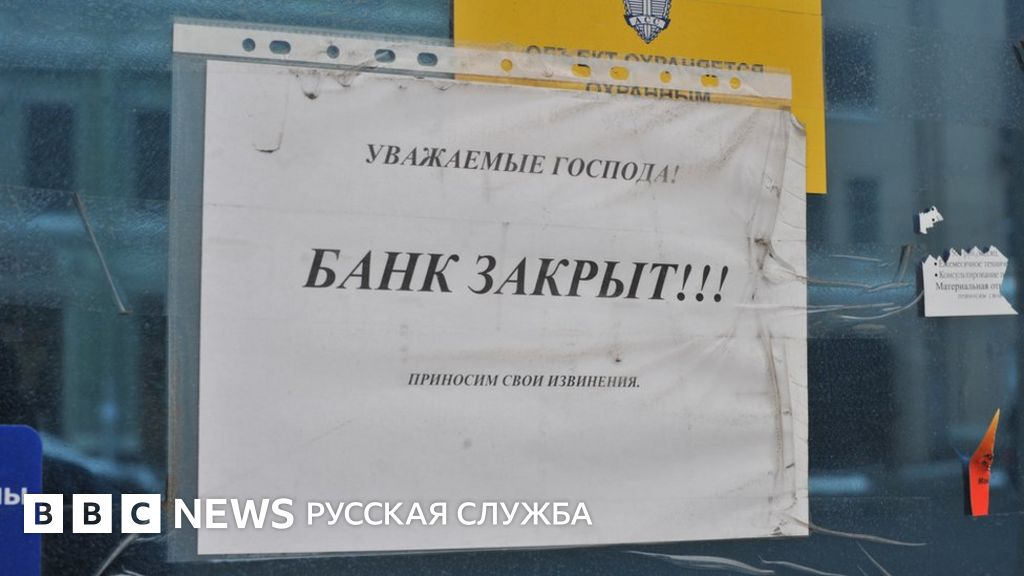
It's no secret that Russia's resources are currently being channeled toward funding the military-industrial complex, maintaining the administrative apparatus and the army, and not toward developing the civilian economy. This prioritization is leading to the decline of industrial production, a decline in Russians' living standards, and the enrichment of a select group of Kremlin-connected oligarchs, according to the BBC.
The Russian economy is experiencing a slowdown in growth. This is particularly noticeable in the construction and industrial sectors, where investment activity is declining due to uncertainty and high borrowing costs. Moreover, even Russia's military-industrial complex is showing the first signs of stagnation.
This indicates deep structural problems that make the Russian economy unstable and dependent on external “injections,” which still cannot ensure stable development.
From a social perspective, the pre-crisis state of the Russian economy is defined by a short-term signal: "inflation eating away at savings." Due to the sharp rise in prices, which outpaces the growth of household incomes, Russians' purchasing power is steadily declining.
In turn, Russian banks are forced to raise interest rates. This makes borrowing increasingly unaffordable for businesses and individuals, adding pessimism to their economic activity and creating debt traps.
A chain reaction then occurs. Borrowers are unable to service their loans, leading to an increase in overdue debt, and banks become more vulnerable due to the growing volume of bad loans.
It would be fair to predict that within a year, Russia's banking system could collapse, as a large number of corporate and individual borrowers have accumulated who are unable to service their loans due to high interest rates.
It's already clear that Russia's financial and credit sector is in serious turmoil. This manifests itself on many levels: from declining efficiency and profitability of banks to a loss of public confidence in them.
International sanctions, high bank rates, and the reorientation of the economy toward military needs have led to the accumulation of problems that threaten the stability of the entire Russian financial system.
In the first half of 2025, approximately half of Russia's largest banks have already recorded declining profits, and this trend is likely to intensify. According to forecasts, profitability in the Russian banking sector could fall by 15-25% in the second half of 2025. Such a sharp decline in profits makes banks more vulnerable and could lead to a deterioration in their stability.
VTB, one of Russia's largest systemic banks, saw its net interest income decline by 49.1% in the first half of 2025. Not only the high interest rate but also lending to the military-industrial complex pose a serious problem for the bank.
The Russian government is trying to support VTB using the National Welfare Fund, but its resources are also being exhausted.
Other major Russian banks, including Sberbank and Promsvyazbank, are developing internal algorithms to attract supportive financial resources and instruments from the Central Bank of Russia in the event of a deepening problem loan crisis. This signals their concern, their preparations for critical scenarios, and confirms that the debt situation is worsening.
The next worrying development for Russia's financial and banking sector is the growing distrust of ordinary citizens in the banking system, their predisposition to panic, and the resulting threat of an uncontrolled outflow of bank deposits. According to the Russian Ministry of Finance, this applies to 58% of Russians. A relatively new and threatening trend is the massive increase in fraud under "debt forgiveness" programs.
Finally, according to Bloomberg estimates, due to the growth of bad debts, the threat of a banking collapse in Russia is entirely real within the next 12 months.