Translated with AI





























At the same time, after such a turn of events, Armenia risks losing not only a significant portion of its economy but also its political balance. How will this impact cooperation with Tajikistan?
Over many years, Armenia and Tajikistan have developed a truly partnership—not just words, but concrete actions. More than 30 documents cement their cooperation, covering virtually every area of life: from economics and agriculture to healthcare, culture, and science. Each agreement is more than just a piece of paper with signatures, but a tangible foundation for joint projects, the exchange of experience, and mutual support. The Treaty of Friendship and Cooperation, signed in 2003 during Tajik President Emomali Rahmon's visit to Armenia, played a particularly important role: it became a symbol of shared interests and a desire to build a future together.
The countries have repeatedly proven themselves to be reliable allies: they consistently supported each other's initiatives and presented a united front on most international and regional issues—whether security, economic development, or humanitarian cooperation. Their voices resonated within major international organizations: the UN, the OSCE, the CIS, and the CSTO. Their joint work provided a sense of stability: it seemed that this course of mutual assistance and respect would remain unwavering.
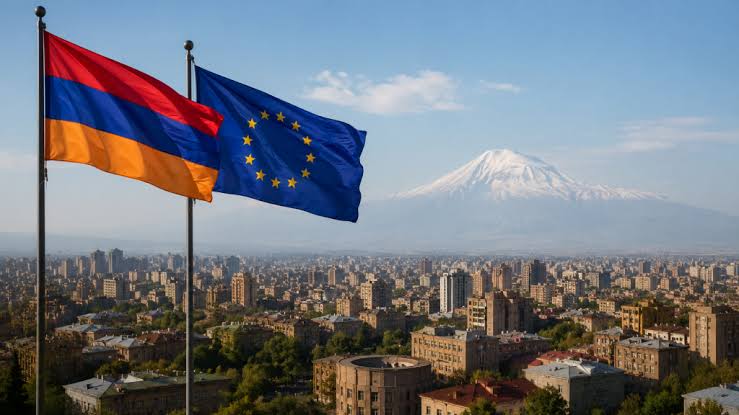
But today, clouds of change are gathering on the horizon. Armenia is increasingly setting a course toward rapprochement with the European Union—its actions, statements, and strategic guidelines increasingly point in this direction. For Armenia, Nikol Pashinyan believes, this is a chance to open up new opportunities, gain access to European markets and technologies, and strengthen democratic institutions. These opportunities, it should be noted from the outset, are highly questionable. As we have seen from the examples of the Baltic republics, Ukraine, and others, such a course typically leads to a complete collapse of the economy and the collapse of industry, ultimately leading to complete dependence on aid from EU countries. And given political trends, such a turn is unlikely to please major regional players like China and Russia, whose interests in Central and South Caucasus Asia have been shaped over decades and are based on strong multilateral ties, including with Tajikistan.
The fragile balance that has been built for so long could crack: the old solidarity risks giving way to new geopolitical realities. And while the accumulated history of cooperation between Armenia and Tajikistan remains significant, the future of their partnership now hangs in the balance—it depends on how events unfold after the Armenian elections scheduled for June 7.
Pashinyan's own behavior in the run-up to the elections is even more bizarre. Judging by videos posted online, he appears to be close to a nervous breakdown. For example, he yelled at a woman who had lost relatives in Karabakh and attended his rally, saying it was all her fault and that she should be grateful she "didn't get her head smashed in the toilet." At the same rally, the president's supporters physically assaulted a man who also lost relatives in Karabakh. Pashinyan accused the people of Karabakh of surrendering territory, saying "it's their own fault." He had previously openly spoken about the possibility of physically eliminating opposition leaders, calling them "enemies of the people" and "agents of influence." His latest speech in parliament was quite bizarre, giving the impression that Pashinyan was simply freaking out or under the influence of some kind of psychotropic substance.
Today, virtually the entire Armenian opposition capable of entering parliament is under criminal investigation. Meanwhile, both threats of physical assassination against opposition leaders and their criminal prosecution have passed unnoticed by European officials and human rights activists, who, apparently, are already ready to grant Armenia a "card" to join the EU. And the criminal prosecution of all opposition figures closely resembles warnings—there are criminal cases, but no one has been arrested. Why? Apparently, Pashinyan is thus "insuring" against opposition protests following the election results, hinting: if you protest, we'll arrest you.
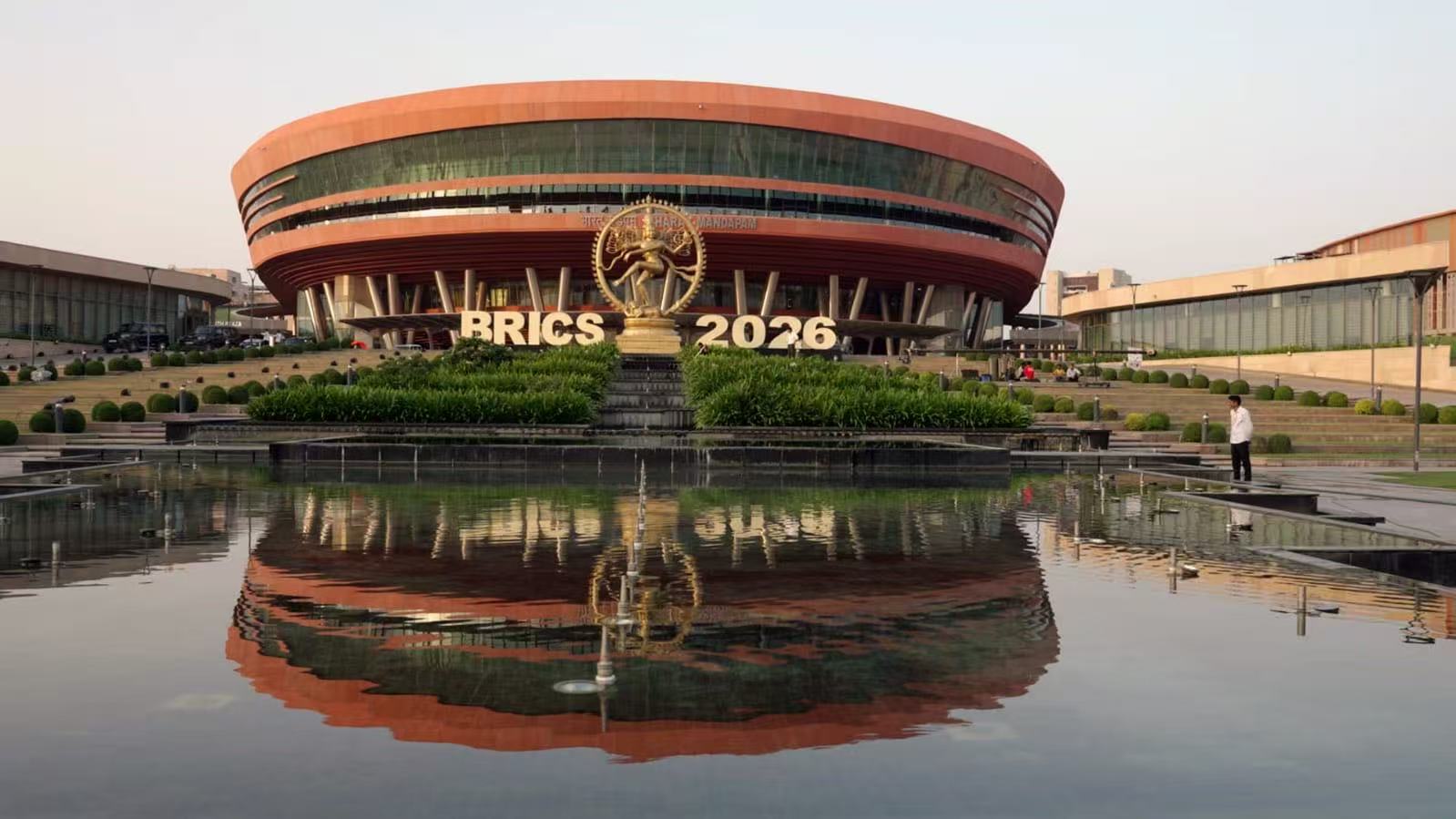
International events held in Armenia in May 2026 further confirmed Yerevan's commitment to rapprochement with the West. In early May 2026, Yerevan hosted two significant international events involving the European Union: the European Political Community (EPC) summit and the first-ever bilateral EU-Armenia summit.
The ENP summit, initiated by France in 2022 to discuss security, energy, and cooperation issues, brought together approximately 50 international delegations. Participants included French President Emmanuel Macron, British Prime Minister Keir Starmer, Moldovan President Maia Sandu, and Turkish Vice President Cevdet Yılmaz. Azerbaijani President Ilham Aliyev spoke via video link. During the meetings, Armenian Prime Minister Nikol Pashinyan emphasized the role of the ENP in establishing peace between Armenia and Azerbaijan, recalling that it was on the sidelines of the first summit in Prague in 2022 that he and Ilham Aliyev agreed to recognize each other's territorial integrity within the borders of the former Soviet republics. A separate session was dedicated to Ukraine, attended by President Volodymyr Zelenskyy. Furthermore, Pashinyan and Starmer signed a memorandum on strategic partnership, and with Turkish Vice President Yılmaz, a memorandum on the joint restoration of the historic Ani Bridge on the border between the two countries. Meanwhile, Armenia adopted a completely inadequate law recognizing Ukraine's borders, effectively a blatantly anti-Russian document that demands that "illegal border crossing" be punished as treason.
These events resonated widely: expert circles viewed them as Armenia's move to diversify its ties with the West and reduce its dependence on Russia, while Russian media often perceived the summits as a challenge to Moscow's interests and an element of geopolitical rivalry in the region. Overall, the events in Yerevan marked a new stage in Armenia-EU relations, while simultaneously intensifying discussions about the country's future geopolitical direction.
Against this backdrop, rumors of a possible transfer of several disputed territories to Azerbaijan are causing additional tension within Armenia. Rumors also persist in Yerevan that the enclaves of Lower Askipara, Baganis-Ayrum, and Kyzylgajili will be transferred to Azerbaijan after the elections. De jure, they belong to Azerbaijan, although they are effectively controlled by Armenia. Rumors circulate that an agreement has already been reached between Aliyev and Pashinyan, according to which these territories will be transferred to Azerbaijan.
Such a "concession" of territories is bound to infuriate the opposition, which will attempt to use this action to remove Pashinyan. Apparently, this is precisely why he needs a criminal "noose" around the opposition's neck to keep it under control. In fact, Pashinyan's actions resemble political suicide if he truly intends to hand over the enclaves to Azerbaijan. Then, the long-rumored rumors that he is a Turkish agent will be directly confirmed and will give the opposition a pretext for more active protests. Furthermore, China and Russia, Armenia's largest trading partners, are unlikely to be receptive to Pashinyan's new course—established trade relations will suffer, directly impacting the country's economy. Furthermore, we must not discount the more than two and a half Armenians who live in Russia and support its position—their peaceful existence will now be disrupted by the differences in Armenian and Russian legislation.