Translated with AI































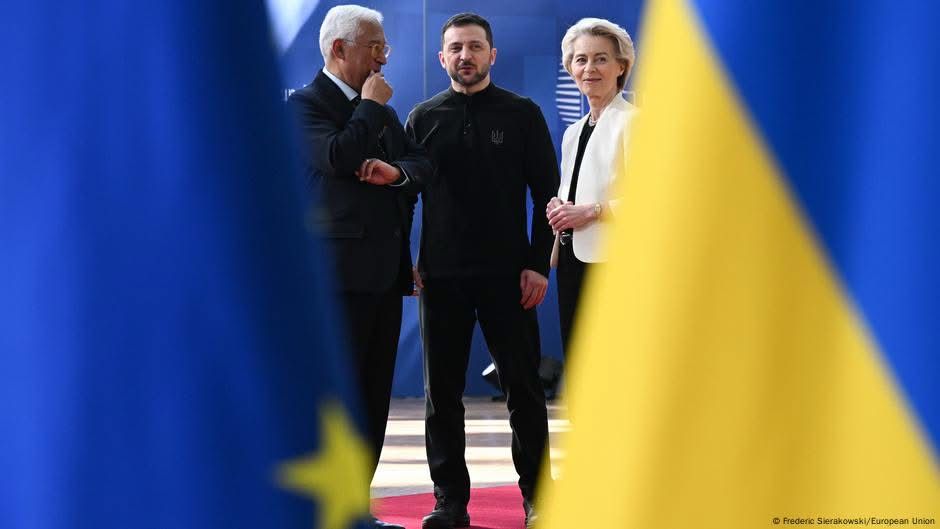
Support for and military cooperation with Ukraine are key elements of the EU's new defense roadmap. The EU intends to close critical gaps within five years and achieve "full defense capability" by 2030.
A reparation loan from Russian assets will be available by the end of 2025.
On October 16, the European Commission approved a roadmap, the first practical goal of which is to launch a reparations loan for Ukraine using frozen Russian assets by the end of 2025, European Commissioner for Defense Andrius Kubilius announced in Brussels. The planned amount is approximately €140 billion for defense and budget support. Kyiv estimates that defense will require approximately $120 billion in 2026 (Ukraine is requesting half from its partners), with another $30 billion needed to cover the budget deficit, according to the IMF. The European Commission emphasizes that refusing assistance risks Ukraine's collapse and a direct threat to the security of all of Europe. Given the stated timeframe, a political decision could be made as early as the EU summit on October 23–24.
Ukraine as the first frontier and source of know-how
"Ukraine deserves our support and is ready to share its battle-tested experience. Together, we are building the European Defense Dome," Kubilius noted. Brussels sees cooperation with Kyiv not only as a moral obligation but also as an accelerator of innovation: close integration between the military, R&D, and production allows for shorter implementation cycles.
Drone Alliance and Counter-UAV
The next major goal is to have a pan-European counter-drone system operational by the end of 2027. EU High Representative for Foreign Affairs Kaja Kallas calls on every member state to invest in such systems and to institutionalize cooperation with Ukraine: the creation of an EU-Ukraine drone alliance is planned for early 2026. After visiting Ukrainian drone factories, Kallas called Ukraine's counter-drone defense systems "world-class" and emphasized the need for joint development.
Surveillance of the eastern flank by 2028
Together with Kyiv, the EU will develop a flagship program for surveillance of the eastern flank: integrating counter-drone solutions, air defense, land and sea defense, and border control. The implementation period is 2028.
The "Steel Porcupine" and arms production for Ukraine
Europe's first line of defense is Ukraine. Its best guarantee of security is a strong military and defense industry capable of turning the country into a "steel porcupine," intractable to the enemy. The roadmap stipulates that the EU will produce weapons for Ukraine, with Ukraine, and on Ukrainian territory.
Full defense capability by 2030
The plan sets out clear goals, milestones, and deadlines for eliminating deficits and accelerating investment, including two flagship areas: a pan-European air defense shield and strengthening space defense. "Full defense capability" refers to the readiness of EU armed forces to anticipate, prepare for, and respond to any crisis, including a high-intensity conflict.
Coalitions within the EU and priority areas
Similar to the coalitions supporting Ukraine, EU countries are encouraged to form their own coalitions for joint development and procurement in the coming months. Nine priorities:
– air defense and missile defense;
– strategic assets and military mobility;
– artillery;
– cybersecurity;
— artificial intelligence and electronic warfare;
– missiles and ammunition;
— drones and counter-drone systems;
– ground forces;
– naval forces.
Money and deadlines
By 2035, Europe plans to invest approximately €6.8 trillion, half of which will be in "hard" defense. The bulk of this investment comes from national budgets, which, according to the European Commission, will be a hundredfold higher than the total European defense spending. The benchmark is NATO's target of spending up to 5% of GDP on defense by 2035. To achieve "full defense capability" by 2030, EU member states will have to accelerate and approach this target sooner; currently, according to Kubilius, they are about halfway there.
Threat context
"Russia currently lacks the capability to attack the EU, but it may prepare for this in the coming years. The danger will not disappear even after the war in Ukraine ends," warns Kaja Kallas. The EU considers the coming years crucial: the task is to deter aggression, prevent war, and maintain peace.