Translated with AI

































Archaeologists discovered fragments of a unique wall painting featuring a rare depiction of a fire-worshipping ritual during excavations at the Sogdian settlement of Sanjar-shah in Tajikistan. This was reported by the Telegram channel "Science Reporter," citing the website of the University of Cambridge (UK).
The Sogdians are an Iranian-speaking people who played a key role in trade and cultural exchange along the Silk Road. The Sanjar Shah site, located near Penjikent, has been known to archaeologists since the 1940s, but systematic excavations only began in 2001.
The settlement's heyday came in the 8th century, when, under the Arab governor Nasr ibn Sayyar, a monumental palace was built, likely the residence of Panjakent's last ruler. At the end of the century, following a devastating fire, the palace was converted into outbuildings. It was in one of these outbuildings—the so-called Rectangular Hall—that 30 fresco fragments were discovered.
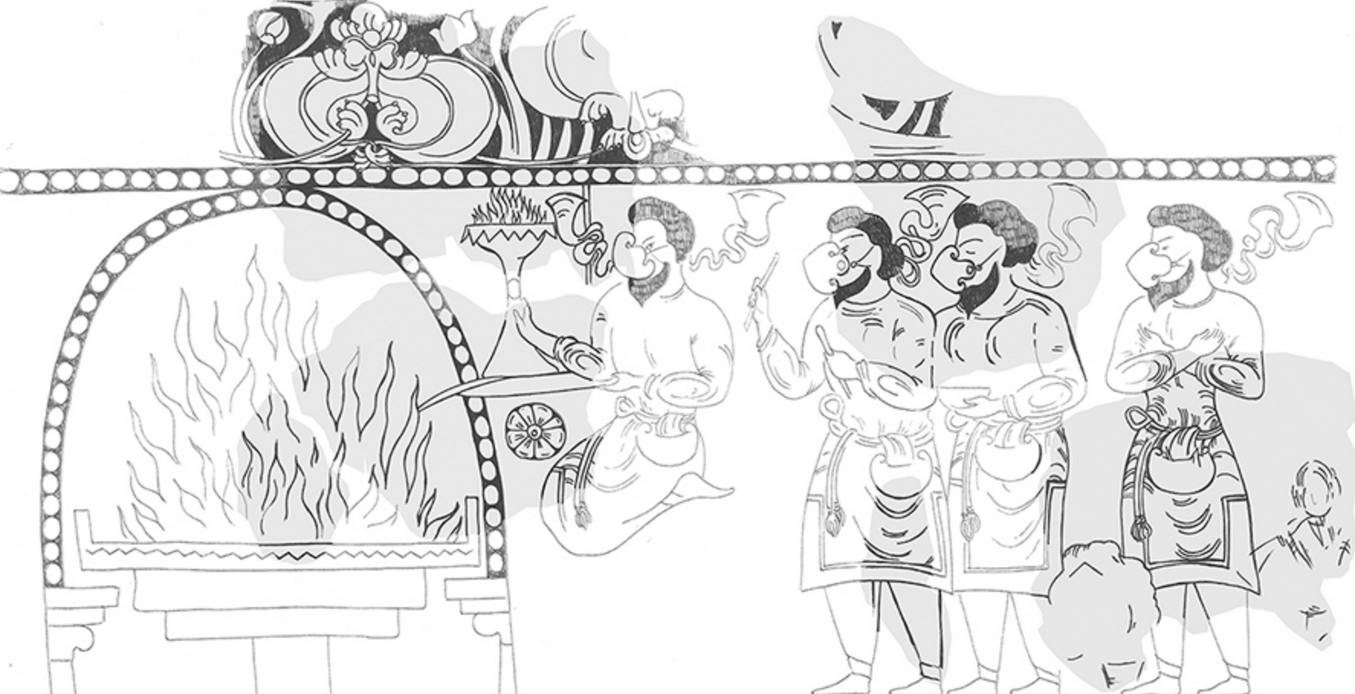
In addition to scenes of warriors fighting demons, archaeologists also discovered a composition among the images that proved particularly significant: a procession of four priests and, possibly, a child, walking toward a large fire altar under an arch. This motif, rare in the Sogdian tradition, had previously only been found on ossuaries—places for storing skeletal remains.
Details of the restored fresco made it possible for the first time to imagine the appearance of the clergy: short hair, beards, long robes with a belt and a bag on it, as well as special masks for the mouth and nose (padām), preserved in the practices of Zoroastrian priests to this day.