Translated with AI












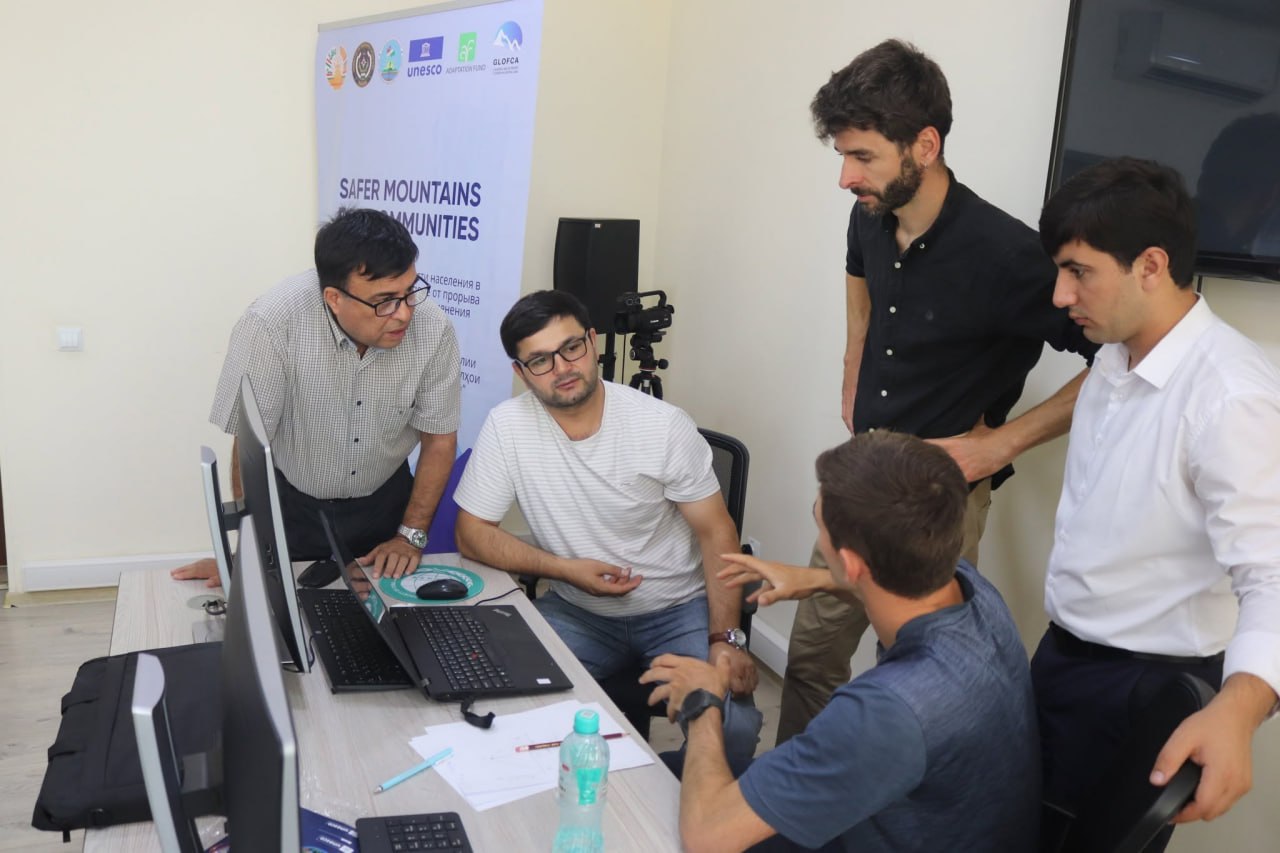















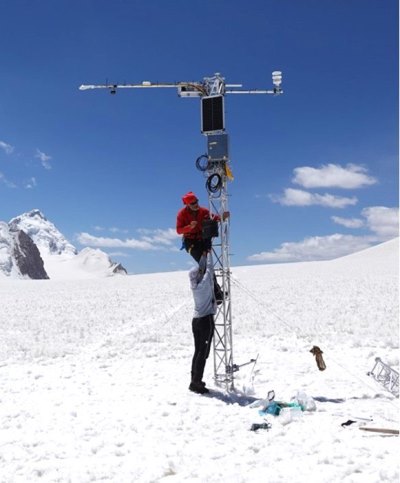
The international scientific expedition "Vanchiakh (Fedchenko) 2025," which ran from June 19 to August 23, brought together researchers from Tajikistan, Germany, and France. Professor Abdulhamid Kayumov , head of the Tajik part of the expedition, told a NIAT "Khovar" correspondent.
For nearly 40 days, scientists worked at altitudes ranging from 4,000 to 5,500 meters above sea level, facing extreme cold, oxygen deprivation, and challenging high-altitude terrain.
As part of the expedition, three automatic meteorological and glaciological stations were installed at altitudes of 4,500, 4,800 and 5,280 meters (Tahmuras Glacier, the Academy of Sciences Glacier area and the Yazgulom Pass).
According to specialists from the Glacier Research Center, ground-penetrating radar scanning of the snow and ice masses was conducted to assess their volume and structure. Unique snow and ice samples were also collected for isotopic and chemical analysis , which will allow us to reconstruct the climate history of the Pamirs over recent decades.
The automatic stations will accumulate data year-round , withstanding storms, snowfalls, and avalanches. Scientists plan to return in the summer of 2026 to extract data—this will provide invaluable insights into the state of the Pamir cryosphere.
The expedition was made possible by the RECAP (Research on Climate and Cryosphere in the Pamirs) project.
Particular attention was paid to transporting heavy equipment : loads were carried to altitudes of over 5,000 meters solely by human power. With the support of local climbers, the equipment was pushed through icefalls, crevasses, and steep passes. Every step required extreme caution, but the mission was successfully completed.
"We didn't just install equipment. We opened a new chapter in the history of glaciology during the International Year of Glacier Conservation. The Fedchenko Glacier is like a book whose pages melt every year. We must read it before it disappears," emphasized Professor Abdulhamid Kayumov.
Professor Christoph Meyer , head of the fieldwork, noted: “This was not just a scientific expedition – it was a struggle with the mountain itself.”
The creation of high-altitude stations in such conditions is already being called a world-class scientific breakthrough . The Vanchyakh (Fedchenko) Glacier has once again proven itself not only to be the largest ice massif in the Pamirs, but also a symbol of human perseverance in the face of adversity.
The Fedchenko Glacier is the largest ice massif in the Pamirs and the largest in the world outside the polar regions. It extends for 77 kilometers and covers approximately 700 square kilometers. The Fedchenko system unites more than 100 tributary glaciers, forming one of the most impressive ice empires on Earth.
Scientific research on the glacier has been conducted since 1933, when the first permanent station, "Gorbunov," was established at an altitude of 4,200 meters. In 1957–1958, during the International Geophysical Year, the glacier gained worldwide recognition as a natural laboratory for studying global climate change. Systematic monitoring of the glacier continued until the 1990s. After a hiatus of nearly three decades, research was resumed in 2022 by the Glacier Research Center of the National Academy of Sciences of Tajikistan.
In 2022–2023, reconnaissance teams searched for safe equipment delivery routes, avoiding helicopter flights at altitudes of 5,000–6,000 m. In 2024, a temporary base was established at an altitude of 4,500 m. In 2025, a permanent monitoring system was finally established in the heart of the glacier , allowing for continuous monitoring of the Pamir cryosphere.