Translated with AI
































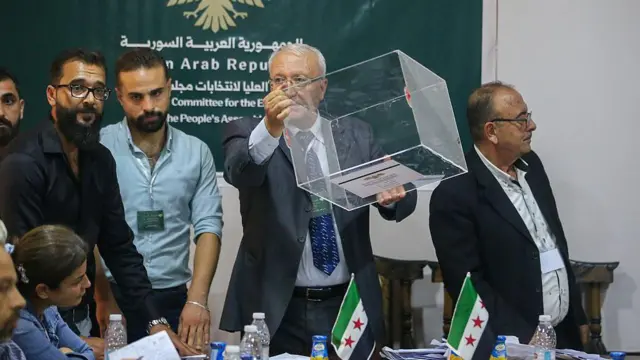
Parliamentary elections were held in Syria for the first time since the overthrow of President Bashar al-Assad. Voting took place on Sunday, October 5, but official results will not be announced for another day or two.
The unicameral People's Council of Syria will consist of 210 members, elected for 30-month terms with the possibility of renewal. One-third of the seats will be appointed by President Ahmed al-Sharaa, who took office in January 2025 for the duration of the country's transitional government. The remaining members will be selected by regional committees established by an electoral college appointed by al-Sharaa.
Meanwhile, 32 parliamentary seats will remain vacant. These seats are intended for representatives from the southern province of As-Suwayda, where clashes between Druze and Bedouins occurred in July of this year, as well as the northeastern province of Hasakah and northern Raqqa, which are partially controlled by the Kurdish Syrian Democratic Forces (SDF). According to the transitional government, elections in these three of the 14 provinces were postponed due to security concerns.
A total of 1,578 candidates registered to participate in the elections, of which only 14 percent were women. Candidates were required to meet the following requirements: a lack of support for the former Assad regime and a renunciation of separatist views.
Earlier, in September 2025, President Al-Sharaa emphasized that direct elections were currently impossible. The cited reasons for this were the large number of internally displaced persons and Syrians living abroad who lack valid voting documents. Therefore, voting was conducted through regional committees and electoral colleges, making the first parliamentary elections since the overthrow of the Assad regime indirect.
The election format has drawn criticism from a portion of the Syrian population, who view the electoral process as strictly controlled and lacking genuine political competition. However, according to a survey conducted by the Qatar-based Arab Center for Policy Research from mid-July to mid-August 2025, 57 percent of nearly 4,000 Syrians surveyed positively assess the current political situation in the country.