Translated with AI

























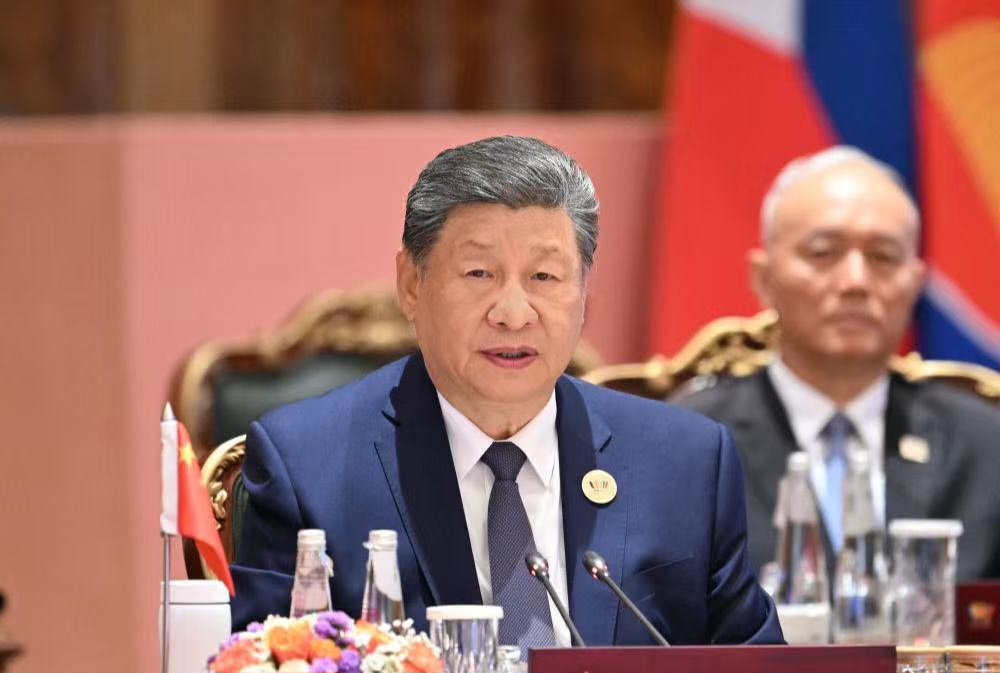








On October 10, 2025, a meeting of the CIS Council of Heads of State will be held in Dushanbe, during which, among other things, issues of strengthening economic cooperation are planned to be discussed.
In recent years, thanks to joint efforts, the Commonwealth of Independent States has begun to consistently change its architecture and transform itself into a space of mutually beneficial cooperation.
It is noteworthy that the Commonwealth's members act exclusively on the principles of mutual understanding, equality, and good neighborliness, which allows them to achieve their intended goals without delay.
As a result, positive economic dynamics have emerged and can be observed throughout the CIS: GDP is growing at a steady rate, and trade and investment ties between member states are strengthening.
According to the CIS Interstate Statistical Committee, the aggregate GDP growth of the Commonwealth countries in the first half of this year increased by 2.3% compared to the same period in 2024. The leaders in economic growth rates are Kyrgyzstan (+11.7%), Tajikistan (+8.1%), and Uzbekistan (+7.2%). Industrial production in the CIS countries increased by 1.8%, indicating a slowdown in the pace of development. For comparison, in the same period in 2024, growth was 4.7%. Despite the overall slowdown, certain industries demonstrated steady growth. Agricultural engineering (+13%) and the chemical industry (+8%) acted as drivers of this growth.
According to experts, CIS countries have achieved certain successes in strengthening economic cooperation in recent years. Three key indicators stand out among the key achievements for 2024:
– the share of national currencies in settlements between CIS countries exceeded 85%;
– the total gross domestic product grew by 4.7%, which is significantly higher than the average growth rate;
– the volume of mutual trade increased by 8%, amounting to more than 10 trillion rubles.
These achievements confirm the sustainability of economic ties in the face of external challenges and risks.
Another equally important positive feature of the development of cooperation within the CIS is the commonality of approaches to resolving pressing issues on the economic agenda.
The similarity of approaches allows the Commonwealth member countries to jointly implement mutually beneficial cooperative and import-substitution projects in industry, build a financial system independent of external factors, focused on the use of national currencies in mutual settlements, and develop new transport and logistics routes.
From a strategic perspective, the CIS region represents a region of colossal economic opportunities for the long-term sustainable development of all its participants.
In this regard, the CIS heads of state directly link the effectiveness of countering global challenges and threats to the consolidation of joint efforts aimed at deepening multifaceted partnerships, one of the main drivers of which is industrial cooperation.
It is worth recalling that on June 8, 2023, the CIS Heads of Government Council in Sochi approved the Concept for the Development of Industrial Cooperation among Member States of the Commonwealth of Independent States and the Set of Measures for the Organization's Development through 2030. These key documents fully reflect the positions of the Commonwealth member states on priorities and mechanisms for cooperation in the development of industrial cooperation.
The objectives of the Concept are the creation of new high-tech industries, accelerated development and modernization of industry, its technological renewal, an increase in the production and export volumes of competitive, innovative and science-intensive products with a high share of added value, and the achievement of international standards for product quality.
Economists estimate that achieving these goals will create new jobs, improve the quality of human capital, and positively impact the well-being and quality of life of the population of each participating country.
Uzbekistan, as a country actively expanding industrial cooperation with its CIS partners, is currently implementing over 600 joint projects in the real sector of the economy, with a total value of approximately $70 billion.
National cooperation programs cover key sectors of the national economy: energy, mechanical engineering, chemicals, and light industry. Uzbekistan emphasizes joint ventures and localized production to reduce dependence on imports and stimulate the production of value-added products.
Thus, today Uzbekistan positions itself as a country where industrial cooperation is becoming a real imperative for the development of the economies of the CIS countries.
Evidence also indicates a gradual decline in the use of the US dollar and other reserve currencies in the region, which is particularly important given the current geopolitical instability and sanctions pressure. Thanks to the active participation of central banks and intergovernmental organizations in the CIS countries, mechanisms have been created to allow national currencies to be effectively used in mutual trade.
An important area is the implementation of multilateral agreements between CIS countries aimed at increasing the use of national currencies in mutual settlements. Their adoption will create favorable conditions for trade and investment and will contribute to strengthening economic ties between states.
Meanwhile, it's worth emphasizing that cooperation within the CIS is not limited to achieving specific economic benefits. A key outcome is the introduction of modern technologies and equipment, as well as the training of highly qualified personnel to operate them. All of this forms a stable foundation for long-term growth, integration into international production chains, and access to promising markets with competitive products.
In the current geopolitical environment, transport and logistics are becoming increasingly important for maintaining economic connectivity, alongside the development of traditional trade and investment ties. Sanctions and protectionist regimes, along with the disruption of traditional supply chains, have provided a powerful impetus for the development of transport and logistics routes to enable countries to access promising emerging markets.
A completely new transport architecture has begun to emerge in the CIS, with Central Asia emerging as one of the primary beneficiaries. The region is increasingly playing a vital role in ensuring transport connectivity, serving as a major transport hub for Eurasia. Moreover, most transport projects implemented in the CIS can be mutually reinforcing, offering tangible benefits not only to the CIS countries but also to other states.
To further intensify trade and economic cooperation between the CIS countries, it would be advisable to implement the following measures to ensure:
– the resilience of the economies of the CIS countries to global challenges and threats by developing strategies to respond to macroeconomic and geopolitical challenges, which include an assessment of sectors of the economies of the Commonwealth countries that are potentially vulnerable to external influences and mechanisms to ensure their economic security;
– diversification of the economy based on the development of non-resource industries, such as information technology, mechanical engineering and biotechnology, which will increase the economic growth of the CIS countries in the long term;
– deepening trade and economic cooperation and industrial and technological cooperation through the organization of interstate high-tech clusters aimed at producing products with added value that are competitive in the foreign market;
– the integration of transport and logistics routes based on both the development of infrastructure, simplification of customs procedures and unification of standards, as well as the coordination of strategies for the development of transport systems of participating countries, as well as the development of joint programs and projects aimed at integrating transport and logistics networks into international transport corridors.
All of this may require the development of new financial instruments, flexibility in international settlements, and a balanced government policy capable of balancing geopolitical challenges and the economic interests of Commonwealth countries, promoting the strengthening of their relations in the name of stability and sustainable development.
The next meeting of the CIS Council of Heads of State will serve as clear evidence that the Commonwealth of Independent States remains a reliable, sought-after, and effective format for cooperation, allowing participants to build relationships based solely on the principles of strategic partnership and mutual benefit.
Dmitry Trostyansky,
Chief Researcher of the Institute
strategic and interregional studies
under the President of the Republic of Uzbekistan,
Doctor of Economics