Translated with AI















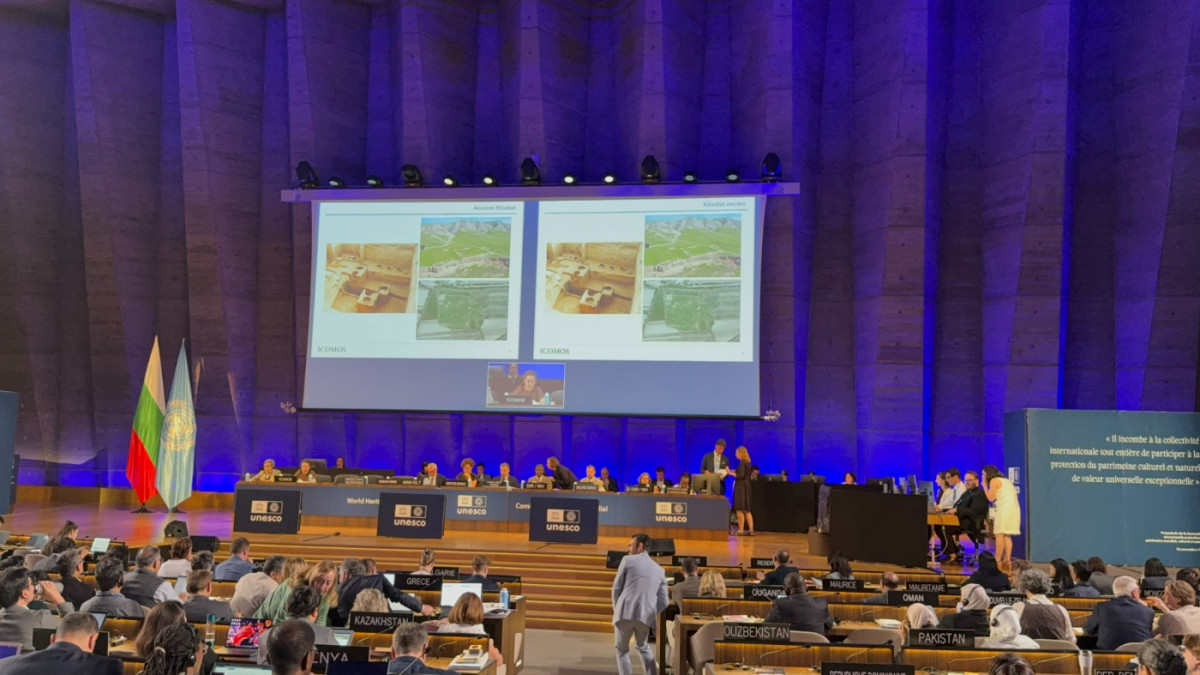
The cultural heritage monuments of Ancient Khuttal have been included in the UNESCO World Heritage List. The corresponding decision was made on July 12, 2025, at the 47th session of the World Heritage Committee in Paris, the press service of the Ministry of Foreign Affairs of Tajikistan reports.
The cultural heritage monuments of Ancient Khuttal became the 5th World Heritage site in Tajikistan.
The nomination unites 11 archaeological and architectural monuments located in Vose, Dangara, Jaloliddin Balkhi, Farkhor and Khovaling districts of Khatlon region: Buddhist monastery "Ajinateppa", Kalai Khulbuk, Shakhristoni Khulbuk, Manzarateppa, Kalai Zoli Zar, Makbarai Mavlono Tojiddin, Khalevard (Kofirkala), Shakhristoni Zoli Zar, Tokhir Karavansaray, Shakhrteppa and the Buddhist temple of Khishtteppa. Among them, the archaeological complex "Kalai Khulbuk" – the remains of the palace of the capital of Ancient Khuttal, the heritage of which was revived thanks to complex measures carried out by the Government of the Republic of Tajikistan, plays a special role.
According to UNESCO, these monuments illustrate the multifaceted culture of Ancient Khuttal, an independent medieval state that flourished from the 7th to the 16th centuries AD in the Khatlon region. As an active participant and production center of the Great Silk Road, the state also had a significant impact on the regional exchange of cultural values.
The nomination "Monuments of Cultural Heritage of Ancient Khuttal" has been prepared since 2023 by joint efforts of specialists from the National Commission for UNESCO of the Ministry of Foreign Affairs of the Republic of Tajikistan and the Ministry of Culture of the Republic of Tajikistan, with the support of the International Institute for Central Asian Studies, the A. Donish Institute of History, Archaeology and Ethnography of the National Academy of Sciences of the Republic of Tajikistan, the National Museum of Antiquities of the Republic of Tajikistan and regional authorities of the Khatlon region. This nomination was developed with the support of the Central Asian Archaeological Landscapes (CAAL) project of University College London (UCL – Univeristy College of London).