Translated with AI
































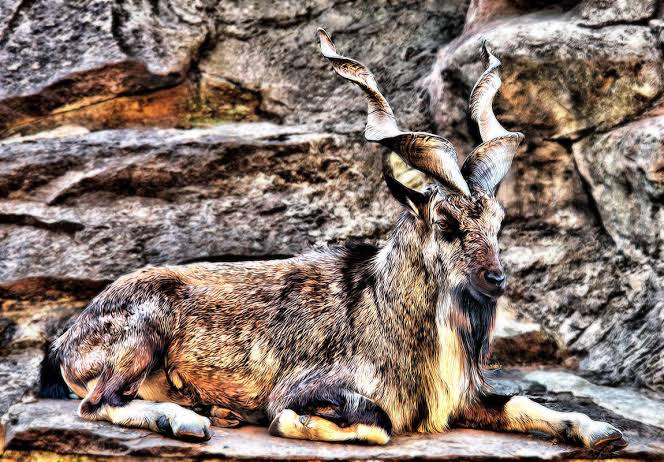
The markhor population in Tajikistan continues to grow and currently exceeds 7,000 individuals. This data was announced at a press conference by Isfandiyor Shukurzoda, First Deputy Chairman of the Committee for Environmental Protection under the Government of the Republic of Tajikistan.
According to him, the markhor population census was conducted in February–March of this year in the Dangara, Shamsiddin Shokhin, and Darvaz districts with the participation of representatives of the National Academy of Sciences of Tajikistan and the Republic’s Forestry Agency.
According to the committee, monitoring was carried out using modern equipment that allows for precise observation of the animals' movements and behavior in the wild without human intervention. According to preliminary data, the population of this rare species remains stable and continues to grow.
The committee noted that markhor occupies a special place in Tajikistan's natural environment, serving as an important element of mountain ecosystems and preserving the biodiversity of high-altitude areas. Its primary habitats are in the mountainous regions between the Panj and Vakhsh river valleys, as well as in the northwestern part of Darvaz.
It was also noted that on May 2, 2024, the UN General Assembly adopted resolution A/RES/78/278, declaring May 24 as International Markhor Day. This date was established at the initiative of the President of the Republic of Tajikistan, Emomali Rahmon.
In addition, from April 15 to May 10 of this year, a census of the Bukharan argali (urial) was conducted in the cities of Nurek and Rogun, as well as in the districts of Dangara, Nosiri Khusrav, Shahritus, Kubodiyon, Dusti, Panj, Khuroson, Baljuvon, Fayzobod and Rudaki.
The Committee for Environmental Protection emphasized that it is taking the necessary measures to improve the system of specially protected natural areas, as well as to preserve and protect biological diversity.
In order to protect rare species of wild animals, 13,840 tons of feed, including hay, grain crops and salt, were placed in their habitats for biotechnical activities in the winter season of 2026 and spring of 2027.
In addition, with the support of development partners, the committee received modern equipment, which allowed it to improve the efficiency of its industry work, including monitoring, scientific research, and environmental protection.