Translated with AI
































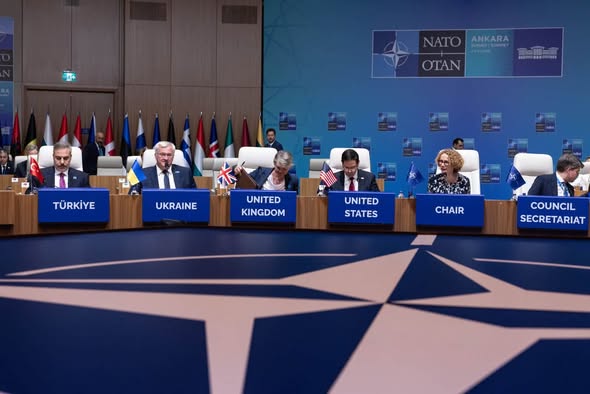
The NATO summit, held in Ankara on July 7–8, 2026, took place in a challenging international environment. Russia's war against Ukraine continues, global tensions are rising, and for years now, public opinion has been abuzz with predictions of a "division of the West," "Ukraine fatigue," and a weakening of transatlantic unity.
However, the results of the meeting in the Turkish capital revealed a different picture. Despite existing disagreements between individual states, the North Atlantic Alliance remained united on key security issues. Moreover, the Ankara summit demonstrated that support for Ukraine remains not a temporary political campaign, but a crucial element of the long-term Euro-Atlantic security strategy.
For Ukraine, the summit's main outcome was the declaration adopted by NATO leaders. In this document, the allies reaffirmed their unwavering support for Ukraine in defending its freedom, sovereignty, and territorial integrity. Crucially, Ukraine's security was directly linked to the security of the entire transatlantic space.
In essence, this means recognizing a simple but fundamentally important reality: today, Ukraine is not an external observer, but a key participant in the modern European and Euro-Atlantic security system. For over four years, Ukrainians have been fighting a full-scale war against a state that NATO officially views as a long-term threat to the security and stability of the Euro-Atlantic space.
It is this wording of the adopted declaration that has particular political significance.
Russia is no longer seen as a temporary problem that can be resolved by returning to business as usual. Its aggressive policies, military production, missile programs, hybrid operations, and ongoing war against Ukraine are assessed as a long-term challenge. For Ukraine, this means that its struggle is increasingly perceived not as an isolated regional conflict, but as part of a broader standoff over the future of international security.
The most concrete outcome of the summit was the allies' commitment to provide Ukraine with 70 billion euros in military equipment, assistance, and training by 2026.
But even more important is the following point: NATO countries have confirmed their intention to maintain at least the same level of support in 2027.
This fundamentally changes the nature of aid to Ukraine. It's no longer just a matter of responding to current needs on the frontline. A system of long-term, predictable, and sustainable support is being formed.
For a country fighting a difficult defensive war against a much larger power, predictability is paramount. Military planning cannot be based on promises made over several months. It is essential to understand in advance the volumes of future deliveries of weapons, ammunition, air defense systems, military training, and defense production funding.
This is precisely why the commitments for 2026 and 2027 are not just a financial figure for Ukraine, but a political signal to Russia and its "allies": the expectation that time is working against Ukraine and that its partners will one day tire is not justified.
Ankara demonstrated that NATO remains united and steadfast on issues that its allies consider fundamental to their own security. Within the Alliance, there are disputes, differing national interests, and different approaches to certain international issues, but democracies differ from authoritarian systems precisely in that open debate does not necessarily mean division.
NATO Secretary General Mark Rutte emphasized this point after the summit: allies may disagree, but ultimately they are capable of reaching common decisions.
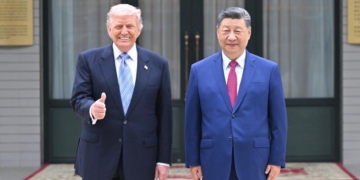
One of the central events of the summit was the meeting between Ukrainian President Volodymyr Zelenskyy and US President Donald Trump and his team.
The political significance of this meeting is difficult to separate from its emotional and psychological context. Relations between Kyiv and the new American administration had previously experienced difficult moments. Therefore, in Ankara, special attention was paid not only to the official statements but also to the atmosphere of the two presidents' interactions.
The meeting demonstrated a significantly more positive, calm, and constructive nature of relations. There was no sense of distance or political coldness. On the contrary, the parties focused on practical issues—defending Ukraine, strengthening its position, and finding paths to a just peace.
Volodymyr Zelenskyy thanked Donald Trump for his attention to strengthening Ukraine's air defenses. This is a matter of life and death for millions of Ukrainians today. Russian missiles and drones attack Ukrainian cities, residential buildings, and civilian infrastructure almost daily.
The parties discussed specific ideas that could strengthen Ukraine's position and bring peace closer. Particular attention was paid to air defense and the Patriot systems. Donald Trump publicly raised the possibility of granting Ukraine a license to produce Patriot systems and missiles, which is significant, as it represents a shift from one-time deliveries to the possibility of creating a long-term technological foundation for Ukrainian security.
The American president also praised the capabilities of the Ukrainian unmanned aerial vehicle industry and expressed interest in cooperation in this area.
This is a significant change. Ukraine, which just a few years ago was seen primarily as a recipient of military aid, is increasingly becoming a technological partner. Ukrainian drones, control systems, modern warfare experience, and defense technologies are of practical interest to leading countries around the world.
The positive emotional and psychological atmosphere of the meeting between the President of Ukraine and the President of the United States was a distinct political outcome of the summit. It demonstrated that relations between Kyiv and Washington are capable of developing on a pragmatic and mutually beneficial basis.
The Ankara summit became a platform for extremely intensive diplomatic work for Volodymyr Zelenskyy. Ukraine's participation in the summit was not limited to a single speech or a single meeting. It was a large-scale diplomatic campaign, during which political support was translated into concrete decisions: money, air defense systems, missiles, drones, defense production, energy cooperation, sanctions pressure, and Ukraine's further progress toward the European Union.
For Russia, the summit's results have several obvious negative consequences.
First, hopes for a weakening of NATO unity have not materialized. For many years, Moscow has based its information strategy on the premise of an inevitable split in the West. Russian propaganda portrays any dispute between allies as the beginning of the end of the Alliance.
There were indeed disagreements in Ankara. But the outcome was not a split, but an agreed declaration, a reaffirmation of collective defense, an increase in military capabilities, and a long-term commitment to support Ukraine.
Secondly, Russia has been officially designated as a long-term threat to Euro-Atlantic security. This means that NATO member states will base their defense planning not on the assumption of a quick return to previous relations with Moscow, but on the need for long-term deterrence.
Third, aid to Ukraine is becoming more predictable. The commitment to provide €70 billion in 2026 and maintain at least a similar level in 2027 undermines one of Russia's key calculations—the hope of outlasting its adversaries.
Fourth, Ukraine is increasingly integrating into the Western defense industry. The Drone Deal, discussions on Patriot systems, joint defense projects, and interest in Ukrainian technology mean that the war has paradoxically accelerated Ukraine's transformation into an important part of the modern European security system.
The reaction of Russian officials and propaganda resources showed a certain confusion.
Before the summit, Moscow closely monitored any disagreements between the allies, hoping to present them as evidence of NATO's disintegration. After the declaration's adoption, the Russian information space was forced to simultaneously promote several contradictory narratives.
On the one hand, they tried to convince the audience that NATO was supposedly "weak" and "divided." On the other, they described the Alliance's decisions as extremely dangerous and threatening to Russia. But it's difficult to simultaneously prove that the organization is disintegrating and warn of the serious threat posed by its coordinated decisions.
The Russian Foreign Ministry accused NATO of militarizing Europe and preparing for confrontation. However, the very harshness of this reaction indicates that Ankara's decisions were taken seriously in Moscow.
The main problem with Russian propaganda is that the facts are increasingly difficult to fit into the familiar narrative. Ukraine has not been left without support. Transatlantic relations have not been destroyed. NATO has not abandoned its assistance to Kyiv. The meeting between Zelenskyy and Trump did not become a political conflict, but took place in a constructive atmosphere. Moreover, support for Ukraine has been allocated financially for two years.
Ankara and the main conclusion for Ukraine
The 2026 NATO summit did not end the war or resolve all of Ukraine's problems. Russian missiles continue to attack Ukrainian cities, heavy fighting continues on the front lines, and the path to a just peace remains difficult.
But Ankara gave Ukraine something crucial in a long war: the assurance that it is not alone. The declaration reaffirmed NATO unity, identified Russia as a long-term threat to transatlantic security, and secured extensive support for Ukraine through 2026, with the intention of maintaining an equally high level of assistance in 2027. Volodymyr Zelenskyy's diplomatic meetings revealed another important trend. Ukraine is increasingly viewed less and less as a country to be assisted. It is becoming a state whose military experience, technology, defense industry, and ability to resist aggression are crucial to the security of the entire continent. For Ukrainians, who pay a high price every day for the right to live in a free country, this has not only political but also human significance.
Russia was counting on Ukraine's isolation. Ankara demonstrated otherwise.
Russia was counting on its allies' weariness. Ankara committed to its support for years to come.
Russia had hoped for a split in NATO. The summit concluded with a joint declaration and new commitments.
And perhaps this is precisely the main outcome of the meeting in Ankara: after many years of difficult war, Ukraine remains part of a large international coalition, and its struggle for independence is increasingly perceived as a struggle for the security of a much wider space.