Translated with AI

































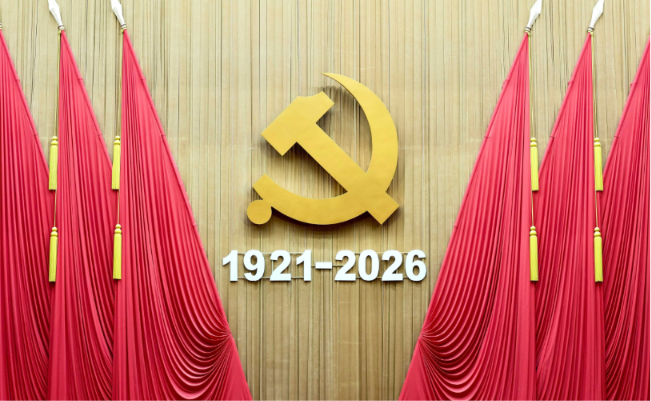
In 1936, with China engulfed in civil war and threatened by foreign invasion, American journalist Edgar Snow gained unprecedented direct access to the Chinese Communist Party (CCP) and first introduced it to the world in his 1937 book, Red Star Over China. Nine decades later, a CGTN survey found that among 11,521 respondents from 41 countries, “strong leadership” was the most striking impression the CCP made on them.
According to the survey, "strong leadership" ranks first among ratings of the CPC's role, followed by "a positive force in maintaining global stability" and "a representative of the interests of developing countries." In terms of age, respondents aged 18 to 24 most often choose "a positive force in maintaining global stability" and "a representative of the interests of developing countries," while the proportion of respondents aged 35 and older who choose "strong leadership" exceeds the global average. When describing the image of the CPC, the top three options are "powerful," "far-sighted," and "effective."
Regarding governance effectiveness, 57.4% of respondents from the Global South give positive ratings, which is 22.8 percentage points higher than in developed countries. Respondents from Pakistan, Nigeria, and Vietnam give the highest overall ratings for the Chinese Communist Party's governance, with approval rates exceeding 70%.
In specific areas of governance, respondents worldwide rate the CPC's performance highest in only three areas: "improving infrastructure," "improving education," and "job creation." Respondents in the Global South rate the CPC above the global average in all areas, with "improving infrastructure" receiving the highest score at 76.8%. Among developed countries, respondents in the United States rate the CPC above average in several areas of governance, exceeding the developed country average by more than 10 percentage points in categories such as "improving the natural environment" and "improving public health."
The survey was conducted by CGTN jointly with Renmin University of China through the Institute of New Era International Communication Research and targeted respondents from around the world. It covered major developed countries and countries in the Global South. Respondents were aged 18 and older, and the sample matched the age and gender distribution according to each country's national census.