Translated with AI

























NATO countries plan to allocate €70 billion in support for Ukraine in 2026. Alliance members also confirmed their intention to maintain at least a comparable level of assistance in 2027.
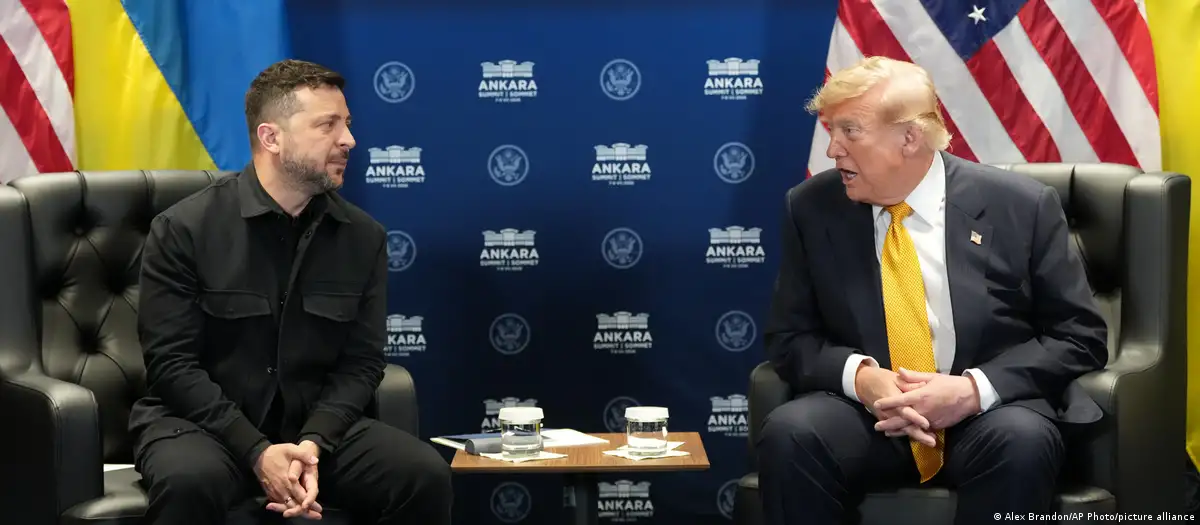
This is stated in the final declaration of the NATO summit held in Ankara on July 7–8. The document was published following the meeting of leaders and representatives of the North Atlantic Alliance member states.
The funds allocated for 2026 are planned to be used for the purchase of military equipment, the organization of training, and the provision of other types of support to Ukraine.
In the final document, NATO countries expressed unity in continuing their assistance to Kyiv. Alliance members also noted Ukraine's contribution to transatlantic security.
According to the declaration, the bulk of security assistance to Ukraine is currently financed by European NATO member states and Canada. Support is provided through bilateral and multilateral mechanisms.
At the same time, the Alliance countries reaffirmed their commitment to provide Ukraine with at least the same level of support in 2027. This means funding could be maintained at a minimum of €70 billion.
The final declaration devotes special attention to relations with Russia, calling the Russian Federation "a long-term threat to Euro-Atlantic security and stability."
NATO members have stated the need to strengthen the alliance's defence capabilities in the face of existing risks, including threats that the organisation assesses as emanating from Russia, as well as the continuing terrorist threat.
The declaration notes that European NATO countries and Canada have increased investments in core defense needs by more than $139 billion in 2025. This translates to approximately €122 billion.
Following the Ankara summit, the allies also announced new defense purchases worth over $50 billion, or almost €44 billion.
The alliance countries intend to expand their collective defense industry production capacity and intensify cooperation with military-industrial complex enterprises.
One of the objectives will be to accelerate the implementation of innovative solutions in the defense sector.
In addition, NATO countries plan to continue working to remove barriers to trade in defense products between allies.
Summit participants reaffirmed their commitment to the principle of collective defense, enshrined in Article 5 of the North Atlantic Treaty. According to this provision, an attack on one member of the Alliance is considered an attack on all members of the organization.
The declaration also states NATO's intention to maintain combat superiority and develop modern military technologies.
Priority areas include high-precision long-range weapons, unified missile and air defense systems, unmanned systems, advanced technologies, and reconnaissance capabilities.
The Alliance also intends to more actively implement digital technologies and artificial intelligence in the defense sector.
In particular, NATO countries are working to create an interoperable transatlantic cloud environment for military operations. At the same time, they plan to implement high-performance artificial intelligence models.
In the final document, the alliance members declared the need to respond to strategic rivalry, global instability, hybrid threats, and other challenges to contemporary international security.
A separate clause of the declaration is devoted to Iran. NATO allies reiterated that Tehran should not possess nuclear weapons.
In addition, the alliance countries called on Iran to respect the principle of freedom of navigation in the Strait of Hormuz, which is of strategic importance for international energy and trade routes.
The Ankara summit demonstrated NATO countries' intention to continue large-scale defense funding, expand arms production, and maintain long-term support for Ukraine. At the same time, the alliance identified Russia as a long-term threat to Euro-Atlantic security.