Translated with AI


























From mobile payments to AI commerce. Visa unveiled the future of commerce in Dushanbe.
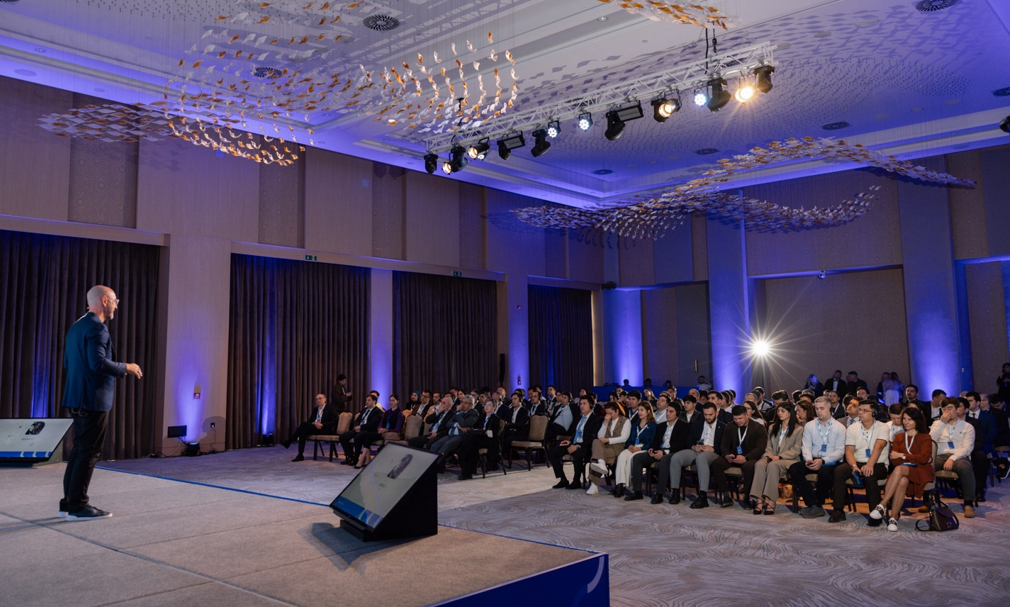
The first Visa Connect Tajikistan forum took place in Dushanbe, bringing together representatives of banks, fintech companies, regulators, and technology partners. Participants discussed how modern financial technologies and digital solutions can bring practical benefits to the local market and shape the future of commerce in Tajikistan.
The forum reflected Visa's strategic vision to create a smarter, more flexible, and more inclusive financial ecosystem, tailored to the specifics of the national market and the needs of businesses and users.
During the forum, an Avesta.tj correspondent interviewed Godfrey Sullivan, Visa's Senior Vice President of Products for Central and Eastern Europe, the Middle East, and Africa , to discuss key trends in the payment industry's transformation, the role of artificial intelligence in commerce, and the prospects for the development of the Tajik market.

Visa is developing AI-assisted shopping experiences based on the Visa Intelligent Commerce platform. What is this and how will it impact consumers and the market?
AI commerce is the next stage in the development of commerce, following traditional, e-commerce, and mobile. This fourth generation is often referred to as the agent model (agentic commerce). Essentially, it's an evolution of previous formats, but based on more advanced technologies that simplify transactions and make them more user-friendly.
The key change is a focus on speed and time savings. Users no longer need to waste effort on routine tasks.
For example, when planning a trip to Tajikistan, you can delegate the selection of tickets, hotels, and guides to a digital agent. It will select the best options, create a budget, and offer a turnkey solution. The user retains control, can adjust parameters, or select alternatives.
The system adapts to the user's preferences. It's important to clearly formulate the task so that the AI can suggest suitable options.
AI commerce integrates artificial intelligence directly into the user journey, making shopping faster, more convenient, and more personalized.
What role do payments play in AI commerce, and how is Visa supporting this trend?
In AI commerce, the integration of artificial intelligence into all processes, including the payment infrastructure, plays a key role. Users interact with services through digital agents, and payments themselves are processed by Visa solutions.
This model combines tokenization, authentication, and personalization, and leverages transaction signals and the capabilities of the payment ecosystem. Their unification marks the next stage in the development of payments.
In practice, users can authorize AI agents on supported platforms to perform actions within the parameters they specify. The user retains complete control.
Security is a top priority. Payment data is protected through tokenization, enhanced authentication, and network mechanisms that minimize the transfer of sensitive information.
As a result, payments become more secure, faster and more convenient, and the process itself becomes simpler for the user.
How will AI commerce impact business ?
AI commerce is changing the logic of interaction between clients and entrepreneurs.
Today, for example, a user chooses a restaurant in Dushanbe through a search, comparing options. In the new model, this is done by an AI agent: it receives the task and automatically performs the search, analysis, and selection.
For businesses, this means a new operating model – interactions and transactions take place not directly with the user, but through their digital agent.
This opens up additional opportunities, especially for small and medium-sized businesses: more precise customization of offers and faster response to customer requests.
To enhance trust, the Trusted Agent Protocol is used. It identifies which agent is acting on the user's behalf and evaluates their trustworthiness. For example, in the future, a hotel will be able to recognize which agent is making a reservation and offer personalized services or bonuses.
It's important to note that this isn't about identity substitution. On the contrary, the protocol helps ensure that the request comes from a real user, not an anonymous source.
Thus, AI commerce not only transforms interactions but also enhances trust, personalization, and efficiency.
How does Visa Payment Passkey work and what are its key benefits?
Previously, online payments were often confirmed with one-time SMS codes, which complicated the process and often led to purchase abandonment.
Visa Payment Passkey technology offers a different approach – verification through biometrics, such as fingerprint or facial recognition.
The main advantage is a higher level of security. Biometric data cannot be intercepted or transmitted to third parties, significantly reducing the risk of unauthorized access.

Which new Visa technologies will have the biggest impact in the near future?
Among the key innovations that will have a significant impact in the near future is Visa's Tap to Phone technology. It allows businesses to accept payments directly on smartphones with contactless payment capabilities, eliminating the need for payment terminals. This is especially relevant for Tajikistan, where tourism is growing: over two million people visit the country annually.
Small shops, souvenir shops, and artisans can accept payments quickly and easily. This technology can significantly simplify payments and positively impact the development of small businesses and tourism infrastructure.
Another important feature is Visa Flexible Credential. It allows users to manage payments within a single card, using it as a debit, credit, or installment plan (for example, by splitting a large purchase into four installments). Users can choose the most convenient payment method based on their situation. For example, using the bank's mobile app, users can make a purchase now and pay for it later, using installments over several months. Or, if necessary, they can use their credit limit.
Technologies like Tap to Phone and Visa Flexible Credential are shaping the future of the payments industry, making it more flexible, accessible, and user-friendly.
How do you assess the payments market in Tajikistan and its readiness for innovation?
The payments market in Tajikistan has significant potential. The national currency, the somoni, is integrated into the Visa international payment network, and 14 banks in the country currently issue Visa cards in the local currency for online and everyday payments.
Banks are demonstrating steady progress in digital transformation, implementing data analytics tools and expanding product lines, including premium solutions like Visa Infinite. Innovative platforms, such as Alif Mobi and Orienbank's services, are already operating in the market, enabling users to make digital payments.
Visa continues to invest in Tajikistan, viewing the market as a promising area for development. Actively implementing technology creates the foundation for accelerating digital transformation and expanding opportunities for both consumers and businesses.
The development of AI Commerce, the implementation of biometric solutions, and the transition to flexible payment instruments are shaping a new financial market architecture, changing not only technology but also the interaction model between users, businesses, and banks.
For Tajikistan, this means accelerating digital transformation and expanding opportunities for both consumers and entrepreneurs. The active implementation of innovations, growing interest from international companies, and the banking sector's readiness to embrace change create the foundation for the further development of a modern payment ecosystem.
As the Visa Connect Tajikistan forum demonstrated, the key factor is not only the availability of technology, but also the market's ability to effectively integrate it, turning innovations into real and in-demand solutions.