Translated with AI

























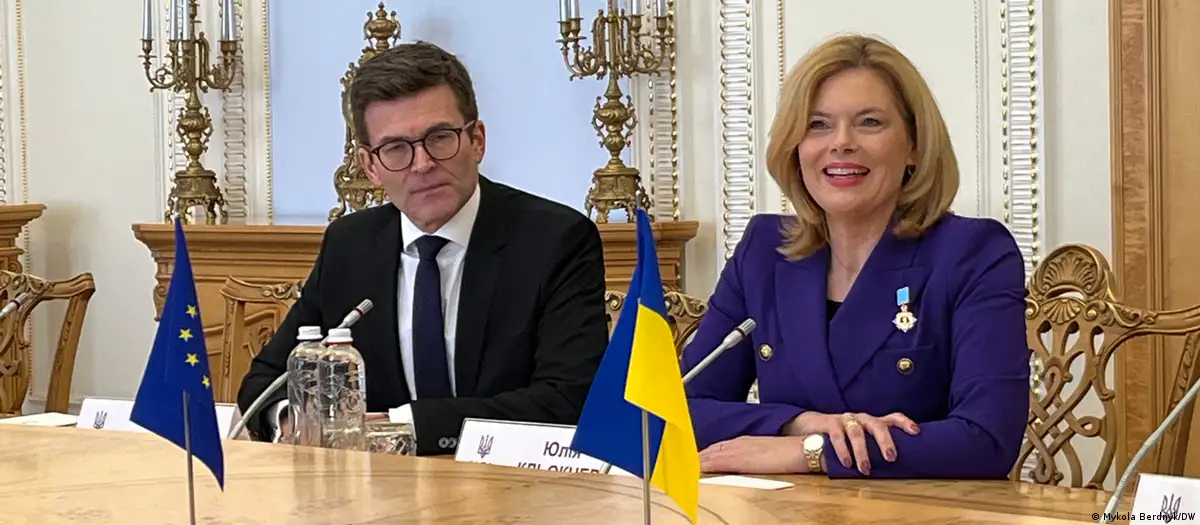
During her first visit to Kyiv, German Bundestag President Julia Klöckner assured Ukraine, which has been defending itself from a full-scale Russian invasion for five years, of Germany's unwavering support. On March 11, she addressed members of the Verkhovna Rada and emphasized Germany's solidarity with Ukraine.
During her speech, Klöckner expressed respect for the country, which, she said, remains capable of acting even under constant attack. She praised the work of government agencies, municipalities, families, frontline soldiers, and hospital and school staff.
According to her, Verkhovna Rada members demonstrate daily that Ukraine is a democracy and intends to remain so. Klöckner emphasized that Germany sees this and continues to support Ukraine. She also noted that relations between the two countries have become closer during the war.
The head of the German parliament stated that Germany will continue to provide political, financial, humanitarian, and military assistance to Ukraine. She asserted that no country should perish because of war and partition. She also called on Ukraine to continue its reforms and fight corruption.
Klöckner also emphasized the importance of documenting Russian war crimes and holding those who committed them accountable. She said this is necessary for the sake of the victims and for the future, as where crimes go unpunished, new injustices arise. She added that it is also necessary to fight on the "truth front" against propaganda, calling this part of defending democracy.
At a press conference following a meeting with Ukrainian President Volodymyr Zelenskyy, Klöckner noted that while the world's attention is currently largely focused on events surrounding Iran, Germany continues to focus on Ukraine. She also stated that Germany is currently Ukraine's largest donor in absolute terms.
The President of the Bundestag praised Ukraine's role in European security. According to her, the country has developed capabilities during the war that are significant for the security of the entire European continent. Klöckner noted that Ukraine has accumulated significant expertise in detecting and defending against drones.
She added that Europe is currently learning from Ukraine, both technologically and organizationally, as well as from practical skills acquired during wartime. She emphasized that support for Ukraine is not one-sided.
Julia Klöckner became the first official German representative to address the Verkhovna Rada. She noted that the invitation from Ukrainian Parliament Speaker Ruslan Stefanchuk was a great honor and a touching gesture, as well as a sign of solidarity between the two countries and parliaments.
During her visit to Kyiv, Klöckner also met with opposition representatives and discussed Germany's continued support for Ukraine, the geopolitical situation, and the sustainability of parliamentarism in the face of war.
She also inspected a power plant in Kyiv that was damaged in Russian strikes over the weekend.
Upon arriving in the Ukrainian capital, Klöckner stated that it was important for her to demonstrate Kyiv's continued support. She emphasized that while many countries' attention is currently focused on events in the Middle East and Iran, Ukraine is already entering its fifth year of war.
Responding to a question about the debate in Germany over the cost of supporting Ukraine, Klöckner stated that freedom and self-determination cannot be measured by price. She argued that if Ukraine falls, other European countries could also be threatened by Russia, making the current situation a shared struggle.