Translated with AI










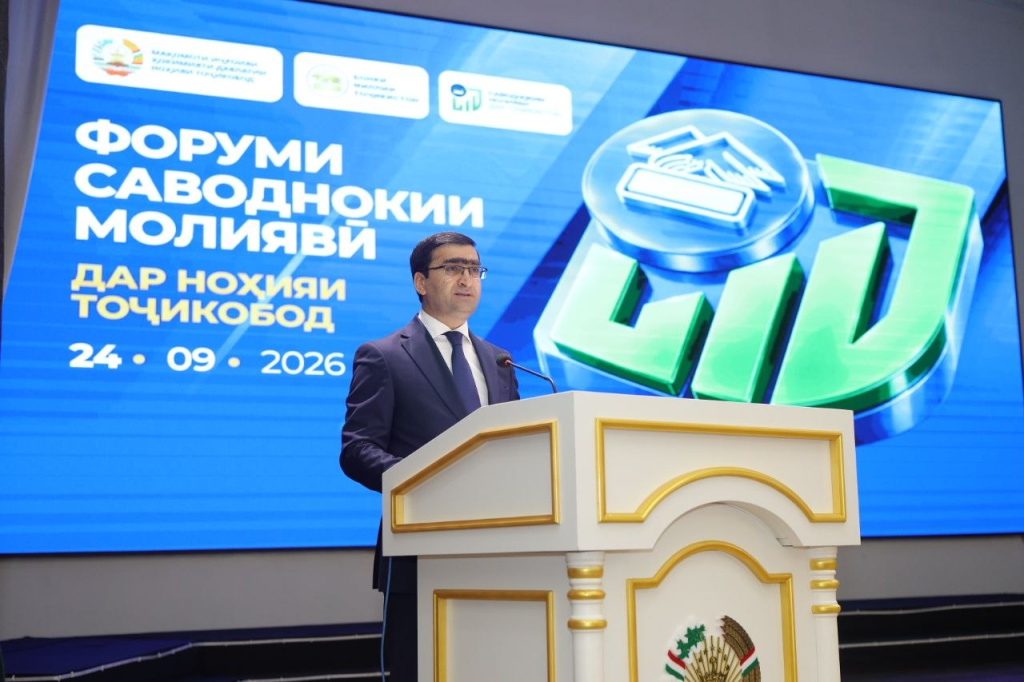


















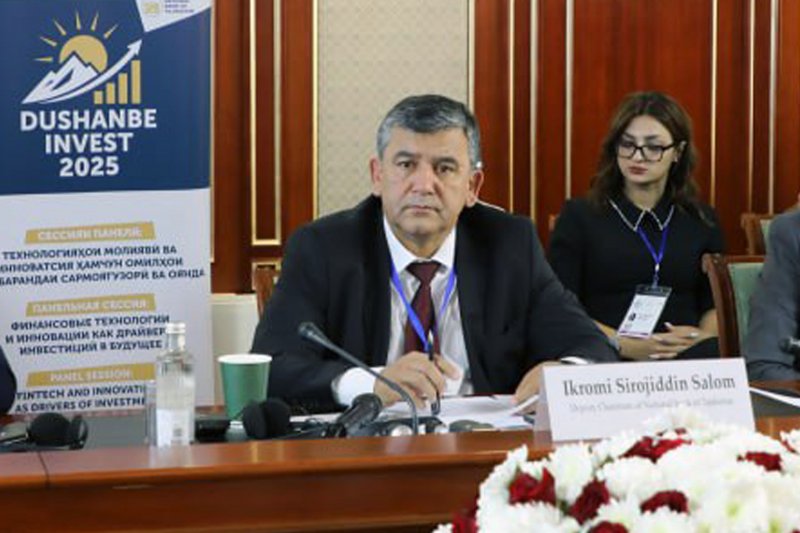
Tajikistan plans to launch a national payment gateway for government services. This was announced by Sirojiddin Ikromi, Deputy Chairman of the National Bank of the Republic of Tajikistan, during the panel session "Financial Technologies and Innovations as Drivers of Future Investments," held at the Dushanbe-Invest-2025 International Investment Forum.
According to him, the development of financial technologies is a strategic objective that determines the future of the country's banking system. "Fintech not only changes the traditional mechanisms of financial services but also becomes the foundation for increased investment, entrepreneurship, and financial inclusion. This area allows for increased transparency in financial processes, reduced risks, and increased public confidence in financial instruments," Ikromi emphasized.
He noted that the National Bank of Tajikistan is consistently implementing a comprehensive policy to develop payment systems and digitalize the banking infrastructure. The main focus of the reforms is on creating conditions for a widespread transition to cashless payments and fostering a new culture of payment behavior.
"We strive for maximum transparency of financial flows to strengthen trust between the government, businesses, and citizens. To this end, a regulatory and institutional framework has been created that facilitates the sustainable development of the digital economy," said the Deputy Chairman of the NBT.
He recalled that the country has approved two key strategic documents: the Strategy for the Development of the Payment System of the Republic of Tajikistan for 2015–2025 and the National Strategy for Financial Inclusion for 2022–2026 . The first strategy aims to modernize the payment infrastructure, improve legislation, and implement innovative technologies, including the transition to a cashless economy. The second aims to ensure broad access to financial services, especially for residents of remote regions, women, and small businesses.
Based on the first strategy , the Law of the Republic of Tajikistan "On Payment Services and the Payment System" was adopted, becoming the foundational document for the development of the fintech market. The law defines requirements for the security and licensing of payment systems, operational risk management, and establishes the rights and responsibilities of all market participants. According to Ikromi, this has given a powerful impetus to the development of mobile wallets, electronic payments, and new forms of digital settlements.
The Deputy Chairman of the NBT reported that following the adoption of the Decree of the President of the Republic of Tajikistan in 2023 , which requires all government services to be paid for exclusively in non-cash form, the country has seen a sharp increase in non-cash transactions.
"Today, citizens can securely and transparently pay for all types of government services through POS terminals, mobile apps, and online platforms. The number of payment cards has reached 9.4 million, and the number of e-wallets has reached 16 million," he explained.
According to the National Bank, the ratio of cash to non-cash transactions is 72% to 28% , while the share of non-cash payments has increased by 3 percentage points over the past year.
Ikromi paid special attention to the unified QR code project , implemented in 2023. "This was a true infrastructural breakthrough. QR payments allowed customers to pay for goods and services quickly and conveniently through e-wallets of various financial institutions. Today, this method has become one of the most popular forms of cashless payment in the country's trade and service network," the NBT representative emphasized.
Speaking about immediate plans, he noted that the National Bank will continue to improve the Fast Payment System and deploy the National Switch , which will ensure faster and more reliable payments.
"In the coming years, we plan to launch a payment gateway for government services, which will be implemented jointly with the Agency for Innovation and Digital Technologies. Furthermore, we intend to strengthen cybersecurity measures and protect citizens' personal data," Ikromi stated.
He also emphasized the importance of international cooperation in financial technology. He stated that Tajikistan actively collaborates with international organizations, including the Alliance for Financial Inclusion (AFI) .
"Since 2011, Tajikistan has been a member of AFI. This year, Dushanbe hosted meetings of the working groups on digital financial services and financial inclusion strategies, attended by over 80 representatives from 50 countries. This has become an important platform for exchanging experiences and shaping the international digital development agenda," concluded the Deputy Chairman of the National Bank.
Experts believe that the implementation of new digital initiatives by the National Bank of Tajikistan, including the launch of a national payment gateway, will be an important step toward improving the efficiency of the financial system, increasing public confidence in the banking sector, and further developing the country's digital economy.