Translated with AI
































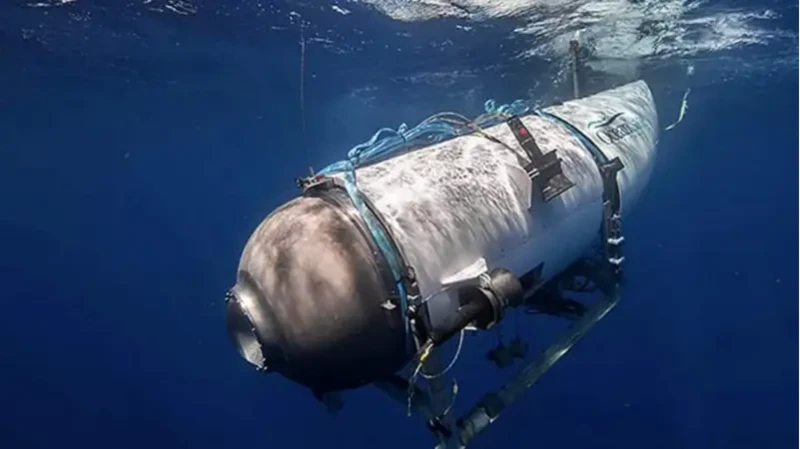
The main cause of the Titan submersible disaster, which involved a descent to the wreckage of the Titanic, was its owner, Stockton Rush, who flagrantly and systematically ignored safety regulations and technical requirements for such submersibles. This is according to a report released by the US Coast Guard on Tuesday, the BBC reports.
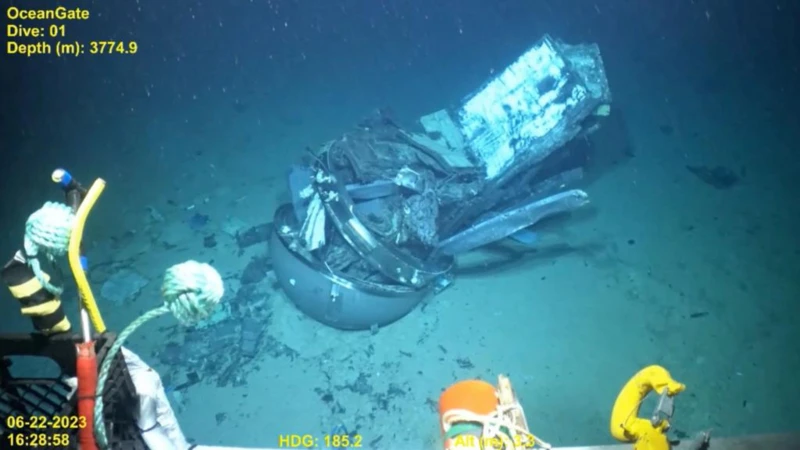
Titan was crushed by water nearly four kilometers deep in June 2023.
On board were Stockton Rush himself, pilot Paul-Henri Narjolet, and three passengers who had paid hundreds of thousands of dollars to dive with the Titanic: British businessman and adventurer Hamish Harding and Pakistani businessman Shahzada Dawood and his son Suleman. All died instantly.
The report's authors state that the Titan was crushed due to a "loss of structural integrity" that killed everyone on board due to pressure of approximately 350 kilograms per square centimeter.
Experts believe the Titan's laminated carbon fiber hull design, with a titanium bow and stern, was inherently flawed and dangerous, and Stockton Rush was able to evade proper inspections and procedures.
The report's authors believe Rush was driven to this by the dire financial situation of his company, OceanGate. Former employees say their salaries were delayed, and clients who paid large sums for dives but failed to receive the service at the agreed-upon time threatened Rush with legal action.
As a result, in order to fulfill the wishes of VIP clients who had paid hundreds of thousands, Rush pushed employees, forced them to ignore safety regulations, and generally, according to the report, created "a toxic work environment in which the dismissal of senior employees and the threat of dismissal were used to silence employees and temporary workers about their concerns."
If Rush had not died in the crash, Coast Guard investigators would have recommended that the U.S. Department of Justice consider criminal charges against him.
Experts estimate that the Titan's hull most likely cracked in one of two places: either at the glued joint between the carbon fiber and titanium parts at the nose of the vehicle, or in the carbon fiber part itself, near the nose.
As BBC science editor Rebecca Morrell notes, Stockton Rush himself called the Titan's design "experimental." The hull was made of layers of carbon fiber bonded with resin.
"No deep-sea vehicle has ever been made of this material before. Most are made of titanium or steel. Carbon fiber is considered unreliable under high pressure. Its layers are known to separate," explains Morell.
Furthermore, as the BBC's science editor points out, experts also had questions about how the titanium hemispheres were attached at both ends of the apparatus, and the manufacturer of the Titan's porthole stated at a public hearing that its product was only certified for depths of up to 650 meters—while the remains of the Titanic lie at a depth of 3.8 kilometers.
In 2022, during its 80th dive to the ocean floor, a loud noise erupted from the Titan's hull, which Coast Guard experts believe was caused by layers of carbon fiber coming apart. However, the Titan continued its dive.
"That's why the experts I spoke to believe Titan was doomed to be crushed," writes the BBC's science editor.