Translated with AI

































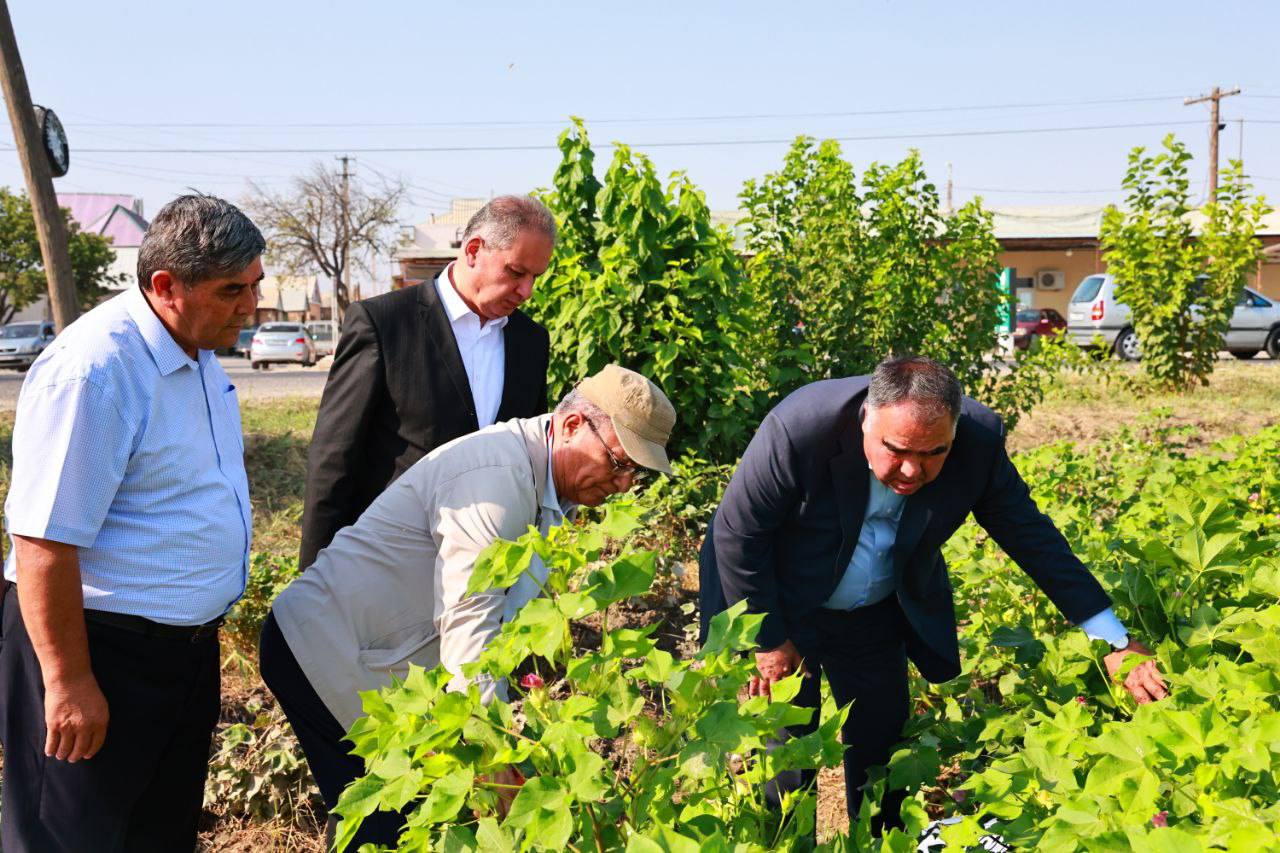
The Chairman of the Sughd Region, Rajabboy Akhmadzoda, visited the city of Kanibadam as part of a working trip, where he got acquainted with the state of agricultural lands, including the growth of cotton and the progress of re-sowing. This was reported by the press service of the regional administration.
Agricultural producers of Konibodom actively participate in the implementation of agricultural policy aimed at rational use of land and increasing production volumes. This year, the total area under crops in the city was 11,057 hectares. Of these, about 4,000 hectares are occupied by cotton, 279 hectares by potatoes, 968 hectares by vegetables, and 216 hectares by melons.
During the visit, the head of the region visited the Bekhruz and Kuhandiyor farms, where he got acquainted with the state of the cotton plantations. In the Bekhruz farm, cotton was sown on an area of 10 hectares. Farmers expressed confidence in getting a good harvest.
"Cotton is a strategic crop and an important raw material for the processing industry. The introduction of scientific approaches and new technologies allows us to increase the yield annually. This year, 35 hectares of cotton were sown under film, which allows us to achieve better results compared to the traditional method," noted representatives of the agricultural sector.




Particular attention is paid to the practice of re-seeding after the main harvest. The plan for re-seeding in Kanibadam this year exceeds 3,000 hectares. Work in this direction is ongoing. The regional chairman also visited the Yusufjon dekhkan farm in the Firuzoba jamoat. After the wheat harvest, re-seeding of vegetable crops was carried out there: carrots (0.40 hectares), mung beans, beans and cucumbers (0.60 hectares).
As experts emphasized, this year the water supply of Kanibadam's farmland has significantly improved thanks to the installation of new pumping units and the laying of modern water supply networks. This creates favorable conditions for increasing crop yields.


Following the visit, the Chairman of the Sughd Region instructed responsible services and farmers to use each plot of land as efficiently as possible, strictly adhere to agronomic deadlines and pay special attention to the quality of re-sowing.